
You'll need a balanced soil mix that supports healthy air-purifying plants. Start with a 5:2 ratio of compost to perlite, then add equal parts peat moss and worm castings for nutrients. Mix in 2-3 cups of worm castings per gallon of soil, and adjust perlite content up to 50% based on your plant's moisture needs. Maintain pH between 6.0-7.0 using lime additives. This basic recipe sets the foundation, but there's much more to maximizing your plants' air-cleaning power.
Understanding Air-Purifying Plant Requirements
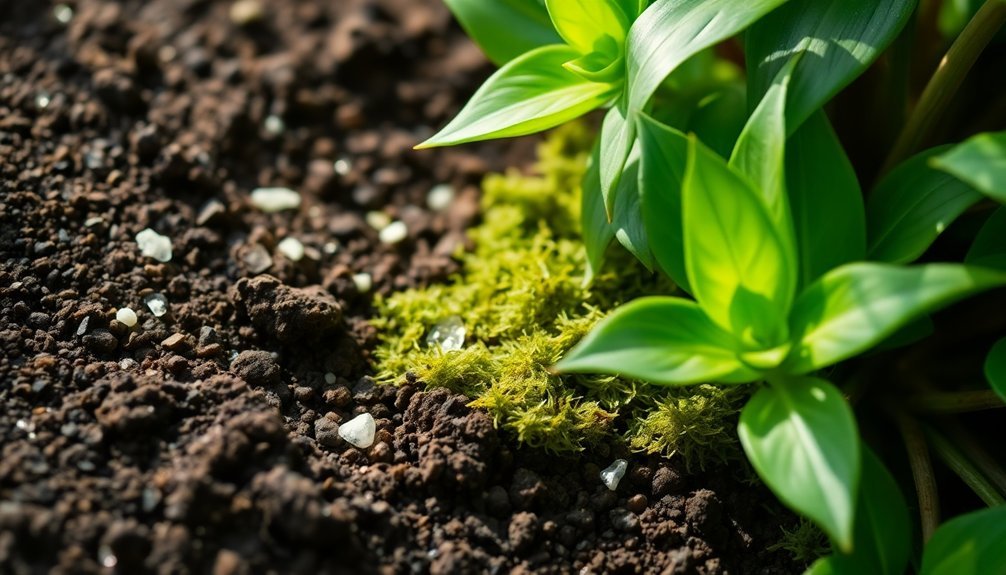
The success of air-purifying plants depends heavily on the soil environment you create for them. When crafting your potting soil, you'll need to focus on achieving the perfect balance of moisture retention and drainage to prevent root problems.
Your soil mix should incorporate perlite to guarantee proper aeration while maintaining adequate moisture levels.
Related guide: Best Perlite-To-Soil Ratios For Potted Plants
Perlite-enriched soil creates the perfect balance of air flow and water retention, essential for thriving air-purifying plants.
For ideal growth of your indoor plants, maintain a pH between 6.0 and 7.0, which you can adjust using lime additives. Include nutrient-rich components like peat moss and worm castings to provide essential elements such as nitrates, potassium, and magnesium.
Since air-purifying plants continuously work to clean your indoor air, they'll deplete soil nutrients faster than typical houseplants. You'll need to establish a regular fertilization schedule to keep your plants performing their air-cleaning duties effectively.
Essential Components of Clean Air Plant Soil
Creating ideal soil for air-purifying plants requires precise ratios of key ingredients that work together synergistically. You'll need to blend peat moss, perlite, and worm castings to support a wide range of clean air plants effectively. The mix provides essential nutrients while ensuring proper drainage and aeration.
Related guide: Best Drainage Mixes For Air-Purifying Plants
| Component | Function | Benefit |
|---|---|---|
| Peat Moss | Water retention | Prevents drought stress |
| Perlite | Aeration | Prevents root rot |
| Worm Castings | Nutrient source | Provides NPK benefits |
| Compost | Organic matter | Sustains growth |
| Coconut Coir | Sustainable alternative | Eco-friendly option |
Mix five parts compost with two parts perlite for best results. This blend delivers concentrated nitrates, potassium, magnesium, calcium, and phosphorus while maintaining proper moisture levels. You can substitute coconut coir for peat moss to create a more sustainable growing medium.
Mixing Ratios for Optimal Growth
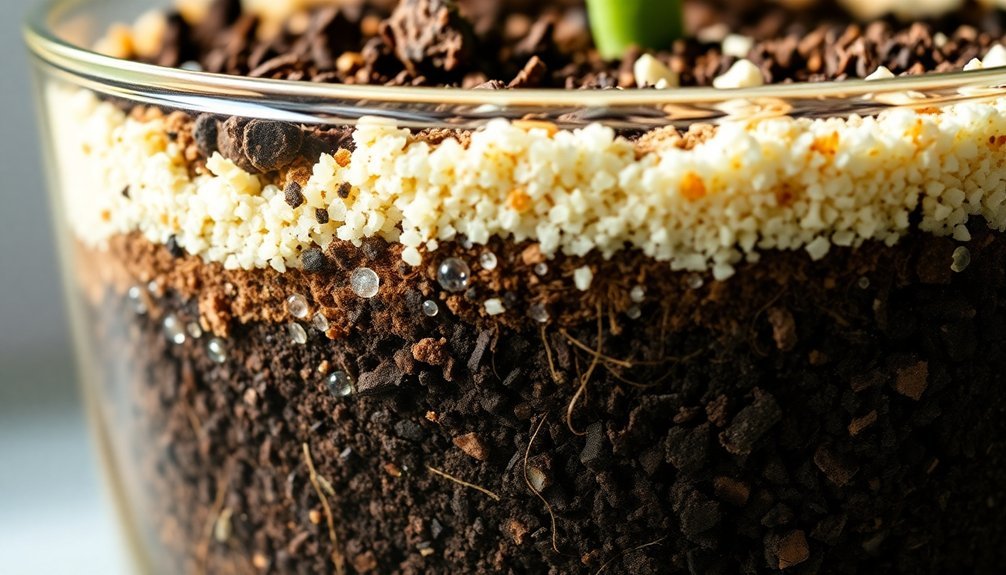
You'll achieve the best results by following the proven 5:2 ratio of compost to perlite when creating your air-purifying plant soil mix.
For enhanced nutrient distribution, mix in equal parts peat moss and worm castings to support your plants' growth while maintaining proper moisture levels.
Related guide: Best Vermiculite Soil Blends For Cleaner Air
When growing moisture-sensitive plants like succulents, you can adjust the perlite content upward to increase drainage and prevent root issues.
Perlite-to-Peat Moss Balance
When mixing soil for air-purifying plants, maintaining the right balance between perlite and peat moss is essential for ideal growth.
To make sure your plants thrive, mix five parts peat moss with two parts perlite. This ratio will give it a good foundation for moisture retention while ensuring proper drainage.
You'll want to check your soil's moisture level four times more frequently when first establishing the right balance. If you're growing succulents or plants that need extra drainage, consider increasing the perlite content up to 50%.
Remember that peat moss holds water and nutrients, while perlite creates crucial air pockets in the soil. This combination prevents root rot and promotes healthy growth.
Adjust the mixture based on your plants' specific needs and how they respond to the initial ratio.
Nutrient Distribution Measurements
The right soil mix for air-purifying plants extends beyond just perlite and peat moss ratios.
You'll need to focus on precise nutrient measurements to create an ideal growing environment. Start with a foundation of five parts compost to two parts perlite, then adjust based on your specific plants' needs.
For the best nutrient distribution in your air-purifying soil mix:
- Mix in two or three cups of worm castings per gallon of soil to boost essential minerals like calcium and phosphorus.
- Test and maintain pH between 6.0-7.0, adding lime if needed.
- Adjust perlite ratios up for succulents or down for moisture-loving varieties.
- Supplement with organic fertilizers on a regular schedule to maintain nutrient levels.
This balanced approach guarantees your air-purifying plants get the exact nutrition they need for healthy growth.
Natural Nutrients and Their Benefits
Your air-purifying plants need essential minerals like nitrates, potassium, and magnesium to reach their full potential.
Nature's own nutrient delivery system comes through worm castings, which enrich the soil with organic compounds and beneficial microorganisms.
The balanced pH levels in this natural mix allow your plants to absorb these nutrients efficiently, creating a thriving ecosystem that maximizes their air-cleaning capabilities.
Essential Minerals For Growth
Natural nutrients serve as the foundation for thriving air-purifying plants, with essential minerals playing a significant role in their growth and effectiveness.
You'll find that Air Cleaning Plant Potting Mix delivers a perfect balance of minerals like potassium, magnesium, calcium, and phosphorus. These nutrients work together to create ideal growing conditions for your air-purifying plants.
- Concentrated nitrates boost plant development and increase yield potential
- Worm castings and lime improve soil structure while providing natural nutrition
- The mix's all-natural composition guarantees chemical-free nutrient delivery
- Regular use promotes both plant health and enhanced air purification
With this specialized potting mix, you're giving your plants the essential building blocks they need to thrive.
The balanced mineral content supports robust growth while maintaining the soil's ability to provide proper aeration and drainage.
Nature's Nutrient Delivery System
While many potting mixes rely on synthetic additives, Air Cleaning Plant Potting Mix harnesses nature's own delivery system through its custom blend of peat moss, perlite, and worm castings.
You'll find this organic powerhouse delivers concentrated nitrates, potassium, magnesium, calcium, and phosphorus directly to your air-purifying plants. The worm castings work double duty – they're not just nutrient-rich but also improve your soil's structure, creating ideal spaces for roots to breathe and drain properly.
What makes this mix stand out is how it naturally enhances your plants' growing environment. The pH-optimizing properties guarantee your Peace Lilies and Snake Plants get exactly what they need.
Best of all, you're supporting sustainable gardening practices since there's not a single chemical additive in sight – just pure, natural ingredients working together.
Drainage Solutions for Indoor Success
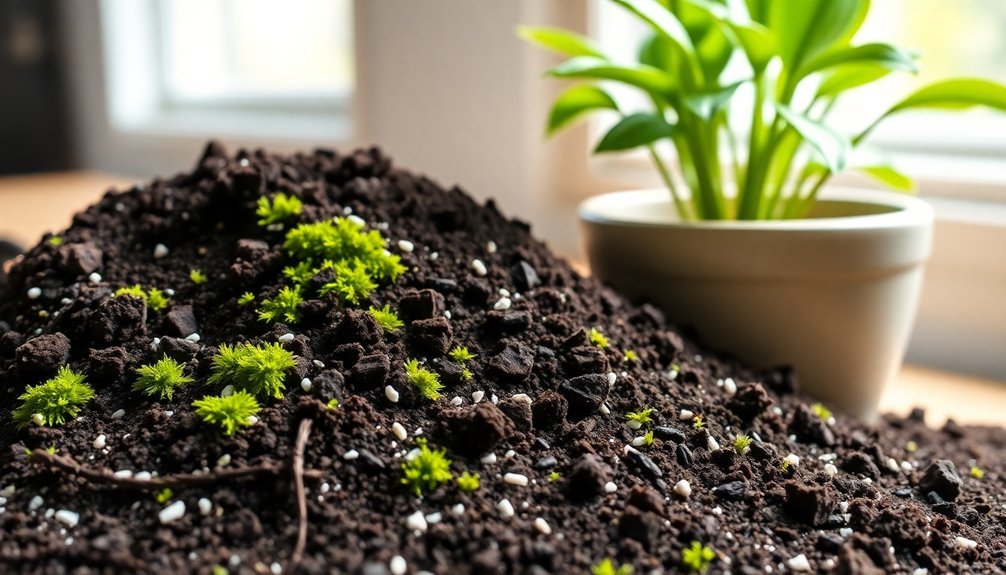
How effectively your air-purifying plants perform depends largely on the drainage capabilities of their soil. When you're creating the perfect growing environment, proper drainage isn't just helpful—it's vital for preventing root rot and maintaining healthy plants.
You'll want to mix five parts compost with two parts perlite to achieve an ideal balance between moisture retention and drainage.
- Select pots with drainage holes to guarantee excess water can escape
- Add perlite to your soil mix for improved aeration and root health
- Monitor your soil's drainage regularly by checking moisture levels
- Follow the 5:2 compost-to-perlite ratio for prime growing conditions
This drainage-focused approach keeps your air-purifying plants, like Peace Lilies and Snake Plants, thriving at peak performance.
Don't skip these fundamental drainage practices—they're your key to maintaining effective natural air cleaners.
Ph Balance and Soil Chemistry
Testing your soil's pH doesn't need to be complicated – you'll find easy-to-use pH testing kits at most garden centers that give quick, reliable results.
When you're working with air-purifying plants, you'll want to maintain a pH between 6.0 and 7.0 for ideal nutrient absorption.
If your soil test reveals high acidity, you can gradually adjust the levels by incorporating lime into your potting mix, or if it's too alkaline, add materials like pine needles or sulfur to lower the pH.
Ph Testing Made Simple
Understanding soil pH doesn't have to be complicated, even though it plays an essential role in your air-purifying plants' health.
You'll find that most air-purifying houseplants thrive in slightly acidic to neutral conditions, with pH levels between 6.0 and 7.0.
Testing your soil's pH is straightforward with these simple steps:
- Purchase an affordable pH test kit or digital meter from your local garden center
- Take soil samples from different areas of your plant's container
- Follow the kit's instructions to get immediate pH readings
- Record your results to track changes over time
If you're creating homemade soil mixes, remember that ingredients like peat moss naturally lower pH.
You can adjust the levels by adding lime to raise pH or sulfur to lower it, ensuring your air-purifying plants get the best nutrient absorption.
Managing Soil Acidity Levels
Now that you can test your soil's pH, maintaining the right acidity levels will maximize your air-purifying plants' performance.
Most houseplants thrive in a pH range between 6.0 and 7.0, where they can efficiently absorb essential nutrients.
You'll want to adjust your soil mix accordingly using key ingredients. If your soil's too acidic, add lime to raise the pH level.
Worm castings are excellent pH neutralizers that won't disrupt your soil's balance while providing valuable nutrients. Be careful with peat moss – while it's beneficial, its acidic nature means you'll need to monitor its impact on your overall soil chemistry.
Regular pH testing lets you make timely adjustments, ensuring your air-purifying plants maintain ideal nutrient uptake.
With proper pH management, you'll see improved foliage growth and enhanced air-cleaning capabilities.
Sustainable Ingredient Alternatives
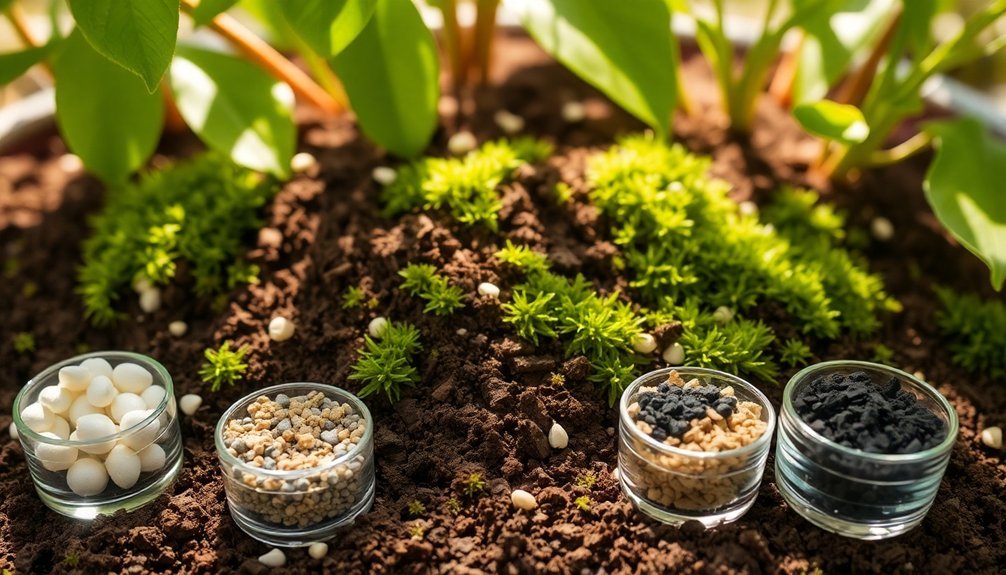
Looking to make your air-purifying plants more eco-friendly? You'll find that sustainable alternatives can revolutionize your soil mix while keeping costs manageable.
Replace traditional peat moss with coconut coir at just 41p per liter, creating an environmentally responsible foundation for your plants.
Coconut coir offers an eco-conscious alternative to peat moss, ensuring sustainable plant growth while keeping costs low at 41p per liter.
- Mix your own compost into the soil to provide natural nutrients, eliminating the need for commercial fertilizers.
- Add perlite in bulk quantities to maintain proper aeration while saving money.
- Incorporate coconut coir as your base material, supporting renewable resource usage.
- Consider volcanic minerals for enhanced nutrition, though they're optional at £7.50 per liter.
Storage and Maintenance Guidelines
When you're working with soil amendments for air-purifying plants, proper storage becomes essential for maintaining ingredient quality and extending shelf life.
Store your compost in a dry, sheltered spot that's protected from rain and wildlife to prevent contamination.
Keep perlite in airtight containers to shield it from moisture and reduce harmful dust exposure. If you've purchased large bags, consider transferring the contents into smaller containers for easier handling and space efficiency.
You'll want to guarantee your storage area has good ventilation to prevent dust accumulation and manage odors effectively.
Don't forget to monitor your stored materials regularly for signs of mold or excess moisture.
Rotate your stock by using older products first to maintain freshness in your soil mix components.
Common Soil Problems and Solutions
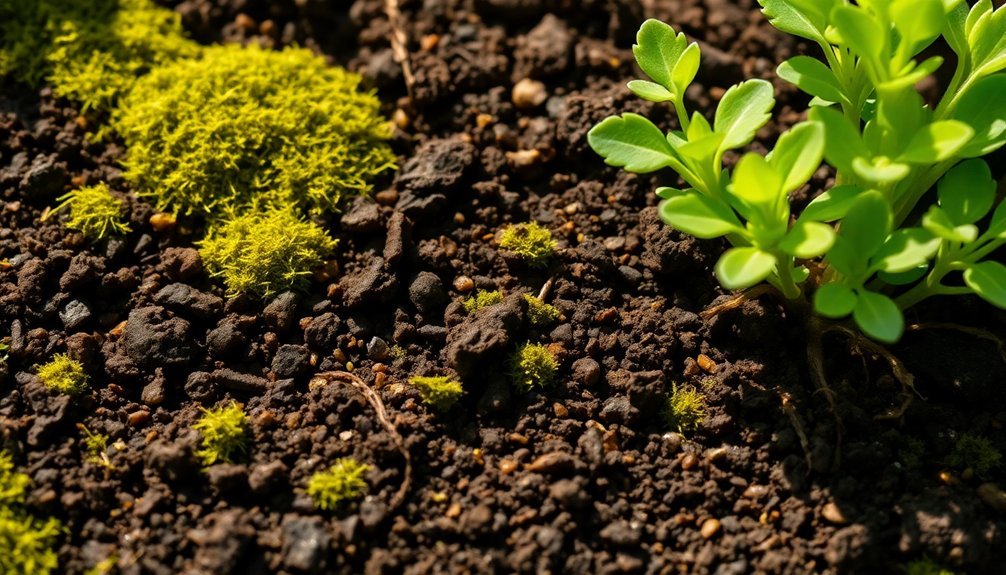
Even with proper storage practices, soil mixes for air-purifying plants can develop issues that affect plant health.
You'll want to watch for signs of poor drainage, which often leads to root rot and mold growth. If you notice these problems, incorporating perlite into your mix will improve aeration and prevent waterlogging.
- If your soil smells unpleasant, it's likely suffering from poor ventilation – adjust your watering schedule and guarantee proper drainage.
- When roots struggle to grow, your mix may be too dense – blend in peat moss to create a lighter texture.
- For plants showing nutrient deficiencies, add worm castings as a natural fertilizer solution.
- If you spot mold, reduce watering frequency and increase air circulation around your plants.
Seasonal Soil Adjustments
To maintain healthy air-purifying plants throughout the year, you'll need to adapt your soil mix for each season's unique challenges.
During wet months, increase the perlite ratio in your mix to improve drainage and prevent root rot.
When winter arrives, add coconut coir to help retain moisture while providing proper aeration during dry indoor heating periods.
In spring and summer, your plants will need extra nutrients during their active growth phase.
Mix in volcanic minerals to supply essential micronutrients, and adjust the pH with lime to optimize nutrient uptake.
Don't forget to boost fertilization during these peak growing seasons.
You'll find that these seasonal adjustments keep your air-purifying plants thriving, regardless of weather changes or indoor climate conditions.
Cost-Effective Bulk Preparation Methods
Making your own soil mix in bulk offers substantial savings, with homemade mixtures costing just 23p per liter compared to premium commercial options at £6 per liter.
You'll maximize value by purchasing ingredients like coconut coir and perlite in larger quantities, requiring an initial investment of around £30.
- Mix your ingredients using a 5:2 ratio of compost to perlite, ensuring ideal drainage and aeration for your air-purifying plants.
- Source bulk perlite at wholesale prices, storing excess in a dry area for future use.
- Create your own compost to further reduce costs while promoting environmental sustainability.
- Calculate your needs for the season ahead to purchase materials efficiently and avoid waste.
This preparation method isn't just cost-effective – it's also environmentally responsible, eliminating the need for peat-based commercial products.
Plant-Specific Soil Modifications
While standard soil recipes provide a good foundation, tailoring your mix to specific air-purifying plants dramatically improves their performance.
Customizing your potting mix for each air-purifying plant species can significantly boost their ability to thrive and filter indoor air.
For your Pothos and Peace Lilies, you'll want to increase the perlite content to create better drainage and prevent root issues. If you're growing Snake Plants, opt for a drier mix by adding extra perlite or switching to coconut coir instead of peat moss.
Your Aralia and Schefflera will thrive with added worm castings, which boost essential nutrients.
For Dieffenbachia, reduce the perlite ratio to maintain higher moisture levels that match their humidity needs.
Don't forget to check your soil's pH – adding lime can help balance alkalinity and improve nutrient uptake for many indoor air-purifying plants.
Frequently Asked Questions
What Is the Best Homemade Soil for Plants?
You'll get the best results by mixing five parts compost (or coconut coir) with two parts perlite. It's cost-effective at 23p per liter and provides excellent drainage while maintaining essential nutrients for your plants.
How to Turn Bad Soil Into Good Soil Naturally?
You'll transform bad soil by mixing in organic compost, worm castings, and perlite. Add lime to balance pH levels, and maintain good drainage. Keep enriching with natural materials to boost fertility over time.
What Ingredients Should Be Avoided in Potting Soil?
You'll want to avoid synthetic fertilizers, chemical pesticides, excessive peat, dense bark, wood chips, and herbicides in your potting soil. Also stay away from mixes lacking proper aeration components like perlite.
How to Prepare Soil Mixture for Plants?
Mix five parts multi-purpose compost with two parts perlite outdoors while wearing a mask. You'll want to layer the ingredients thoroughly, ensuring proper aeration. Don't forget to blend until you achieve consistent texture.
In Summary
You'll find creating the perfect soil mix for air-purifying plants isn't complicated once you understand the basics. Mix your ingredients in proper ratios, guarantee good drainage, and adjust seasonally for peak results. By following these guidelines and customizing soil for specific plants, you'll maintain healthier air-cleaning plants while saving money through bulk preparation. Remember, the right soil foundation leads to better air quality in your space.