
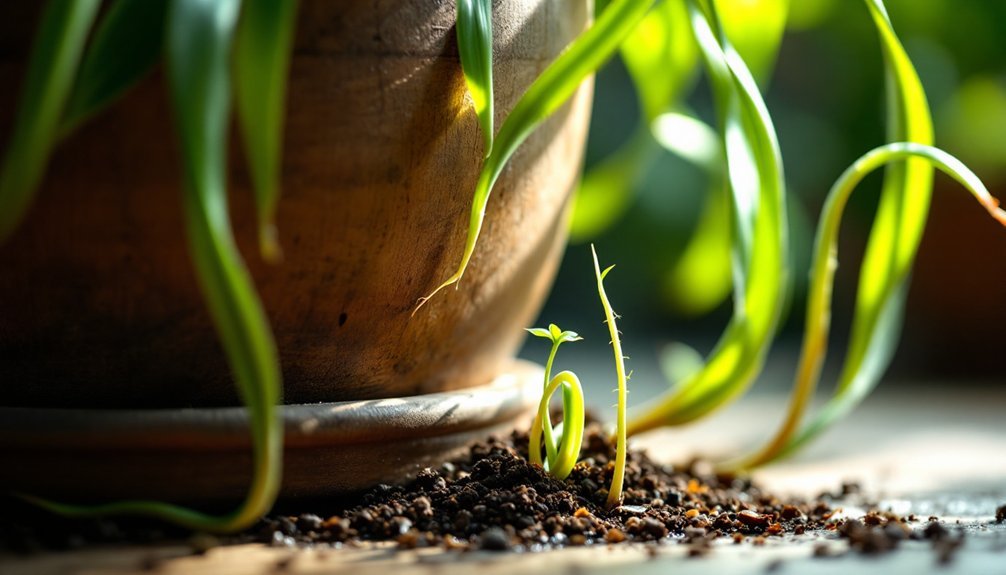
You'll get the best results with spider plant babies by placing them in bright indirect light, maintaining temperatures between 65-75°F, and keeping humidity at 40-60%. Use a well-draining potting mix with perlite, water weekly during growing seasons, and choose small containers with drainage holes. Space babies 2-3 inches apart, mist occasionally, and feed lightly during active growth. Mastering these essential conditions will release your spider plant's full potential.
Perfect Light Requirements for Spider Plant Babies
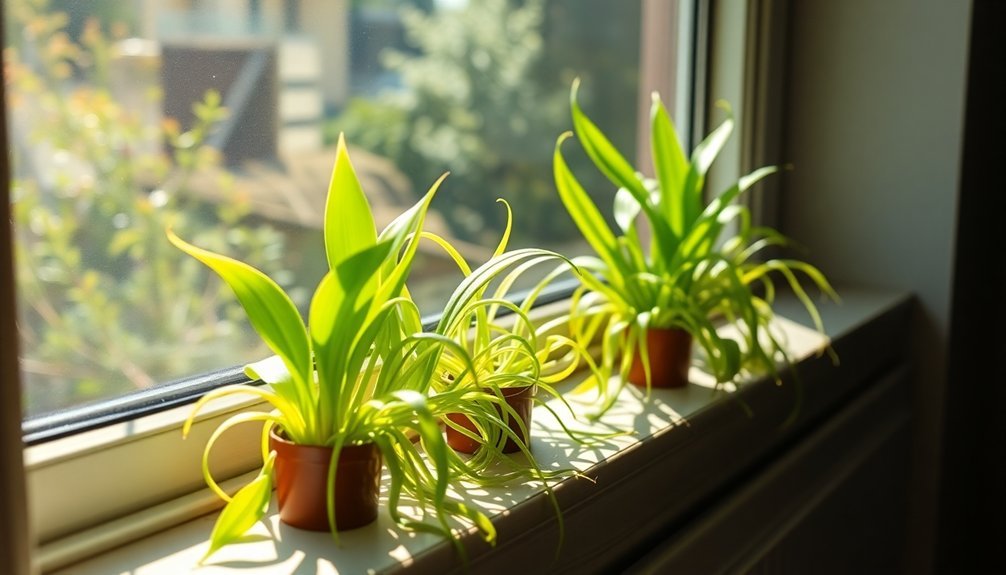
When it comes to growing healthy spider plant babies, proper lighting serves as the foundation for success. You'll want to position your spider plant babies in bright, indirect sunlight to encourage robust growth and abundant spiderette production.
Place your plants near north or east-facing windows where they'll receive consistent light throughout the day without direct sun exposure. This placement protects them from harsh rays that can cause brown-tipped leaves and stress.
While these resilient plants can survive in partial shade, they won't thrive as vigorously as they'd in ideal lighting conditions.
Remember to maintain steady light exposure, as fluctuating conditions can impede your spider plant babies' development.
Optimal Temperature and Humidity Levels
Beyond proper lighting, your spider plant babies need the right balance of temperature and humidity to thrive. Keep your indoor growing space between 65°F and 75°F (18°C to 24°C) to provide the best temperature for healthy growth.
You'll want to maintain humidity levels between 40% and 60% to prevent those pesky brown leaf tips on your plantlets. During winter months, protect your spider plant babies from cold drafts and temperatures below 50°F (10°C).
To create the perfect humid environment, try misting the leaves regularly or setting up a humidity tray nearby. These consistent conditions will encourage stronger root development in your plantlets.
When you maintain both warmth and moisture at these ideal levels, you're setting up your spider plant babies for successful propagation.
Best Soil Mix and Drainage Setup
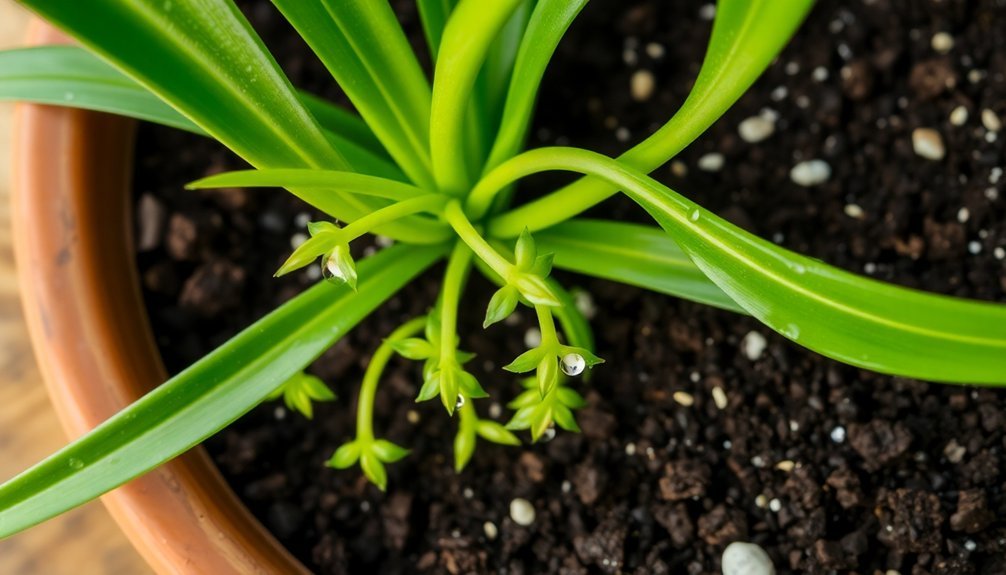
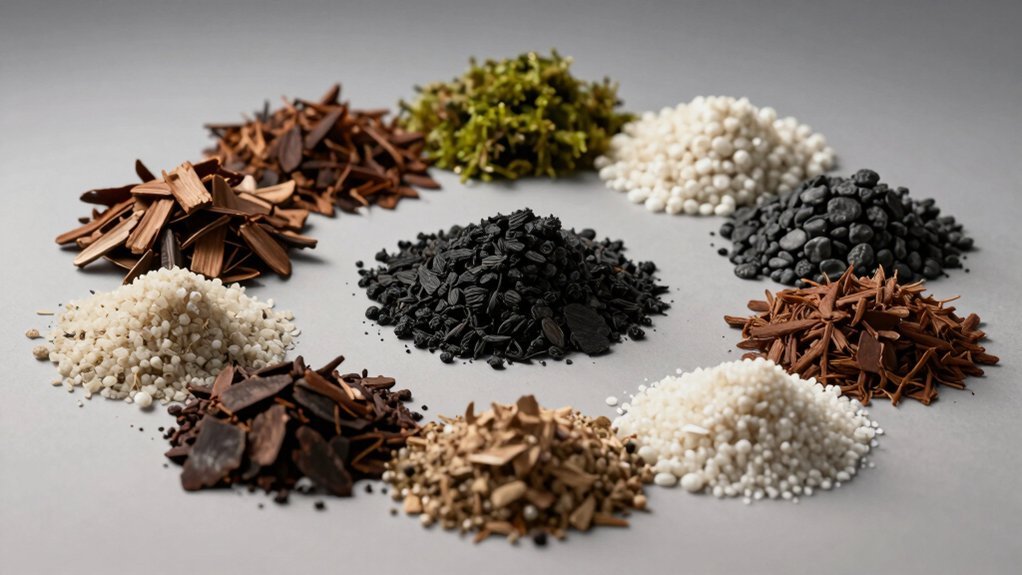
Your spider plant babies will thrive in a lightweight potting mix that combines regular potting soil with succulent mix, along with perlite or sand for ideal drainage.
Set up your pots with proper drainage holes and consider adding a layer of gravel at the bottom to prevent soil compaction and water logging.
You'll want to maintain soil that's slightly moist but never soggy, which this mix and drainage setup helps achieve perfectly.
Perfect Potting Mix Components
Creating the perfect potting mix for spider plant babies requires three essential components: well-draining organic soil, aeration additives, and proper drainage setup.
You'll want to start with a high-quality organic potting mix that retains just enough moisture while allowing roots to grow freely.
Mix in perlite or sand at a ratio of about 1:3 with your potting mix – this creates air pockets that prevent soil compaction and promote healthy root development.
When selecting containers, make sure they've adequate drainage holes and are just slightly larger than the current grow pot. This size allows for growth while preventing excess soil that could retain too much moisture.
The lightweight, well-draining mixture you create will give your spider plant babies the perfect foundation for establishing strong, healthy root systems.
Drainage Layer Setup Tips
To prevent waterlogged roots, setting up proper drainage layers is vital for spider plant babies. Start by placing a layer of stones or gravel at the bottom of your pot, creating a foundation that allows excess water to flow freely through the drainage holes.
Above the drainage layer, you'll want to add your custom soil mix. Combine standard potting soil with succulent and cactus mix, incorporating perlite or sand to enhance drainage capabilities. This lightweight blend guarantees your spider plant babies get the nutrients they need while preventing water from pooling around their delicate roots.
Don't forget to check that your pot has adequate drainage holes before adding any materials.
Once planted, you can monitor soil moisture by inserting your finger about an inch deep – if it feels dry, it's time to water.
Essential Watering Schedule and Techniques
A well-planned watering schedule is essential for spider plant baby success. You'll need to water your spider plant babies weekly during spring and summer, then reduce to every three weeks in winter when growth slows.
Don't guess about soil moisture – use the finger test by checking if the top inch feels dry before watering.
Your pots must have proper drainage holes to prevent waterlogging and root rot. Stick to a consistent watering schedule, as irregular watering can stress your plants and slow their development.
If you're in a dry environment, mist the leaves occasionally to boost humidity levels. This extra moisture helps create ideal growing conditions for your plantlets.
Proper Pot Size and Material Selection
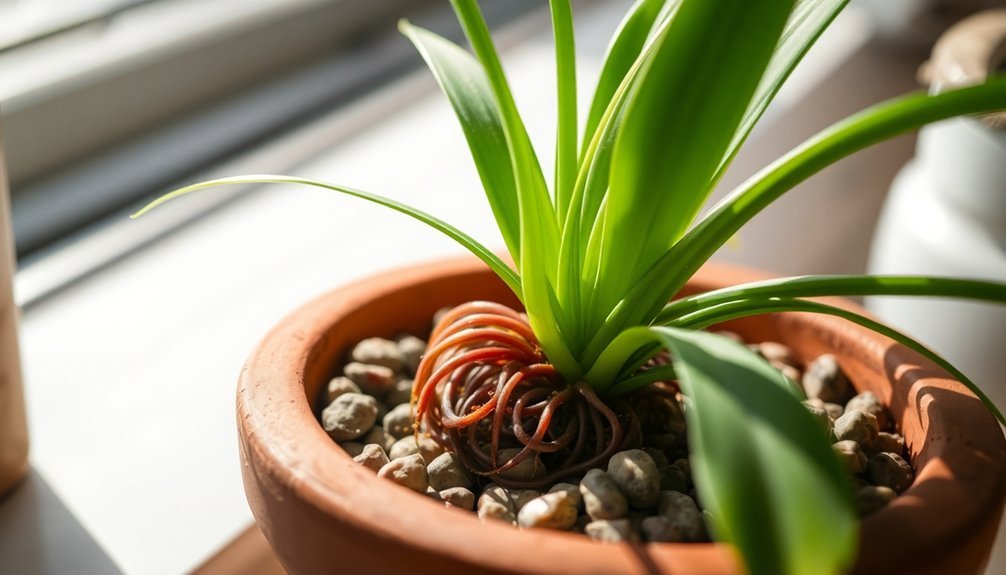
When selecting pots for spider plant babies, size and material play vital roles in their development. Choose a container that's slightly larger than the grow pot to give roots room to expand while maintaining a snug fit that encourages blooming and baby production.
For proper pot size, start with a four-inch or smaller container and use a lightweight potting mix that guarantees good root development.
You'll want to select pots made from lightweight materials like plastic or terracotta, making them easier to handle during maintenance and repotting.
Don't forget to check for drainage holes in your chosen container, as they're essential for preventing water accumulation and root rot.
Ideal Placement and Air Circulation
Since spider plants flourish in bright, indirect light, finding the perfect spot for them can make or break their success. The ideal placement for your spider plant should be near a window with filtered light, but not directly in the sun's path where its leaves could get scorched.
Good air circulation is an essential aspect of spider plant care, so position your plant where air can flow freely around it. This helps prevent fungal problems and enhances photosynthesis.
You'll want to place it away from heating vents or air conditioners that could create drafts or temperature fluctuations.
Don't forget to rotate your plant every few weeks to guarantee all sides receive equal light exposure. This practice promotes balanced growth and encourages the development of those cherished baby plants, especially when the plant is slightly root-bound.
Root Development Indicators and Support
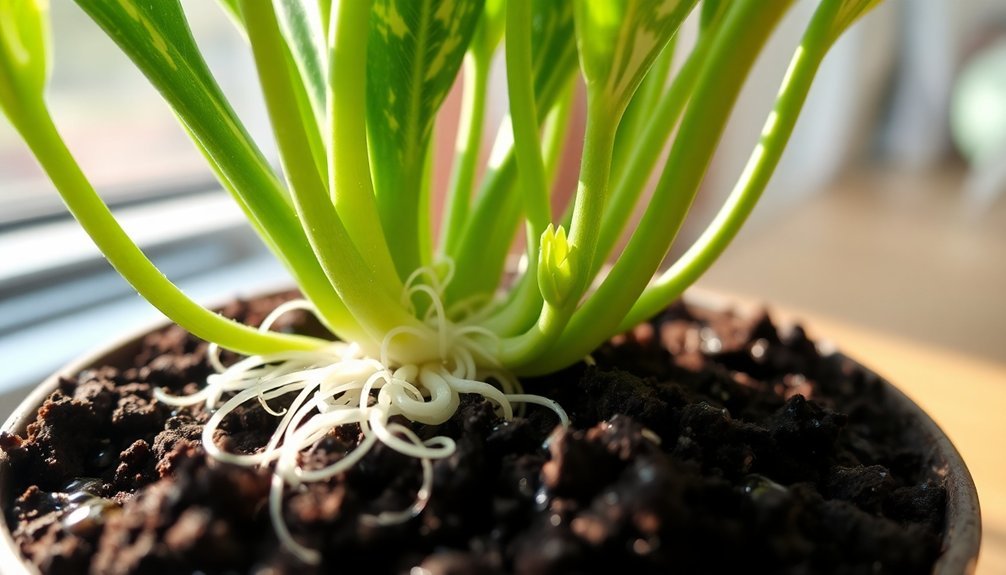
Understanding root development signs helps you track your spider plant babies' progress toward independence.
When you're ready to propagate spider plant babies, look for small, brownish knobs forming on the underside of their leaves – these are the first signs of emerging roots.
You'll know your baby spider plants are developing well when they resist a gentle tug, indicating established roots.
Keep the soil slightly moist during this vital phase, providing enough water without oversaturating. When planting, make sure you firm the soil around the base to give developing roots the stability they need to grow strong and absorb nutrients.
Watch for healthy new growth, including fresh leaves or additional spiderettes, as these are reliable indicators that your root development efforts are succeeding.
Nutrient Balance and Feeding Guidelines
Proper nutrition plays an essential role in your spider plant babies' success.
You'll want to maintain a careful nutrient balance by applying a diluted liquid fertilizer monthly during the growing season. Cut the recommended strength in half to protect your plants' roots and leaves from fertilizer burn.
Create an ideal potting mix by incorporating perlite or sand to guarantee good drainage and efficient nutrient delivery.
You can enhance your soil's health by adding organic materials like compost or worm castings, which provide slow-release nutrients to your growing plants.
Remember to adjust your feeding guidelines seasonally.
During winter, when growth naturally slows, reduce or stop fertilizing altogether. This approach mirrors your plant's natural growth cycle and prevents unnecessary nutrient buildup in the soil.
Spacing and Companion Plant Considerations
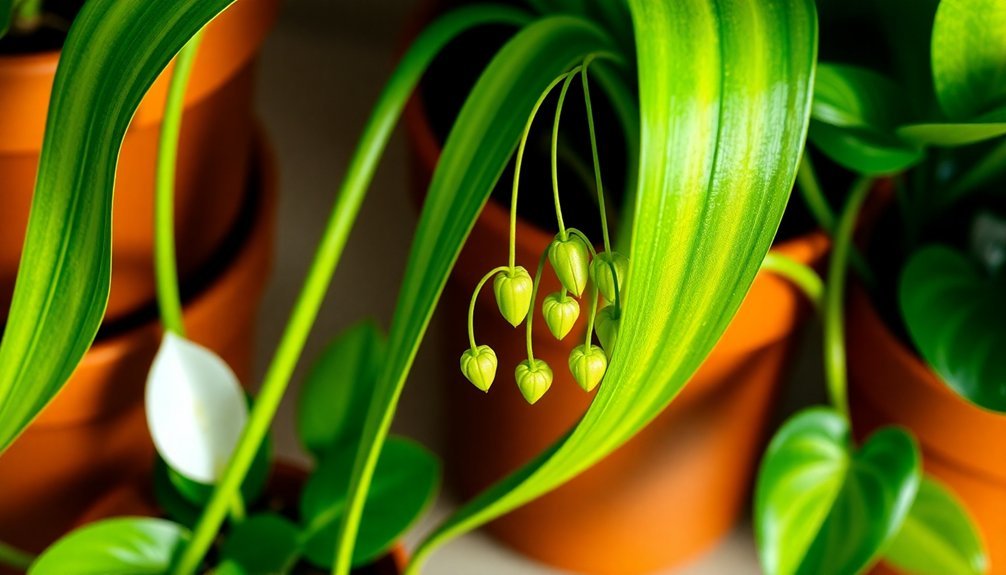
Place your spider plant babies 2-3 inches apart to give them breathing room and prevent future crowding issues.
You'll find that non-competing houseplants make excellent companions, sharing similar light and moisture needs while creating an appealing display.
Consider adding small stones or mulch between your plant groupings to improve drainage and maintain consistent moisture levels for both spider plants and their chosen companions.
Optimal Plant Grouping Distances
To guarantee your spider plant babies thrive in their new homes, maintaining appropriate spacing between plants is essential for their long-term success. When planning your plant grouping, keep spider plant babies 4-6 inches apart to promote healthy air circulation and prevent overcrowding.
Choose companion plants that share similar care requirements for a successful arrangement:
- Select plants with matching light and water needs
- Maintain 4-6 inch spacing between all plants
- Monitor grouped plants regularly for signs of stress or competition
Your spider plant babies will flourish when you pair them thoughtfully with other plants while avoiding nutrient competition.
Choose decorative containers that complement your space and provide ample room for root development. Remember to check your grouped plants frequently for any signs of pest problems or disease, as close proximity can increase these risks.
Friendly Neighboring Plant Species
When selecting companion plants for your spider plants, choosing species with similar care requirements creates an ideal growing environment for everyone.
You'll find that pothos and peace lilies make excellent friendly neighboring plant species, as they share comparable light and moisture needs.
Consider grouping your spider plants with humidity-loving plants like ferns to establish a beneficial microclimate that supports robust growth.
You'll want to keep at least 6-12 inches between plants to prevent resource competition and guarantee adequate airflow.
While companion plants can enhance your spider plant's environment, it's important to avoid aggressive growers such as philodendrons and monsteras, which can overshadow your spider plants and compete for nutrients.
Keep an eye on your plant groupings and watch for any signs of overcrowding or stress.
Seasonal Growth Cycle Management
Understanding your spider plant's seasonal rhythms is essential for maximizing baby production throughout the year. As an indoor plant, your spider plant needs specific seasonal adjustments to thrive.
During spring and summer, you'll notice increased growth and baby production when temperatures warm up and daylight extends.
Key seasonal care tips include:
- Maintain consistent water frequency during growing months, offering weekly drinks
- Reduce watering in autumn and winter to prevent root issues
- Boost humidity through misting in warmer seasons
Keep your plant slightly root-bound to encourage blooming and baby development.
Your spider plant will naturally slow down during cooler months, so don't worry if baby production decreases – it's part of their natural cycle. When spring returns, you'll see renewed vigor and abundant growth resume.
Frequently Asked Questions
How Can I Encourage My Spider Plant to Have Babies?
To get spider plant babies, keep your plant slightly root-bound in a snug pot, provide bright indirect light, maintain warm temps, water consistently, and use light fertilizer during growing season.
How Often Should I Water My Spider Plant Baby?
You'll need to water your spider plant baby weekly during spring and summer, then reduce to once every three weeks in fall and winter. Always check if the top inch of soil is dry first.
Where Is the Best Place to Put a Spider Plant?
Place your spider plant in bright, indirect light on a desk, bookshelf, or hanging planter. You'll want to avoid direct sunlight that can burn leaves, and make sure there's space for it to cascade.
What Conditions Do Spider Plants Like to Grow In?
You'll want to give your spider plant bright indirect light, temperatures between 65-75°F, well-draining soil, and weekly watering. They're happiest when slightly pot-bound and prefer consistent but not soggy moisture levels.
In Summary
You'll find spider plant babies are incredibly rewarding to grow when you've got these key conditions down. Keep monitoring their progress and adjust care as needed – they'll tell you what they need through their growth patterns. Remember, it's perfectly normal for some babies not to make it, so don't get discouraged. With patience and these ideal growing conditions, you'll soon have thriving spider plant babies everywhere.



Leave a Reply