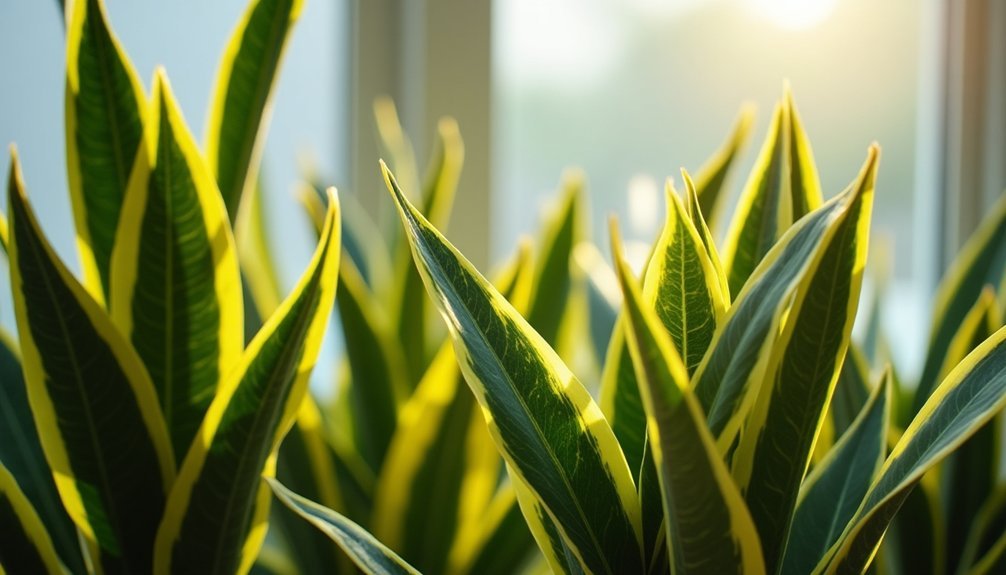
Snake plants are powerful natural air purifiers backed by NASA research. You'll find they remove common toxins like formaldehyde, benzene, and xylene from your indoor air while producing oxygen even at night. Unlike most houseplants, they tackle multiple pollutants simultaneously and require minimal maintenance to thrive. Place them in bedrooms or living areas for maximum impact, and you'll discover why these resilient plants are considered top choices for healthier home environments.
Understanding Snake Plant's Air-Filtering Power

When it comes to natural air purification, snake plants stand out as remarkable powerhouses. You'll be amazed at how these efficient plants purify your indoor air quality by eliminating harmful toxins like formaldehyde, benzene, and xylene.
What makes them truly exceptional is their ability to tackle multiple pollutants simultaneously, setting them apart from other houseplants that typically target only one or two toxins.
You'll appreciate that snake plants continue working even while you sleep, converting carbon dioxide into oxygen throughout the night.
In just 48 hours, they can greatly improve air quality in your living spaces. The best part? They're incredibly low maintenance, making them perfect if you're looking for an effortless way to create a healthier home environment while adding a touch of natural beauty to your space.
Scientific Evidence Behind Air Purification
Scientific research consistently validates the remarkable air-purifying abilities of snake plants, most especially through NASA's groundbreaking clean air study.
The study confirms that Sansevieria trifasciata ranks among nature's most effective air purifiers, capable of removing common toxins like formaldehyde, benzene, and trichloroethylene from your indoor environment.
Snake plants stand as elite natural air purifiers, effectively eliminating harmful indoor toxins including formaldehyde, benzene, and trichloroethylene from your living space.
You'll notice improved air quality within just 48 hours of placing these powerful plants in your home.
What makes snake plants particularly unique is their ability to tackle four different airborne allergens simultaneously, while many other plants can only handle one or two.
They'll also continue working through the night, releasing fresh oxygen through their specialized CAM process.
For maximum health benefits, you can strategically place multiple snake plants throughout your space to enhance their collective air-purifying impact.
Top Toxins Removed by Snake Plants

Building on these impressive air-purifying capabilities, snake plants specifically target four major indoor toxins that pose significant health risks in modern homes.
As natural air purifiers, they effectively remove formaldehyde, which you'll commonly find in building materials and household cleaning products. You'll also benefit from their ability to eliminate benzene, xylene, and toluene from your living space.
These efficient indoor air pollutants fighters work continuously to improve air quality by breaking down harmful toxins that off-gas from everyday items like furniture, carpets, and personal care products.
You'll notice a reduction in airborne allergens as your snake plants work to detoxify your environment. By placing these versatile plants throughout your home, you're creating a healthier breathing environment that supports your respiratory well-being.
Optimal Plant Placement for Air Quality
Since snake plants excel at purifying air in any indoor environment, strategic placement throughout your home maximizes their air-filtering benefits.
You'll get the most impact by positioning these versatile plants in spaces where you spend significant time, like bedrooms and living areas.
Place your snake plants in bedrooms to benefit from their nighttime oxygen production, which can enhance your sleep quality.
Their impressive tolerance for low light conditions means you can put them in dimly lit corners while still maintaining effective air purification.
In bathrooms, they'll thrive in the humid environment while filtering airborne toxins.
For ideal air quality results, don't limit yourself to just one plant – distribute multiple snake plants across your indoor spaces.
The more plants you have, the better your home's overall air purification will be.
Nighttime Oxygen Production Benefits

While most plants reverse their photosynthesis process at night, snake plants continue to purify your air by releasing oxygen during dark hours.
You'll benefit from improved air quality as these remarkable plants absorb carbon dioxide and create a more breathable environment while you rest.
Measuring Air Quality Improvements
You can track your snake plant's air-purifying performance using simple air quality monitors that measure common indoor pollutants like formaldehyde and benzene.
Your plant's effectiveness will show measurable improvements within 48 hours, with studies confirming up to a 50% reduction in targeted toxins during this timeframe.
To maximize these benefits, you'll want to position your snake plants strategically – placing them every 100 square feet and focusing on areas with poor ventilation or known pollutant sources.
Testing Methods For Purification
To accurately measure a snake plant's air-purifying abilities, researchers employ various scientific testing methods in controlled environments.
You'll find that air sampling techniques are used to measure specific pollutants like formaldehyde and benzene, while specialized sensors track volatile organic compounds (VOCs) before and after introducing these natural air filters.
The NASA Clean Air Study demonstrated how testing methods for purification involve placing plants in controlled chambers to monitor their effectiveness against toxic airborne substances over 24 hours.
By comparing pre- and post-introduction measurements, you can see how indoor air pollutants decrease by up to 87% within 48 hours.
These air quality improvements are documented through repeated measurements using standardized air quality indices, providing concrete evidence of snake plants' effectiveness at cleaning your indoor air.
Toxin Reduction Over Time
Recent studies tracking snake plants' air-purifying performance reveal impressive toxin reduction rates over time.
You'll notice significant improvements in your indoor air quality within just 48 hours of introducing these efficient natural filters into your space.
These low-maintenance plants effectively remove four common indoor air pollutants: benzene, formaldehyde, trichloroethylene, and xylene.
As snake plants continuously work to reduce airborne allergens, you'll experience better respiratory health and improved sleep quality, thanks to their unique ability to release oxygen at night.
They're particularly effective in bedrooms, where you spend extended periods.
Over the long term, you'll benefit from both cleaner air and potential energy savings, as these natural air purifiers can reduce your reliance on mechanical filtration systems while consistently removing toxins from the air.
Placement For Best Results
Three key factors determine the ideal placement of snake plants for maximum air purification: lighting, pollutant concentration, and room function.
Position your snake plants a few feet from east-or-west-facing windows to receive 5-6 hours of indirect sunlight. You'll want to focus on areas with high levels of air pollutants to improve indoor air quality effectively.
| Room Type | Best Placement | Benefits |
|---|---|---|
| Bedroom | Near bed, 3-4 feet from window | Enhanced nighttime air quality |
| Living Room | Near furniture, away from vents | Maximum foot traffic filtration |
| Office/Bathroom | Close to cleaning supplies | Targeted toxin removal |
Consider placing multiple plants throughout your home, prioritizing spaces where you spend the most time. You'll see the best results within 48 hours as your snake plants begin filtering harmful toxins like formaldehyde and benzene.
Best Snake Plant Varieties for Air Filtering
You'll find the NASA-tested Golden Snake Plant and Laurentii Sansevieria leading the pack for their exceptional ability to filter formaldehyde, benzene, and other common indoor toxins.
For maximum air-cleaning benefits, position these powerhouse varieties near potential pollution sources like printers, new furniture, or recently painted walls.
The compact Dwarf Snake Plant proves equally effective in smaller spaces, targeting specific pollutants like xylene and toluene while fitting perfectly on desks and windowsills.
Effective NASA-Tested Varieties
Several NASA-tested Snake Plant varieties stand out as exceptional natural air purifiers for your home. The Golden Snake Plant and Dwarf Snake Plant effectively remove harmful toxins like formaldehyde and benzene from your indoor air.
You'll find the Laurentii variety particularly impressive, as it can remarkably improve indoor air quality within just 48 hours, thanks to its distinctive green and yellow-margined leaves.
For smaller spaces, consider the Birds Nest Snake Plant (Hahnii), which combines powerful air filtration with compact aesthetic appeal. The NASA Clean Air Study confirms that these plants convert CO2 to oxygen at night, making them perfect for your bedroom.
You'll also benefit from unique varieties like the Twisted Sister and White Snake Plant, each contributing its own air-purifying capabilities to create healthier indoor environments.
Indoor Placement For Results
Strategic placement of Snake Plant varieties can maximize their air-purifying potential in your home.
You'll get the best air purification results by positioning these natural filters a few feet from east or west-facing windows, where they'll receive 5-6 hours of indirect sunlight.
For larger spaces, the Golden Snake Plant is your ideal choice, effectively removing toxins like formaldehyde and benzene.
If you're working with limited space, opt for the Dwarf Snake Plant, which offers the same benefits in a compact form.
Place the Green Snake Plant in your bedroom to benefit from its nighttime oxygen production.
The Birds Nest variety works best in living areas, where it helps reduce airborne allergens.
Remember that proper indoor placement of snake plants guarantees they'll thrive while keeping your air clean.
Maintaining Peak Air-Purifying Performance

To keep your snake plant operating as a natural air filter, maintaining its peak performance requires attention to a few key care elements. Your snake plants need 5-6 hours of indirect sunlight daily to guarantee ideal growth and maximize their air-purifying abilities.
To maintain your plant's effectiveness as an air filter, follow these essential care guidelines:
- Water every 2-6 weeks, waiting until soil is completely dry
- Watch for yellowing leaves that signal overwatering or cold stress
- Clean leaves regularly with a damp cloth to remove dust
- Place near windows or doors where air pollutants are common
These practices will help your snake plant filter toxins like formaldehyde and benzene more effectively.
Remember that a healthy plant is a better air purifier, so maintaining proper care directly impacts its ability to clean your indoor air.
Combining Snake Plants With Other Air Filters
While snake plants effectively remove certain toxins from indoor air, combining them with mechanical air filtration systems creates a more extensive air-cleaning strategy.
You'll get better results by pairing your snake plants with HEPA filters, which trap allergens like dust and dander that the plants might miss.
For ideal indoor air quality, consider using both snake plants and activated carbon filters.
The plants excel at absorbing harmful toxins like formaldehyde and benzene, while the filters capture larger particles and eliminate odors.
Though snake plants do purify the air, they work slowly, so mechanical filters help speed up the process.
You'll also benefit from the aesthetic appeal of this combination – your space will look more inviting while maintaining cleaner air through this thorough approach to air filtration.
Health Benefits of Cleaner Indoor Air
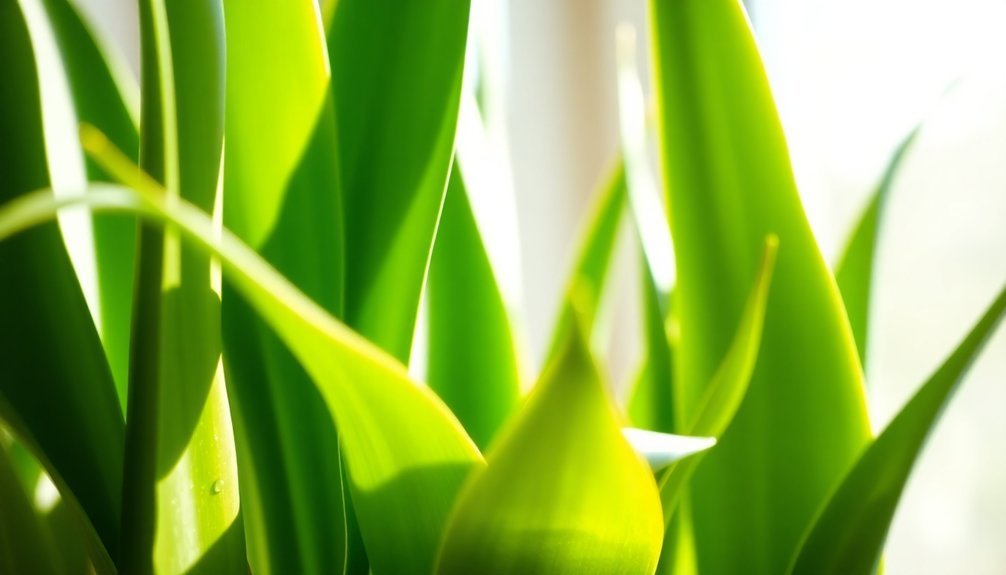
Since indoor air quality directly impacts your daily well-being, maintaining cleaner air through snake plants offers numerous health advantages. By removing toxins like formaldehyde and benzene from your home, these natural air filters create a healthier indoor environment that'll benefit both your physical and mental health.
The benefits of indoor plants, particularly snake plants, include:
- Better sleep quality due to increased oxygen levels at night
- Reduced stress levels and improved mental well-being
- Fewer allergy symptoms through natural allergen reduction
- Lower utility costs from more efficient air circulation
Clean air doesn't just improve your breathing – it creates a ripple effect of positive changes throughout your home.
With improved air quality, you'll notice enhanced comfort, better respiratory health, and a more pleasant living environment that supports your overall wellness.
Creating an Air-Purifying Plant Network
Although a single snake plant can effectively filter your indoor air, establishing a network of strategically placed plants maximizes their air-purifying potential.
You'll achieve the best results by combining snake plants with other air-purifying varieties like spider plants and peace lilies throughout your home.
Position your snake plants in bedrooms and living areas where you spend the most time. They'll work overtime to remove harmful toxins like formaldehyde and benzene while releasing oxygen at night.
To maintain ideal indoor air quality, make sure your plant network stays healthy with minimal care – just water every 2-6 weeks.
You'll notice the difference as your interconnected system of plants collectively filters pollutants, creating a healthier environment that can improve your sleep and reduce respiratory issues.
Frequently Asked Questions
Is Snake Plant a Natural Air Purifier?
Yes, you'll benefit from snake plants' natural air-purifying abilities. They'll remove toxins like formaldehyde and benzene from your home, plus they're unique because they'll release oxygen at night while you sleep.
Which House Plant Purifies the Air the Most?
You'll find snake plants are among the most powerful air purifiers. They can remove four toxins at once and work 24/7, outperforming most other houseplants. NASA's research confirms they're top performers for clean air.
Is It Good to Sleep Next to a Snake Plant?
Yes, it's beneficial to sleep next to a snake plant. You'll breathe cleaner air since they release oxygen at night and remove toxins. They're also calming to have nearby while you rest.
How Many Snake Plants Does It Take to Purify a Room?
You'll need at least two Snake Plants per 100 square feet for effective air purification. For best results, add more plants based on your room's size and consider mixing them with other air-purifying houseplants.
In Summary
You'll breathe easier knowing your snake plants are working hard to purify your indoor air. Place them strategically throughout your home, keep them healthy, and combine them with other air-purifying plants for maximum effect. By maintaining these natural air filters, you're creating a healthier living space that removes toxins and produces oxygen while you sleep. Your lungs – and your well-being – will thank you.

Leave a Reply