
Your pothos will thrive best in temperatures between 65°F and 85°F (18°C to 29°C), mimicking their natural tropical habitat. Keep them away from cold drafts and direct heat sources, as temperatures below 50°F or above 90°F can stress the plant. You'll notice yellow leaves or drooping stems if temperatures aren't ideal. Watch humidity levels too, aiming for 40-60%. Understanding these temperature basics opens the door to mastering your pothos' complete care needs.
Understanding Your Pothos' Natural Temperature Habitat
When you understand your Pothos' native environment, you'll find it easier to create perfect growing conditions in your home.
These popular houseplants naturally thrive in the tropical regions of Southeast Asia, where consistent temperatures range between 65°F and 85°F (18°C to 29°C).
Your Pothos will flourish when you maintain these temperature conditions, along with humidity levels between 40-60%.
Since these plants evolved in stable tropical climates, they're sensitive to temperature-related stress when exposed to extremes.
You'll want to protect your plant from temperatures below 50°F (10°C) or above 90°F (32°C), as these conditions can cause leaf curling, drooping, or yellowing.
Optimal Temperature Ranges for Daily Growth
Your Pothos will flourish in daily temperatures between 65°F to 85°F (18°C to 29°C), creating ideal conditions for steady growth and vibrant foliage.
You'll notice seasonal temperature variations can affect your plant's growth rate, with more active growth during warmer months and slightly slower development during cooler periods.
To maintain your Pothos' health year-round, you should aim to keep temperatures above 60°F (15°C) during winter months and below 85°F (29°C) during summer, adjusting your home's climate control accordingly.
Daily Growth Sweet Spot
To keep your pothos thriving, maintaining temperatures between 65°F and 85°F (18°C to 29°C) creates the perfect daily growth environment. Your pothos plants will reward you with lush foliage and vibrant colors when you maintain consistent temperatures within this ideal range.
You'll want to monitor your room's temperature regularly, especially if your plants are near windows, air vents, or heating units. These areas can experience unexpected temperature swings that stress your plants.
When temperatures drop below 60°F or exceed 90°F, you'll notice your pothos's growth rate declining considerably. Watch for warning signs like yellowing leaves or drooping foliage, which often indicate temperature-related stress.
Temperature Impact By Season
Seasonal temperature shifts can greatly impact your pothos plant's growth patterns throughout the year. You'll want to maintain consistent temperatures between 65°F and 85°F for ideal growth, with special attention during extreme seasons.
In summer, keep your pothos below 90°F to prevent stress and leaf curling.
When winter arrives and growth slows, don't let temperatures drop below 50°F, as cold damage can cause yellowing and drooping leaves. You'll need to adjust your care routine accordingly, particularly by reducing watering during cooler months.
To keep your pothos thriving year-round, avoid sudden temperature changes that could shock the plant.
Warning Signs of Temperature-Related Stress
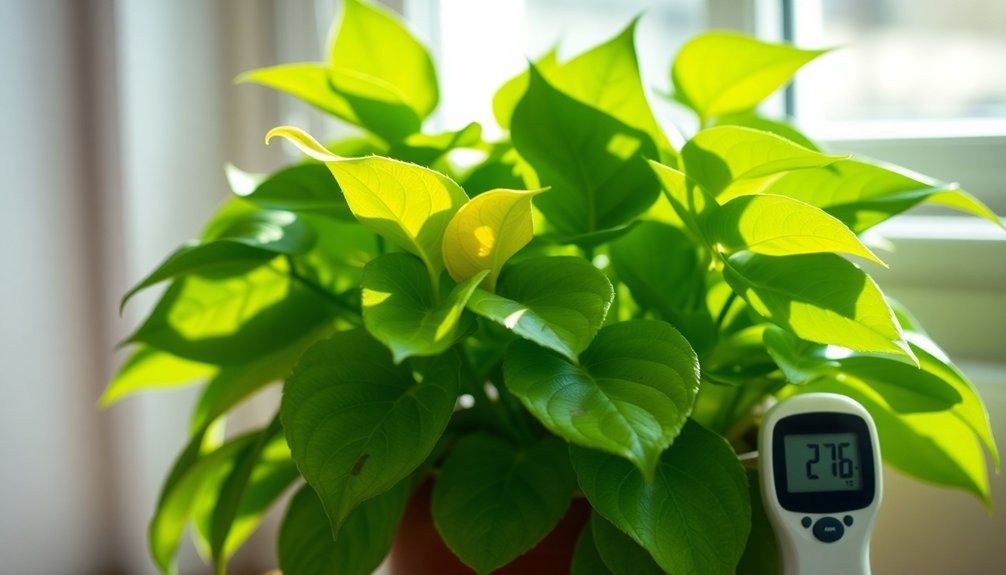
While Pothos plants are generally hardy, they display clear warning signs when temperatures aren't within their comfort zone.
Watch for yellow leaves, which often signal your plant is struggling with temperature extremes. If you notice brown tips on the foliage, your Pothos might be too close to a heat source or exposed to cold drafts.
During periods of heat stress, you'll observe leaf curling as your plant tries to conserve water.
Curling leaves on your Pothos aren't just for show – they're a survival strategy to minimize water loss during hot weather.
When temperatures drop too low, particularly below 50°F (10°C), drooping stems are a telltale indicator that your plant is uncomfortably cold.
By recognizing these temperature-related stress signals early, you can quickly adjust your plant's environment and prevent lasting damage.
Pay attention to these visual cues, as they're your Pothos's way of communicating its temperature needs.
Seasonal Temperature Adjustments for Indoor Pothos
Although pothos plants are adaptable to indoor environments, they benefit from seasonal care adjustments that mirror their natural growth patterns. To keep your pothos thriving, maintain indoor temperatures between 65°F and 85°F throughout the year for peak growth.
As temperature changes occur between seasons, adjust your care routine accordingly. During summer months, increase watering frequency to compensate for higher evaporation rates. In winter, reduce watering as your plant's growth naturally slows.
You'll also need to monitor humidity levels more closely during dry winter months, aiming for 40-60% humidity through misting or using a humidifier. When spring arrives, support your plant's renewed growth by implementing a regular fertilization schedule every 1-3 months.
These seasonal adjustments will help guarantee your pothos remains healthy year-round.
Creating Temperature-Stable Growing Zones
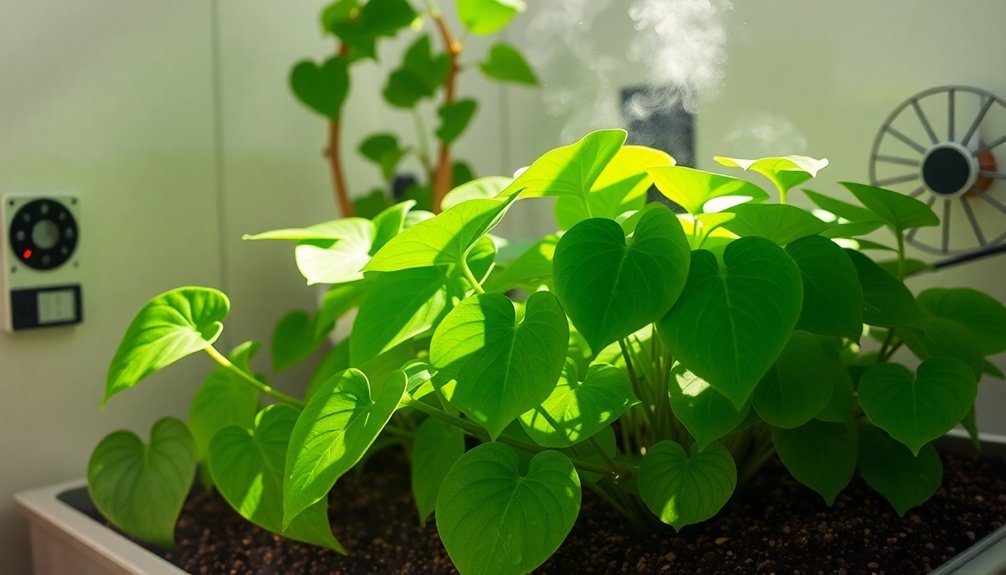
To create an ideal growing environment for your pothos, you'll need to identify stable temperature zones within your home that consistently stay between 65°F and 85°F.
Keep track of different areas using a thermometer, paying special attention to spots away from drafty windows and heating vents that could cause sudden temperature changes.
You can further protect your pothos by using curtains or blinds to buffer cold drafts and by grouping plants together to create micro-climates that maintain more consistent temperatures.
Shield From Temperature Swings
Since Pothos plants flourish in consistent temperatures between 65°F and 85°F, creating temperature-stable growing zones is vital for their health.
You'll need to shield your Pothos from temperature fluctuations to guarantee they maintain the best growth conditions.
Here are four effective ways to protect your Pothos from harmful temperature swings:
- Install thermal window films or heavy curtains to insulate against cold drafts and maintain stable temperatures.
- Position your plants away from air conditioning vents and drafty windows where temperatures might drop below 50°F.
- Use shade cloths during hot weather to prevent overheating and maintain the ideal temperature range.
- Deploy portable heaters or fans strategically to regulate temperatures in challenging spots.
These measures will help create a consistent environment where your Pothos can thrive without stress from temperature fluctuations.
Monitor Room Climate Zones
Creating stable climate zones for your Pothos requires careful monitoring of room temperatures throughout your living space.
You'll want to monitor room climates consistently, ensuring they stay within the ideal temperature range of 65°F to 85°F for peak growth.
To establish reliable growing areas, you'll need to evaluate your home's microclimates by considering multiple factors.
Start by checking light exposure patterns and identifying areas free from temperature fluctuations.
Install a room thermometer to track indoor temperatures, and keep your Pothos away from drafty windows and HVAC vents.
Don't forget to maintain humidity levels between 40-60%, as this complements the temperature requirements.
Managing Heat Sources and Cold Drafts
While Pothos plants are known for their adaptability, proper management of heat sources and cold drafts plays an essential role in their health.
You'll need to carefully monitor temperature changes and create stable environments to guarantee your plant thrives in the ideal range of 65°F to 85°F.
Here's what you need to do to protect your Pothos from temperature extremes:
- Keep your plant away from direct heat sources like radiators and intense sunlight.
- Install insulating curtains to block both cold drafts in winter and excessive heat in summer.
- Create barriers between your Pothos and air conditioning or heating vents.
- Use a thermometer to regularly check the temperature around your plant.
Temperature Impact on Watering Schedules
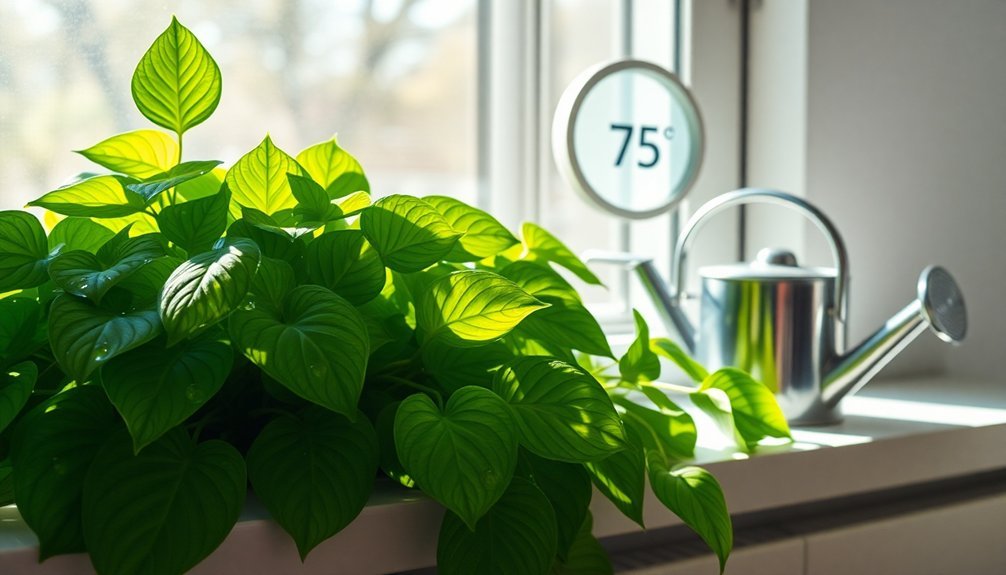
Temperature plays an essential role in determining how often you'll need to water your Pothos plant. During warmer conditions, you'll notice the soil dries out more quickly, requiring you to water more frequently than the typical 1-2 week schedule.
Higher temperatures increase Pothos water needs, often requiring more frequent watering than the standard 1-2 week interval.
When temperatures rise, monitor your plant closely as the increased evaporation rate can lead to curling leaves, a telltale sign of underwatering.
In contrast, when temperatures drop below 60°F, your Pothos's growth slows down, reducing its water needs. You'll want to adjust your watering routine accordingly, as cooler conditions mean soil moisture persists longer.
Be particularly cautious during these periods, as excessive moisture can lead to overwatering issues. Always check the soil's moisture level before watering, regardless of temperature, to maintain ideal growing conditions.
Measuring and Monitoring Growing Conditions
To successfully maintain your Pothos plant, you'll need reliable tools for monitoring its growing environment.
Using a room thermometer helps you track and maintain temperatures between 65°F and 85°F, protecting your plant from temperature stress.
By measuring light conditions with a light meter and monitoring humidity levels with a hygrometer, you'll create a suitable growing space for your Pothos.
Here's what you need to monitor:
- Temperature: Keep a thermometer away from drafts and vents for accurate readings
- Light: Use a light meter to guarantee proper brightness throughout the day
- Humidity: Maintain 40-60% using a hygrometer and humidifier if needed
- Soil moisture: Check regularly and adjust your water schedule based on seasonal temperature changes
These measurements will help you maintain ideal conditions for a thriving Pothos plant.
Temperature Considerations During Propagation
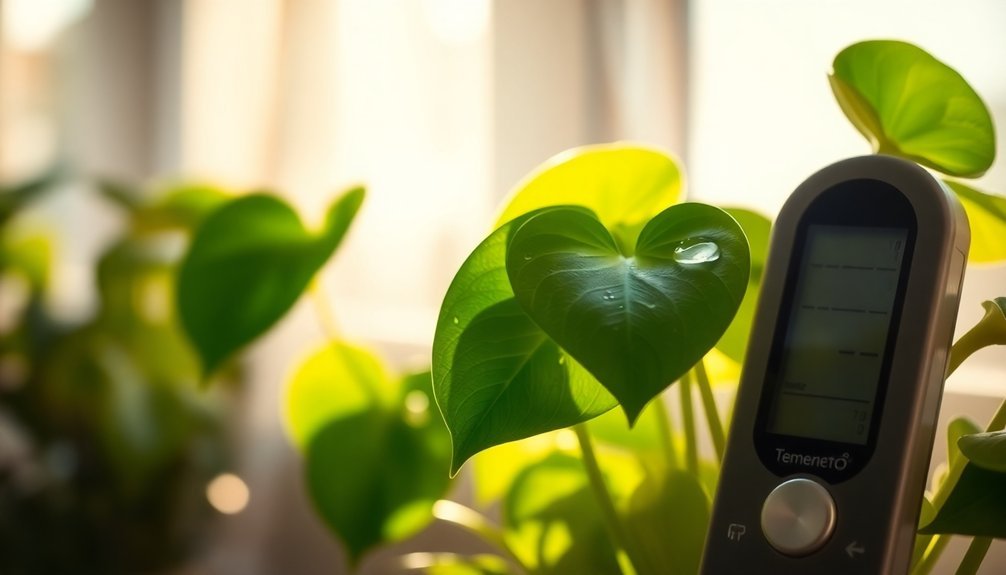
Building on your knowledge of monitoring conditions, maintaining proper temperatures becomes even more critical during the propagation phase of your Pothos plant.
For successful Pothos propagation, you'll want to keep temperatures between 65°F and 85°F (18°C to 29°C) to encourage ideal root development.
Watch out for temperature drops below 60°F (15°C), as they'll slow down the rooting process. If temperatures dip under 50°F (10°C), your cuttings may become stressed and fail to establish roots.
To boost your propagation success, create a warm, humid environment using a propagation station with a humidity dome. Remember to maintain a consistent temperature throughout the process, and check both temperature and humidity levels regularly.
These conditions will give your Pothos cuttings the best chance at developing a strong root system.
Frequently Asked Questions
What Temperature Kills Pothos?
Your pothos will die if temperatures drop below 45°F (7°C) for extended periods. They'll also suffer severe damage or death when exposed to temperatures above 90°F (32°C) for too long.
What Are the Best Conditions for Pothos to Grow?
You'll get the best Pothos growth with temperatures between 65-85°F, moderate humidity around 40-60%, bright indirect light, and well-draining soil. Keep your plant away from drafts and maintain consistent watering.
Where Is the Best Place to Put a Pothos?
Place your pothos near an East or West-facing window for bright, indirect light. You'll get the best results in bathrooms or kitchens where humidity's higher. Avoid drafty spots, heating vents, and direct sunlight.
Do Pothos Prefer to Climb or Hang?
You'll find that pothos thrive both ways – they naturally climb in the wild but adapt well to hanging. If you want larger leaves, let them climb; for a cascading effect, hanging's your best choice.
In Summary
You'll find that maintaining your pothos in the right temperature range isn't complicated once you understand its needs. Keep temperatures between 60-85°F (15-29°C), protect your plant from drafts and extreme fluctuations, and adjust care routines seasonally. Watch for stress signals and respond promptly. With consistent monitoring and proper temperature management, your pothos will reward you with vibrant, healthy growth year-round.

Leave a Reply