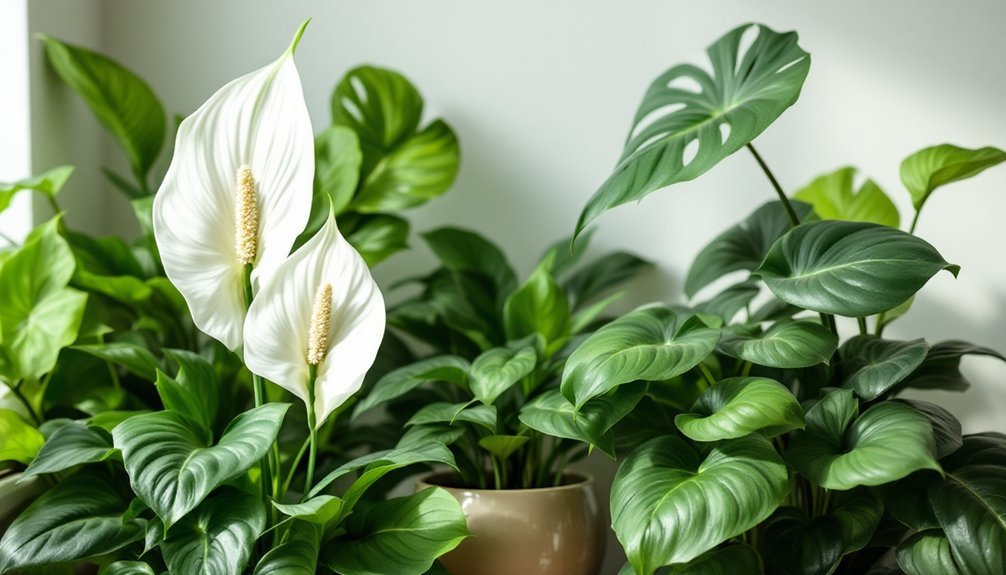
You'll get excellent air filtration from medium-sized indoor plants like Peace Lilies, Snake Plants, and Bamboo Palms. These natural purifiers remove common household toxins including formaldehyde, benzene, and volatile organic compounds through their leaves and root systems. Position them near windows with indirect light, 2-3 feet from air vents, and group them together for maximum effect. Understanding proper plant care and placement can transform your indoor air quality.
Understanding Medium Plant Air Filtration Power
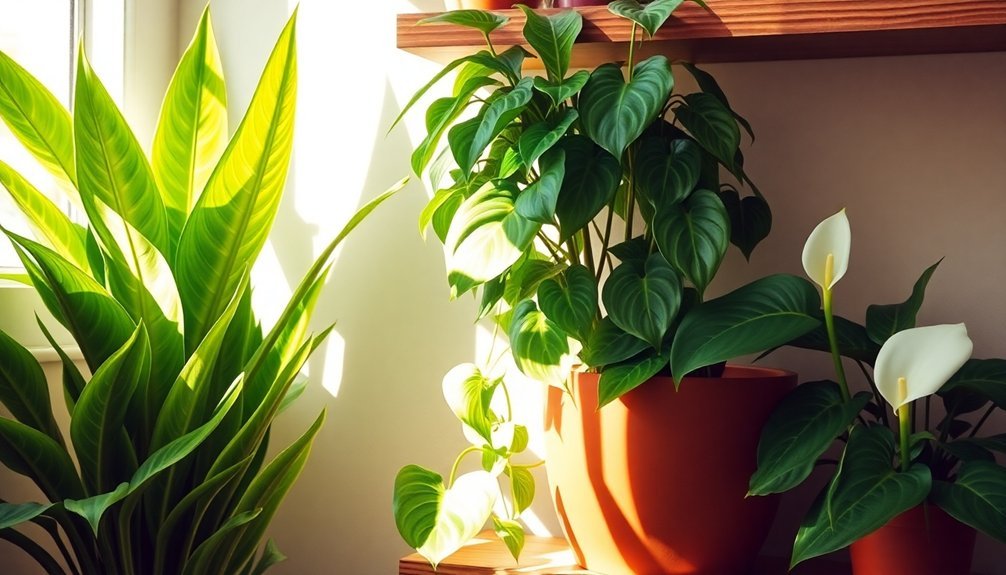
While many homeowners focus on air purifiers, medium-sized plants offer a natural and effective way to clean indoor air. Through transpiration, these leafy air cleaners absorb harmful indoor air pollutants, including formaldehyde, benzene, and trichloroethylene.
You'll find several medium plants excel at filtering indoor air. The Peace Lily removes volatile organic compounds and ammonia, while the Snake Plant thrives in low light conditions while eliminating multiple toxins.
The Bamboo Palm, growing up to 12 feet, tackles formaldehyde and benzene effectively. For spaces needing humidity control, the Boston Fern's consistent moisture requirements help remove xylene and toluene while improving indoor air quality.
Each of these plants brings unique air purification benefits, making them valuable additions to your home's natural air filtration system.
Top Medium-Sized Plants for Indoor Air Quality
When choosing medium-sized plants for indoor air purification, several species stand out for their exceptional filtering abilities.
The Rubber Plant effectively removes formaldehyde while thriving in indirect sunlight, making it a reliable air-purifying houseplant.
You'll find the Peace Lily particularly effective at filtering alcohols and acetone, performing well in low light conditions.
Consider the Bamboo Palm if you've got pets, as it's safe for animals while tackling indoor air pollution by removing benzene and xylene.
The Dracaena Janet Craig excels at filtering trichloroethylene and requires minimal maintenance.
For spaces with varying light conditions, the Chinese Evergreen proves versatile, effectively removing multiple toxins while adapting to different environments.
These medium-sized plants combine aesthetic appeal with powerful air-filtering capabilities for your home.
Positioning Your Medium Plants for Maximum Effect
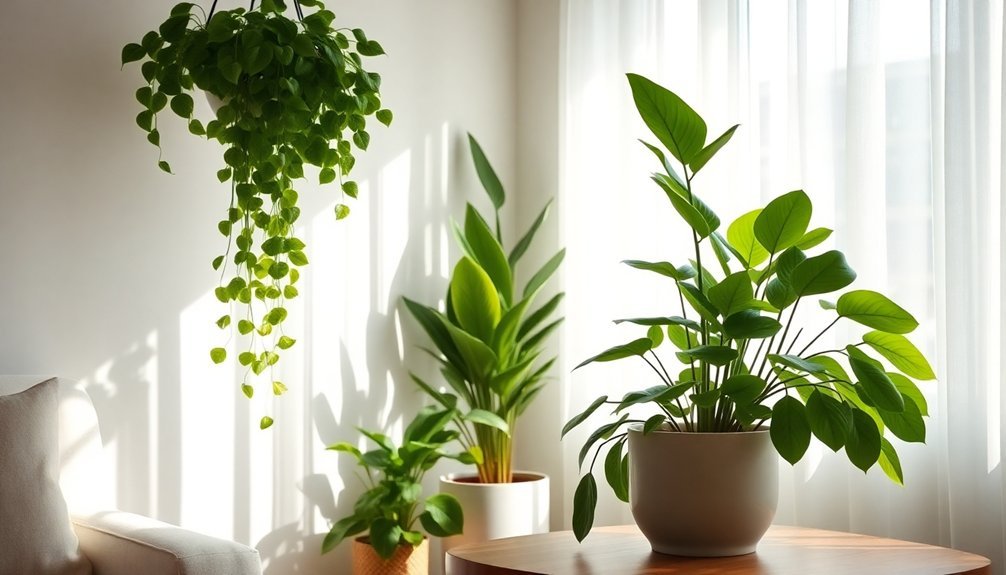
Strategic placement of your medium-sized air-filtering plants can dramatically boost their effectiveness in purifying your home's air.
Position your medium plants near windows with bright indirect light, but keep them at least 2-3 feet away from air vents to prevent stress. You'll maximize their air-purifying potential by arranging clusters of plants together, as they work synergistically to filter airborne toxins.
- Locate humidity-loving plants like Peace Lilies in naturally moist areas such as kitchens or bathrooms
- Group multiple medium plants together to enhance their collective air filtration power
- Maintain proper distance from heating vents and drafts to protect plant health
- Rotate plants regularly to guarantee uniform growth and ideal air-cleaning performance
Remember to take into account each plant's specific light requirements while maintaining adequate humidity levels through strategic placement or humidifier use.
Caring for Air-Purifying Medium Plants
Despite their resilient nature, air-purifying medium plants need consistent care to maintain their toxin-filtering abilities. You'll get the best results by matching each plant's specific needs.
Water your Peace Lily when the top soil feels dry, while drought-tolerant options like the Snake Plant can go longer between waterings.
Most medium plants, including the Bamboo Palm and Rubber Plant, thrive in bright, indirect light and need regular moisture to effectively remove toxins.
Keep your Boston Fern's air-filtering power strong with frequent misting and leaf cleaning to remove dust buildup.
For best results with Dracaena Janet Craig and similar air purifiers, guarantee consistent watering without oversoaking.
Combining Medium Plants With Other Air Quality Solutions
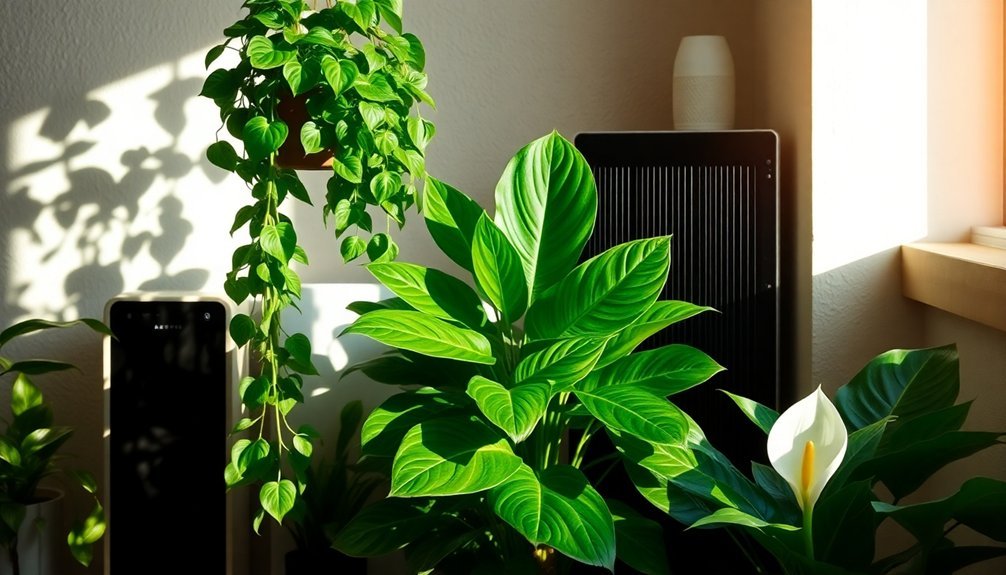
Medium-sized air-purifying plants work best as part of a thorough indoor air quality strategy.
By combining them with HEPA air purifiers, you'll create a more effective system for removing indoor air pollutants while enhancing your indoor environment's aesthetic value. For ideal results, place two medium plants per 100 square feet alongside your air purifier.
- HEPA filters quickly remove airborne particles while plants naturally improve humidity
- Diverse plant selection targets specific pollutants like formaldehyde and benzene
- Regular maintenance through proper watering and light management guarantees continued effectiveness
- Strategic placement of both plants and purifiers maximizes air cleaning potential
This combined approach greatly improves your respiratory health while creating an attractive living space.
Remember that different plants excel at filtering different pollutants, so mixing varieties helps achieve thorough air purification.
Frequently Asked Questions
What House Plant Purifies the Air the Most?
You'll get the most air purification from a Snake Plant, as it effectively filters out five major pollutants: formaldehyde, benzene, xylene, toluene, and nitrogen oxides, making it your best choice for cleaner air.
What Plant Removes 78% of Airborne Mold?
The Peace Lily (Spathiphyllum) will remove 78% of airborne mold in your home. You'll benefit from its powerful air-purifying abilities, but remember to keep it away from pets since it's toxic.
What Is the Healthiest Plant to Have in Your House?
You'll find the Spider Plant is the healthiest choice for your home, as it effectively removes multiple toxins like formaldehyde, xylene, and toluene from your air while being easy to maintain.
What Plants Are Good for Clearing the Air?
You'll get excellent air purification from Spider Plants, Snake Plants, and Peace Lilies. They're proven to remove harmful toxins like formaldehyde and benzene. Golden Pothos and Bamboo Palms are also great choices.
In Summary
Ready to breathe cleaner air? You'll get the best results by combining several medium-sized powerhouses like peace lilies, snake plants, and spider plants throughout your home. Remember to position them in areas with good airflow and maintain proper care routines. While these plants work hard to filter your air, pair them with other solutions like air purifiers for the most effective indoor air quality improvement.

Leave a Reply