
Large-leaved plants are your best defense against indoor air pollution. You'll get maximum toxin absorption from Alocasia imperialis, Fiddle Leaf Fig, and Philodendron gloriosum, which feature extensive leaf surface areas. Monstera pinnatipartita, silver birch, and yew can capture up to 79% of airborne particulates. Place these powerhouse purifiers in well-lit, high-traffic areas and group them together for ideal results. The science behind their remarkable filtering abilities reveals an even more fascinating story.
Understanding Leaf Surface Area and Pollutant Capture
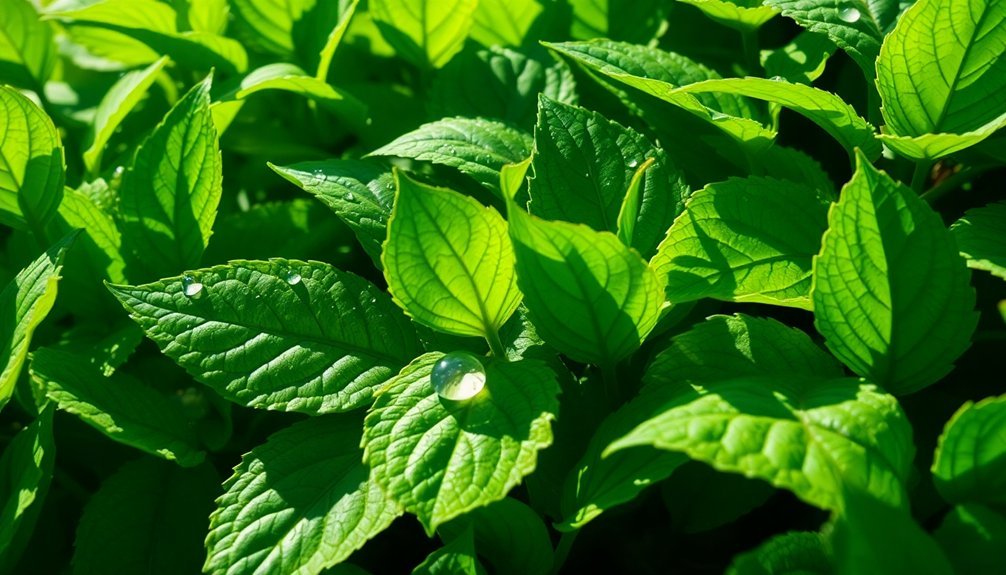
While many factors influence a plant's air-purifying abilities, leaf surface area stands out as one of the most critical components. You'll find that larger leaves provide more stomata, enhancing the plant's capacity to absorb air pollutants effectively.
Plants with rough or hairy surfaces are particularly adept at trapping particulate matter, making them excellent choices for air purification.
When you're selecting plants for pollution control, consider that species like silver birch and yew, with their expansive canopies, can capture up to 79% of particulate matter.
You'll get the best results by strategically placed plants near pollution sources. If you're aiming for year-round effectiveness, opt for evergreen species rather than deciduous trees, as they'll maintain their pollutant-capturing abilities throughout all seasons, while deciduous trees lose effectiveness during winter months.
Top Large-Leaf Plants for Maximum Absorption
When it comes to maximizing air pollutant absorption, large-leaf plants stand out as nature's most efficient filters.
You'll find these natural air purifiers excel at removing volatile organic compounds (VOCs) through their extensive leaf surface area and abundant stomata.
For ideal indoor air quality, consider these top performers:
- Alocasia imperialis – Its massive leaves effectively absorb airborne pollutants, making it a powerhouse for air purification.
- Fiddle Leaf Fig – Combines striking aesthetics with superior air-filtering capabilities.
- Philodendron gloriosum – Features prominent leaf veins that enhance CO2 and pollutant capture.
- Monstera pinnatipartita – Adaptable to various indoor environments with exceptional VOC absorption.
These large-leaf plants don't just make beautiful additions to your space – they're working hard to keep your air clean and healthy.
Scientific Mechanisms Behind Plant Air Filtration
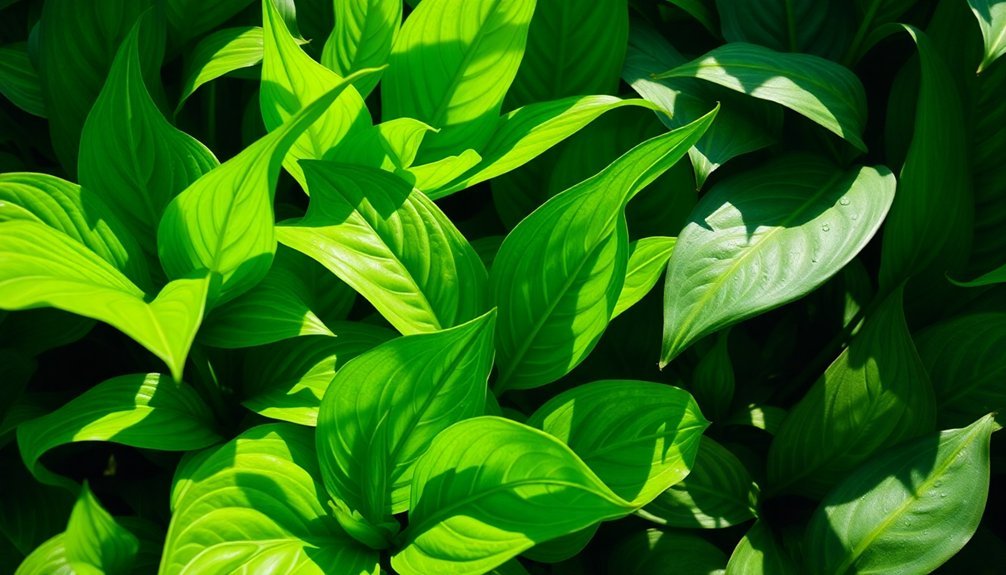
Your indoor plants work as natural air filters through multiple sophisticated mechanisms, starting with their leaves' surface texture that traps airborne particles through microscopic hairs and waxy coatings.
During photosynthesis, plants absorb carbon dioxide and other pollutants through their stomata, converting harmful substances into energy while releasing clean oxygen back into your environment.
The continuous plant-air exchange process creates a dynamic filtration system where gases and particles move through the leaf structure, allowing plants to effectively remove various indoor air contaminants.
Leaf Surface Particle Capture
Because effective air pollution control depends heavily on plant selection, understanding leaf surface characteristics is essential for enhancing particulate matter (PM) capture.
You'll find that plants with larger, rougher leaf surfaces like silver birch and yew are particularly adept at trapping pollutants from the air. Hairy and waxy leaf textures greatly enhance a plant's ability to filter airborne particles.
When selecting tree species for best air quality improvement, consider these key factors:
- Surface texture – rougher leaves trap more particulate matter
- Leaf size and density – larger surfaces provide more area for pollutant absorption
- Canopy characteristics – fuller canopies maximize filtering capacity
- Seasonal retention – evergreen species offer year-round PM capture, while deciduous trees are less effective in winter
These features directly impact a plant's ability to improve air quality through pollutant absorption.
Photosynthesis Filtration Process
Three key scientific mechanisms drive plants' remarkable air filtration abilities during photosynthesis.
First, you'll find that leaves actively absorb carbon dioxide through their stomata, converting it to oxygen and glucose while reducing greenhouse gases.
Second, the leaf's surface structure works as a natural trap for particulate matter, with trichomes and textured surfaces capturing airborne pollutants before they can circulate further.
Finally, you'll see that the process of phytoremediation allows plants to break down harmful pollutants through both their leaves and roots.
The efficiency of these mechanisms depends on environmental conditions that affect photosynthesis rates, including light exposure, temperature, and humidity levels.
Plants with larger leaves perform these functions more effectively, as their increased surface area provides more opportunities for air filtration and pollutant absorption.
Plant-Air Exchange Mechanics
Plant-air exchange mechanics operate through sophisticated biological processes that build upon the basic photosynthesis cycle.
You'll find that leaf size and surface characteristics directly impact how effectively plants absorb pollutants and improve air quality.
Key mechanisms in plant-air exchange include:
- Specialized stomata that control CO2 intake and oxygen release during photosynthesis
- Hairy or waxy leaf surfaces that trap particulate matter, preventing it from circulating in the air
- Large leaf surface areas that maximize contact with airborne pollutants, enhancing absorption rates
- Species-specific filtering capabilities that determine the plant's overall effectiveness in removing specific contaminants
Understanding these mechanics helps you select the most efficient air-purifying plants for your space, as larger-leafed varieties typically demonstrate superior pollutant absorption compared to smaller-leaved plants.
Optimal Leaf Characteristics for Toxin Removal
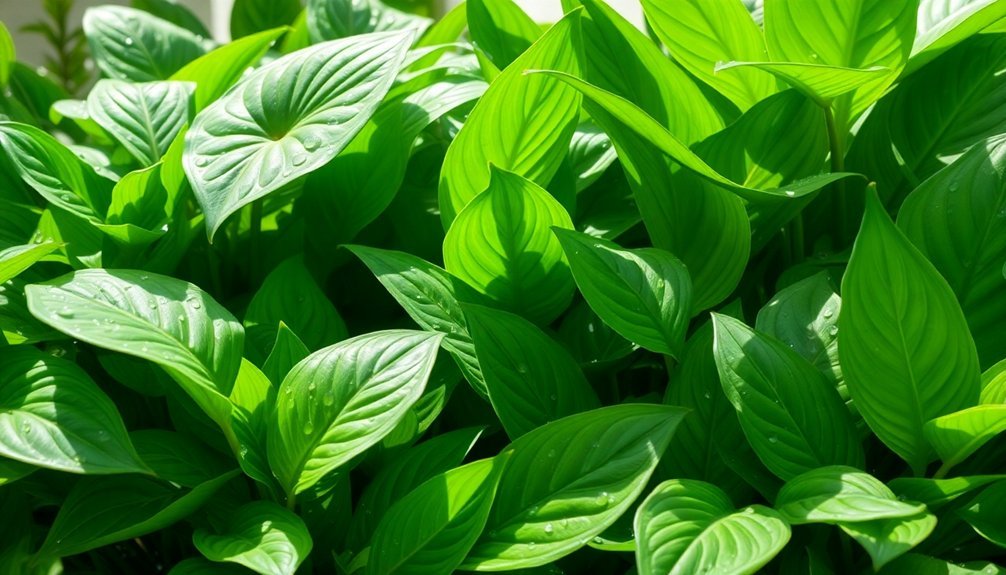
When selecting plants for ideal air purification, leaf characteristics play an essential role in determining their effectiveness at removing toxins.
You'll want to look for plants with large leaves that maximize air pollutant absorption through their increased surface area. Plants featuring hairy or textured leaf surfaces are particularly effective at trapping particulate matter from the surrounding environment.
To optimize your plant's filtration capabilities, choose species with abundant stomata, as these tiny pores enhance gas exchange and toxin removal.
Plants with thick, waxy leaves offer superior moisture retention while effectively absorbing airborne pollutants, improving your indoor air quality.
Consider species like silver birch and yew, which have proven particularly effective at reducing urban air pollution through their specialized leaf characteristics.
These features work together to create natural air-cleaning powerhouses in both indoor and outdoor spaces.
Native Species With Superior Absorption Rates
Native plant species stand out as nature's most efficient air purifiers, consistently outperforming their non-native counterparts in pollutant absorption.
You'll find that these plants have evolved to thrive in local climates while maximizing their air filtration capabilities. The silver birch, for example, captures an impressive 79% of particulate matter from the surrounding air.
For ideal air pollutant removal, consider these native species with superior absorption rates:
- Eastern red cedar – exceptional at trapping airborne particles
- American elm – highly effective in filtering multiple air pollutants
- Silver birch – proven leader in particulate matter capture
- Mixed native plantings – creates diversity of plants for targeting different toxins
You'll also benefit from these species' natural adaptation to local soil conditions and reduced water requirements, making them both efficient and sustainable choices for air purification.
Comparing Indoor Plant Filtration Efficiency
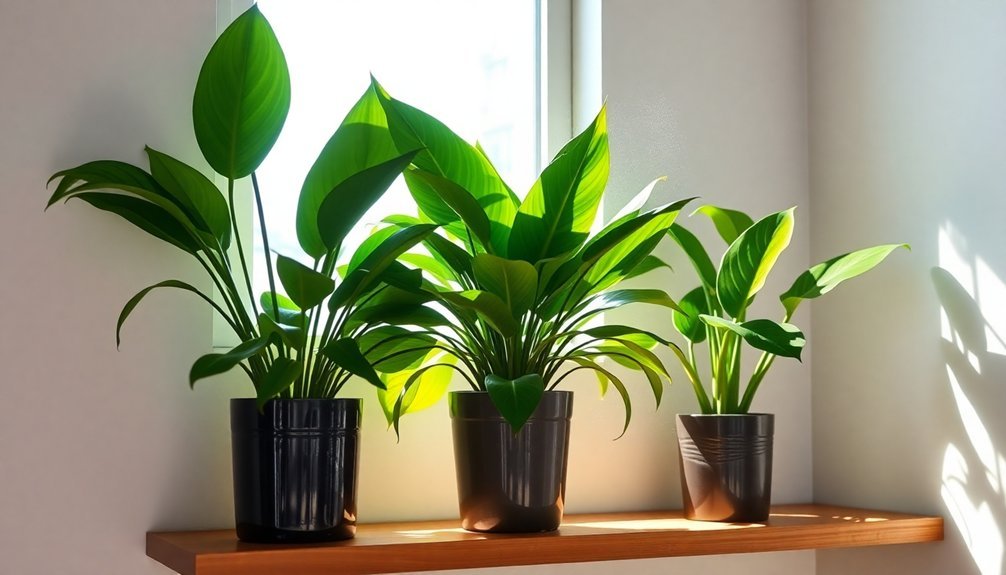
When selecting plants for air purification, you'll want to prioritize species with larger leaves and greater surface areas, like the Heartleaf Philodendron, which can rapidly remove formaldehyde within 24 hours.
You can maximize filtration by strategically placing multiple plants throughout your space, as higher plant density directly correlates with improved air quality.
Your most effective choices will include plants with specialized leaf structures, such as the Purple Waffle Plant's textured foliage or the Fiddle Leaf Fig's waxy surface, which excel at trapping airborne particles.
Leaf Surface Area Matters
The sheer size of a plant's leaves plays an essential role in its ability to filter indoor air pollutants.
You'll find that larger leaf surface area directly correlates with improved air purification efficiency.
Plants with hairy leaves or waxy surfaces are particularly effective, as their unique leaf structure enhances the absorption of airborne toxins.
When selecting plants for air filtration, consider these key factors:
- Maximize plants density in your space to increase overall pollutant absorption
- Choose varieties like Heartleaf Philodendron for their proven filtration capabilities
- Mix different leaf sizes and shapes to target various types of pollutants
- Look for plants with textured leaf surfaces that trap more particles
Plant Placement For Filtration
Strategic positioning of indoor plants dramatically influences their air-filtering performance.
You'll want to place multiple plants in high-traffic areas and near pollution sources like kitchens and living rooms to maximize their ability to absorb airborne toxins. Plants with hairy or waxy leaf surfaces, such as the Philodendron gloriosum, are particularly effective at trapping particulate matter when positioned strategically.
To boost air purification, consider grouping several plants together, as higher plant density improves overall filtration efficiency.
You'll achieve the best results by placing large-leaved varieties like the Alocasia imperialis in well-lit central locations.
Don't forget to position your Fiddle Leaf Fig in areas with adequate sunlight, as this promotes healthy growth and enhances its air-cleaning capabilities.
The key is creating a thoughtful arrangement that maximizes each plant's natural filtering abilities.
Species-Specific Absorption Rates
Understanding absorption rates among different plant species helps you select the most effective air purifiers for your space.
Different plants absorb air pollutants at varying rates, with leaf surface characteristics playing an essential role in their indoor air purification efficiency.
Here's how specific species perform in removing toxins:
- The Heartleaf Philodendron demonstrates remarkable efficiency, eliminating formaldehyde within just 24 hours.
- Fiddle Leaf Figs excel at filtration when given adequate space to develop their large leaves.
- Anthuriums combine powerful pollutant removal with aesthetic appeal, particularly in humid environments.
- Plants with larger or hairy leaf surfaces prove more effective at trapping airborne contaminants.
To maximize absorption rates, you'll want to take into account increasing the density of these efficient species in your space, as more leaf surface area leads to better air quality results.
Measuring Leaf Surface Performance Metrics
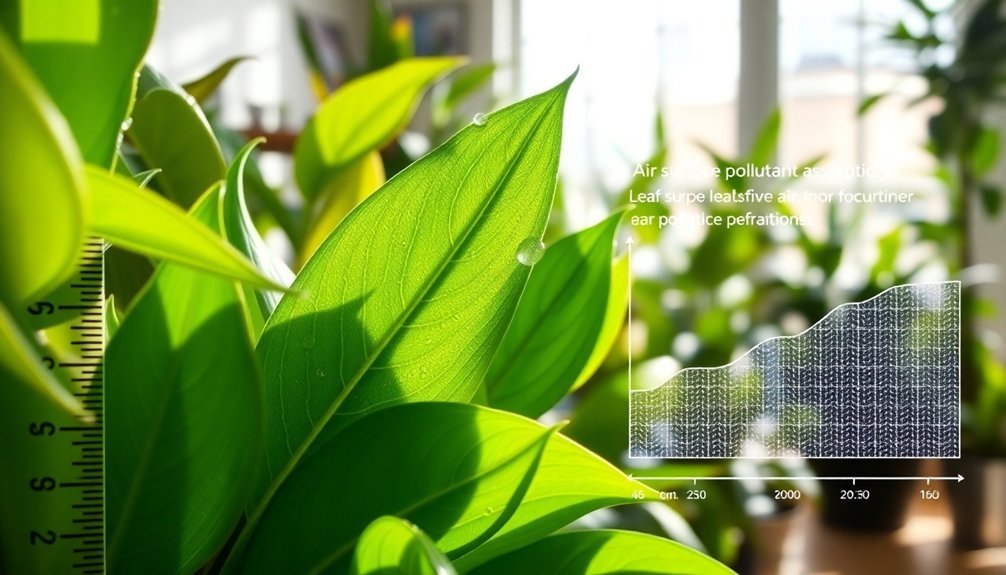
When evaluating a plant's capacity to filter air pollutants, measuring leaf surface metrics provides essential data about its effectiveness. You'll want to focus on key indicators like leaf surface area and stomata count to ascertain a plant's filtering potential.
| Metric | Significance |
|---|---|
| Leaf Area Index (LAI) | Measures total leaf coverage relative to ground area |
| Specific Leaf Area | Indicates leaf thickness and absorption capacity |
| Stomata Density | Determines gas exchange efficiency |
To maximize air quality performance, you'll need to take into account how leaf thickness affects particulate matter retention. Plants with rough or hairy surfaces, like silver birch, can trap up to 79% of airborne particles. Remember, larger leaf surface areas typically translate to better pollutant absorption, while higher stomata counts enhance the plant's ability to filter harmful gases.
Environmental Factors Affecting Absorption
Your plant's ability to filter air pollutants depends heavily on ideal sunlight exposure, which directly influences leaf growth and surface area development.
Soil quality acts as a vital foundation, with nutrient-rich, well-draining soil promoting stronger root systems and healthier foliage that's more effective at trapping particulate matter.
Maintaining proper humidity levels and temperature ranges within your plant's comfort zone will guarantee it doesn't become stressed, allowing it to maximize its natural air-filtering capabilities.
Sunlight Exposure Effects
Since sunlight plays a significant role in air purification, proper exposure directly impacts how effectively plants can filter pollutants from your indoor environment.
When your plants receive ideal sunlight, they'll perform photosynthesis more efficiently, increasing their ability to absorb carbon dioxide and filter air contaminants.
For maximum pollutant absorption, you'll want to take into account these key factors:
- Plants with larger leaf surface area trap more pollutants, and sunlight exposure directly influences leaf growth.
- Your plant's stomata function more effectively with proper sunlight, enhancing gas exchange and pollutant filtering.
- Sun-loving species typically outperform shade-tolerant varieties in air purification capacity.
- Consistent daily sunlight exposure maintains ideal plant health and sustains maximum filtering efficiency.
Position your air-purifying plants where they'll receive appropriate light based on their specific requirements.
Soil Quality Impact
The quality of soil serves as a fundamental cornerstone for a plant's air-purifying capabilities.
You'll find that nutrient-rich soils greatly enhance your plants' ability to absorb air pollutants through their leaves. When your soil contains high organic matter, it promotes beneficial microbial activity that helps break down absorbed pollutants.
To maximize pollutant absorption, you'll need to maintain ideal soil pH levels, which directly affect nutrient availability and plant health.
If you're dealing with urban soils, they often contain harmful contaminants that can hinder your plants' performance. That's why proper soil remediation becomes essential.
Watch out for compacted soil conditions, as they'll restrict root growth and reduce your plants' overall effectiveness at filtering air pollutants.
Humidity and Temperature Range
Understanding two critical environmental factors – humidity and temperature – will maximize your plants' air-cleaning performance. Higher humidity levels enhance your plants' ability to filter air pollutants through increased leaf absorption rates.
Most air-purifying plants reach peak pollutant absorption when you maintain specific environmental conditions.
For ideal growth and maximum air-cleaning efficiency, follow these key guidelines:
- Keep humidity levels between 40% and 60% to enhance stomatal conductance
- Maintain indoor temperatures of 65-75°F (18-24°C)
- Monitor plants for stress signs at extreme temperatures, as this reduces their filtering capacity
- Consider using humidity-loving plants like Peace Lily and Fiddle Leaf Fig for better indoor air quality
Year-Round Plant Performance Analysis
When selecting plants for ideal air purification, year-round performance becomes an essential factor to take into account.
You'll want to focus on evergreen tree species that maintain their ability to filter air pollutants throughout all seasons. Silver birch stands out as a top performer, capturing an impressive 79% of particulate matter with its large canopy and rough leaf surfaces. Yew trees follow closely behind, trapping 71% of airborne particles.
While deciduous trees lose their effectiveness during winter months, evergreen varieties continue their pollutant absorption without interruption.
To maximize your air quality improvement efforts, you should consider planting a diverse mix of native species. This strategy guarantees consistent performance and reduces the potential release of volatile organic compounds that could contribute to ozone formation.
Advanced Placement Strategies for Enhanced Filtration
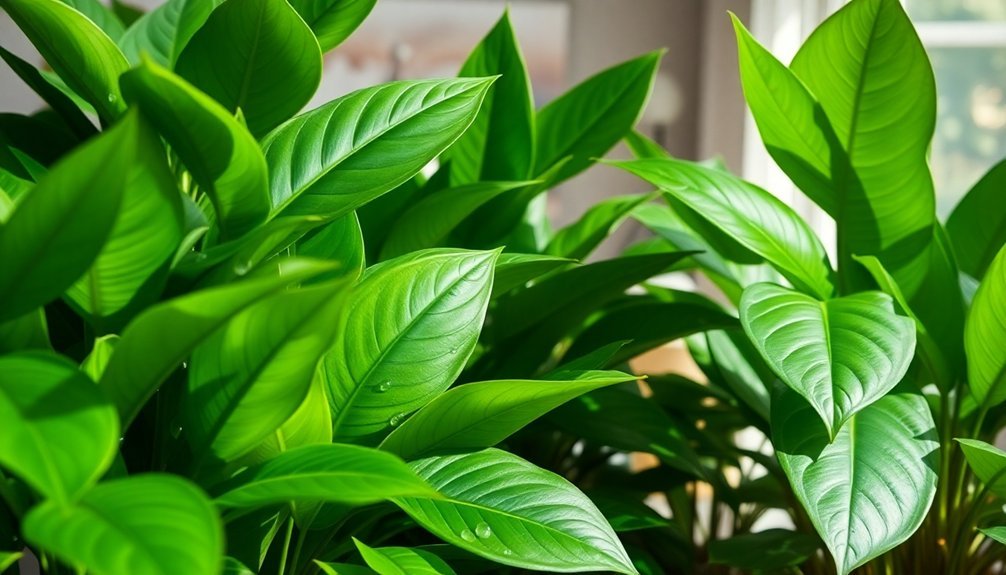
Strategic placement of air-purifying plants can dramatically boost their filtration effectiveness in your indoor spaces.
By understanding ideal positioning, you'll maximize leaf absorption and enhance overall air quality in your home.
Consider these key placement strategies to improve filtration efficiency:
- Position large-leafed plants like Alocasia imperialis near windows to enhance CO2 absorption and photosynthesis.
- Install plants with hairy or waxy leaves in high-traffic areas to trap air pollutants more effectively.
- Utilize vertical space with climbing plants like Monstera pinnatipartita to maximize leaf surface exposure.
- Create plant groupings to establish humidity-rich microenvironments that boost collective filtration power.
Remember to vary plant heights and canopy sizes when arranging your indoor garden, as this maximizes airflow and guarantees thorough pollutant removal at multiple levels.
Frequently Asked Questions
What Plant Absorbs Most Pollution?
You'll find silver birch trees are the most effective pollution absorbers, capturing 79% of particulate matter. It's your best choice for air filtration, followed by yew and elder trees.
Which Plants Are Most Effective at Reducing Air Pollution?
You'll get the best air pollution reduction from silver birch, yew, and elder trees due to their large canopies and rough leaves. Native evergreen conifers are also excellent choices for year-round pollutant filtration.
What Plant Purifies the Air the Most?
You'll find the Purple Waffle Plant (Hemigraphis exotica) is the most powerful air purifier. It's proven to eliminate significant amounts of formaldehyde within 24 hours, outperforming other common houseplants in toxin removal.
What Plant Is NASA Recommend for Air Purifiers?
NASA's top recommendations for air purification include Peace Lily, Boston Fern, Snake Plant, and Spider Plant. You'll get the best results when you combine multiple plants to maximize their air-cleaning capabilities in your space.
In Summary
You'll find that maximizing your indoor air quality comes down to strategic plant selection and placement. By choosing large-leaved species with proven absorption rates and understanding their specific filtration mechanisms, you're setting yourself up for success. Remember to take into account your local climate, seasonal changes, and proper plant care. Implement these evidence-based strategies, and you'll create a naturally purified living space that works year-round.

Leave a Reply