
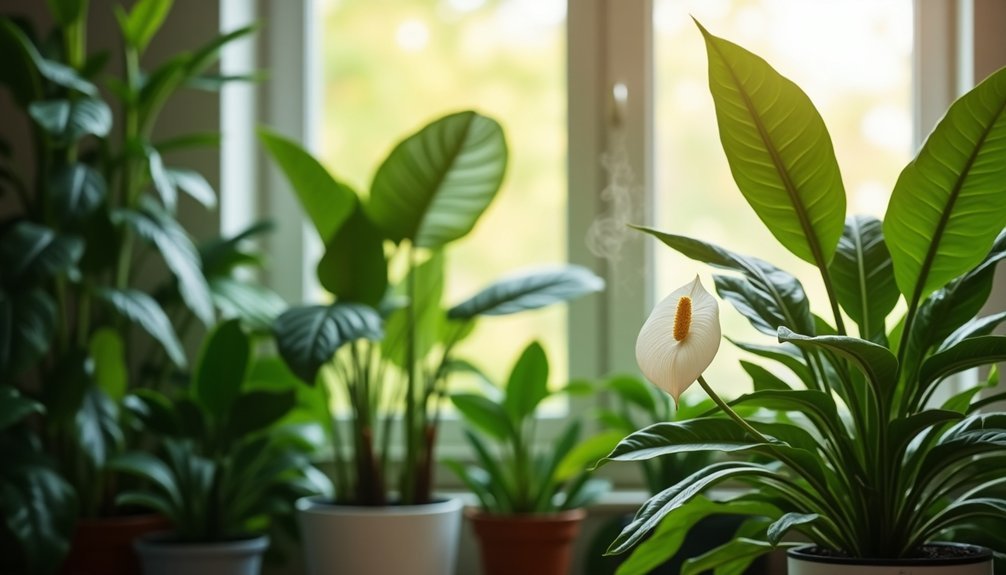
Three indoor plants excel at boosting your home's humidity through natural transpiration. You'll find the Peace Lily thriving in any room, releasing steady moisture while purifying the air. English Ivy works wonders in bathrooms, where it can maximize existing dampness. The tropical Calathea rounds out this moisture-boosting trio with its impressive humidity-generating capabilities. Discover how these natural humidifiers can transform your indoor environment when properly placed and maintained.
The Power of Peace Lily: Nature's Living Humidifier
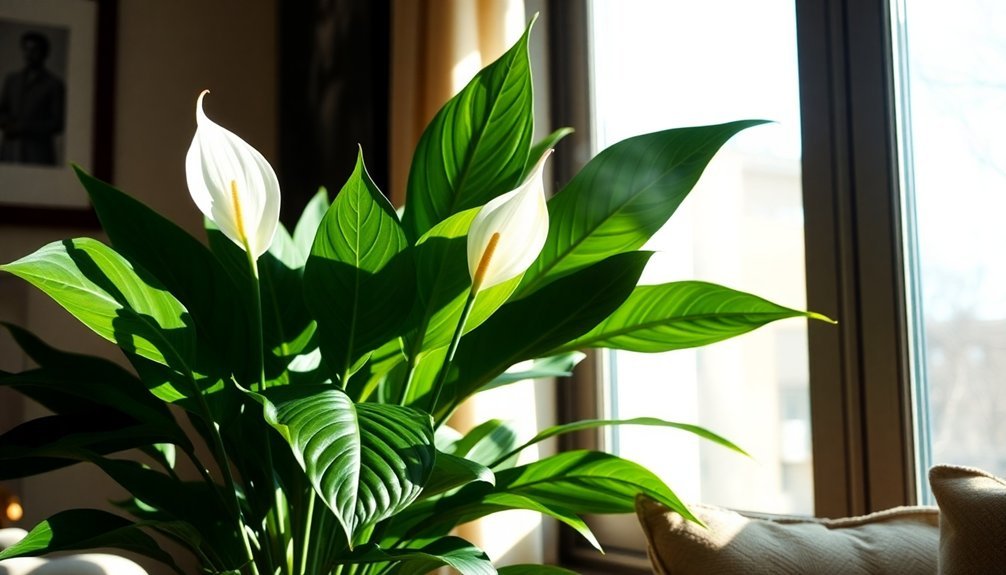
While many indoor plants can boost humidity, the peace lily stands out as nature's living humidifier. As a tropical native, it thrives in humidity levels between 50-70%, making it perfect for improving your indoor air moisture.
You'll know when your peace lily needs more humidity by watching for telltale signs. Brown leaf tips, drooping foliage, and curling leaves indicate that your air is too dry. Most homes naturally have humidity of 30-40%, which is lower than what peace lilies prefer.
Don't worry – there are several effective solutions. Try placing a pebble tray beneath your plant, using a humidifier, or grouping it with other moisture-loving plants to create a natural microclimate.
To keep your peace lily at its humidifying best, maintain temperatures between 65-85°F, provide bright indirect light, and keep the soil consistently moist.
Remember to keep it away from heating vents, which can dry out the air.
English Ivy: Your Bathroom's Moisture-Boosting Champion
When it comes to bathroom-friendly plants, English Ivy emerges as a natural humidity champion. You'll find this adaptable plant thrives in humidity levels between 40% and 60%, making it perfect for your bathroom's naturally moist environment. Grouping your ivy with other moisture-loving plants creates a beneficial microenvironment for all.
Keep an eye on your ivy's leaves – they'll tell you if humidity levels aren't quite right. Brown edges signal it's too dry, while yellowing leaves suggest excessive moisture. If you notice these signs, you can easily adjust conditions by misting the leaves every few days or placing a pebble tray beneath the pot.
During winter months, you'll want to compensate for dry indoor air by using a humidifier or relocating your ivy to naturally humid spaces.
Calathea: The Tropical Humidity Generator
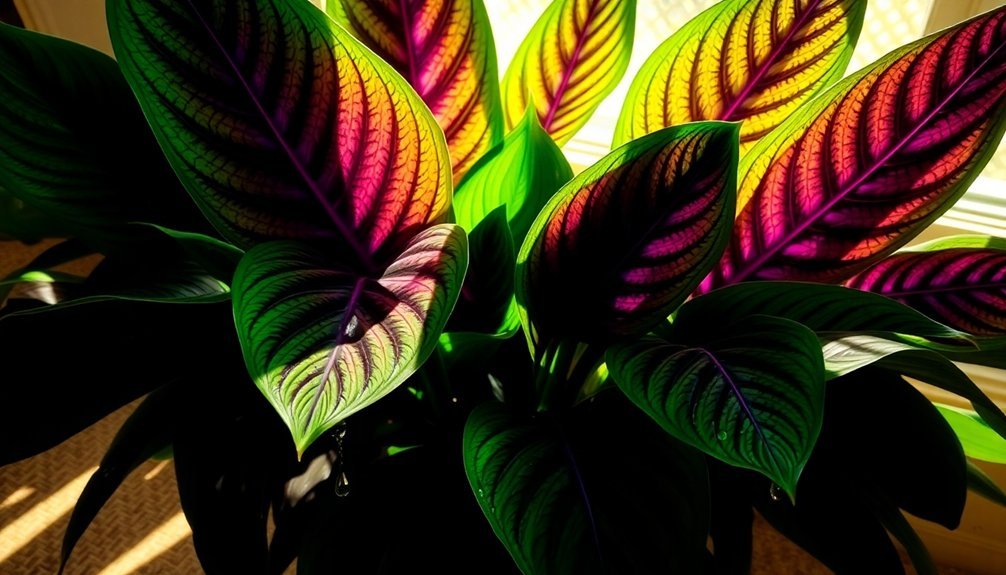
Since calatheas naturally thrive in tropical rainforests, they're exceptional at generating humidity in your home.
You'll get the best results by grouping several calatheas together, creating a moisture-rich microclimate that benefits both the plants and your indoor air.
To keep your calathea thriving, place it in bright, indirect light, like near a north-facing window with a sheer curtain.
You'll want to maintain temperatures between 70-85°F and keep the humidity level at 50-60%.
Consider setting up your calathea in a bathroom, where it'll naturally receive higher humidity levels. Regular applications of Osmocote Pour+Feed fertilizer during the growing seasons will ensure optimal plant health.
When watering, use room temperature distilled water and maintain consistently moist, but not waterlogged soil.
Be careful to protect your plant from drafts and direct sunlight, which can damage its striking foliage.
Frequently Asked Questions
Can Humidity-Loving Plants Survive in Air-Conditioned Rooms?
Yes, you can keep humidity-loving plants in air-conditioned rooms! Choose adaptable species like Dracaena, Peace Lily, or Snake Plant, and boost humidity by grouping plants together or placing them in naturally humid spaces.
How Often Should I Clean the Leaves of Humidity-Boosting Plants?
You'll need to clean your humidity-boosting plants' leaves every 2-3 weeks. If your home's dusty or heavily air-conditioned, clean them weekly. Always use a soft, damp cloth during morning hours.
Do These Plants Attract More Insects Due to Increased Moisture?
Yes, you'll likely notice more insects with increased humidity, but you can prevent this by avoiding overwatering, ensuring good airflow, and using preventive measures like alcohol sprays and pest-deterrent treatments around your plants.
Will Humidity-Loving Plants Increase Mold Growth on Nearby Walls?
No, you won't see increased mold growth on walls. Humidity-loving plants actually help prevent mold by absorbing excess moisture from the air. Just guarantee proper ventilation and don't overwater your plants.
Can These Plants Effectively Humidify Large Open-Concept Living Spaces?
You won't get enough humidity from plants alone in large open spaces. While they do add moisture, you'll need supplemental humidification like whole-house humidifiers to effectively maintain proper humidity levels.
In Summary
You'll notice an immediate difference in your indoor air quality when you add these three humidity-boosting plants to your space. Whether you choose the elegant peace lily, the versatile English ivy, or the stunning calathea, you're bringing nature's own humidifiers into your home. Place them strategically in bathrooms, bedrooms, or living areas, and you'll create a healthier, more comfortable environment while adding natural beauty to your décor.

Leave a Reply