
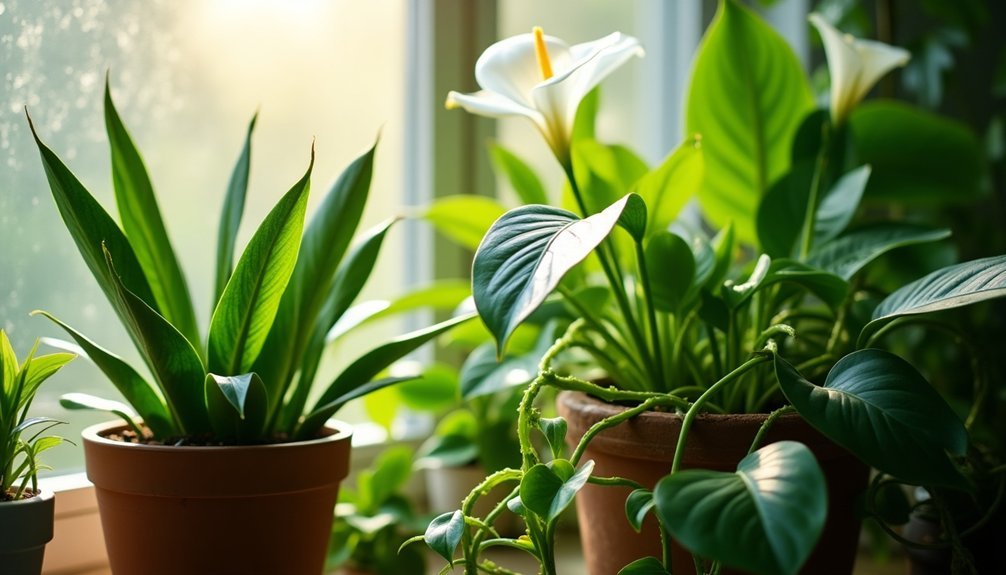
Transform your bathroom's humidity levels naturally with these top five moisture-controlling plants. Snake Plants release moisture at night while Boston Ferns thrive in humid environments, making them perfect partners. Peace Lilies adapt well to various conditions and help maintain ideal moisture levels, while Spider Plants reduce excess humidity through their leaves. You'll also love how Aloe Vera absorbs moisture while offering therapeutic benefits. Discover how these green companions can revolutionize your bathroom's environment.
Why Snake Plants Are Your Bathroom's Best Friend
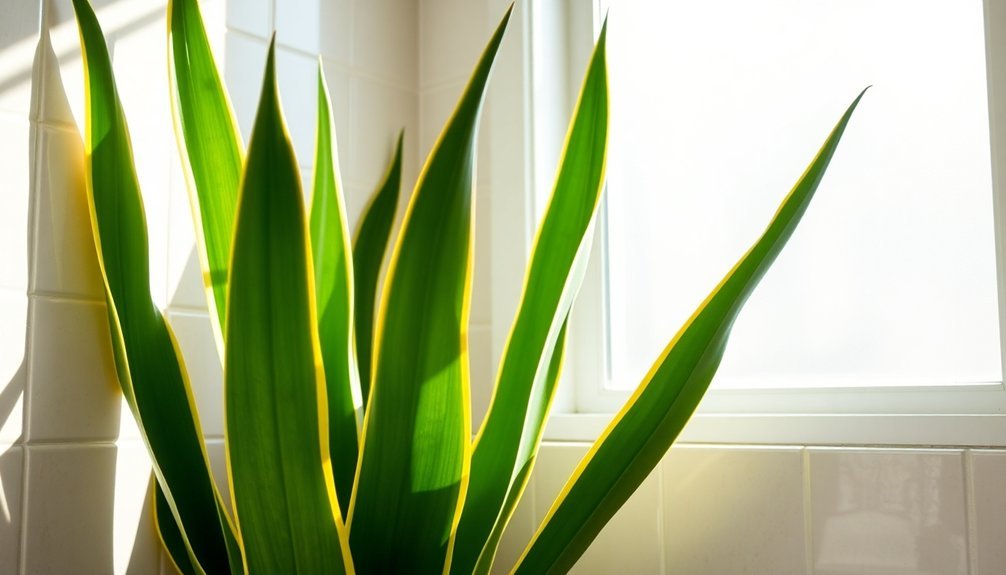
Four remarkable qualities make snake plants the perfect bathroom companion.
First, they're natural humidity regulators, releasing moisture at night while preventing excess dampness. You'll find they maintain ideal humidity levels between 30% to 50%, counteracting the drying effects of ventilation systems. Positioning multiple plants together creates an even more effective moisture-control environment.
Second, these plants are incredibly adaptable, thriving in low light and surviving irregular care.
Third, they're powerful air purifiers, filtering out toxins like benzene and formaldehyde while releasing oxygen at night – especially helpful in small bathroom spaces where cleaning products are stored.
Finally, snake plants are low-maintenance champions. You won't need to water them frequently, and they're forgiving if you forget.
Just make sure they're in well-draining soil with proper drainage holes, and they'll beautify your bathroom while keeping the air balanced and clean.
The Magic of Boston Ferns in Moisture Control
When it comes to natural humidity control, Boston ferns reign supreme as bathroom champions, thriving in moisture levels between 50% to 80%.
You'll find these lush plants particularly well-suited to your bathroom's naturally humid environment, where they can flourish while helping to maintain ideal moisture levels. Consider using a digital hygrometer nearby to monitor and maintain optimal humidity for your fern.
Your Boston fern will show clear signs when humidity isn't quite right.
Watch for brown leaf tips or curling fronds, which signal that your plant needs more moisture.
To keep your fern happy, maintain temperatures between 65-75°F and provide bright, indirect light.
If your bathroom lacks windows, a grow light works perfectly.
As an added bonus, you're not just getting a beautiful plant – Boston ferns are natural air purifiers, removing harmful pollutants while being completely safe for your family and pets.
Peace Lilies: Nature's Humidity Managers
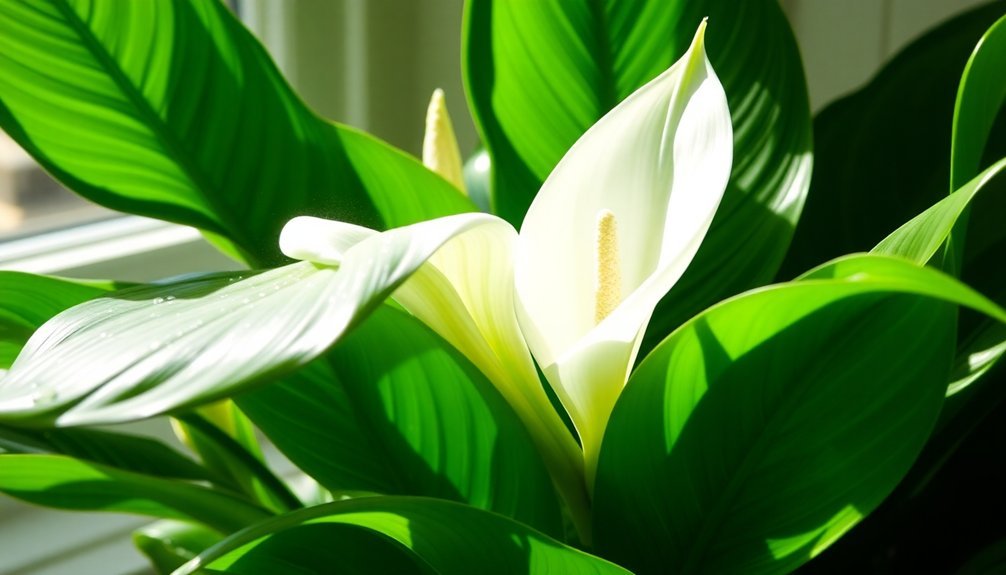
Peace lilies stand out as exceptional bathroom plants because they naturally regulate humidity while adding elegant beauty to your space. They thrive in the humid conditions typical of bathrooms, preferring humidity levels between 40-60%, which mirrors their tropical origins.
You'll find these versatile plants adapt well to your bathroom's lighting conditions, whether you have bright, filtered light from a window or limited natural light. Place them away from direct sunlight and drafts to prevent leaf damage. The optimal temperature range of 65-85°F will ensure your peace lily thrives in the bathroom environment.
When it comes to care, water your peace lily when the top inch of soil feels dry, and consider using a pebble tray for extra moisture. As an added bonus, they'll purify your bathroom air by removing common pollutants like formaldehyde and benzene.
Just remember to check regularly for pests and maintain good air circulation to prevent fungal issues.
Spider Plants: The Low-Maintenance Moisture Solution
Spider plants offer another excellent option for managing bathroom humidity, combining effortless care with impressive moisture-control abilities.
You'll find these adaptable plants thrive in your bathroom's steamy environment, preferring humidity levels between 50-60% while actively helping to reduce excess moisture.
Place your spider plant in bright, indirect light, though it'll tolerate low-light conditions common in bathrooms. You won't need to fuss much with maintenance – just water when the top inch of soil feels dry, typically every 10-14 days.
Their trailing tendrils make them perfect for hanging baskets above your tub or placing on toilet tanks.
Beyond humidity control, spider plants purify your bathroom air by removing toxins like formaldehyde and carbon monoxide, creating a healthier space while adding a touch of natural beauty.
Aloe Vera: Your Dual-Purpose Humidity Fighter
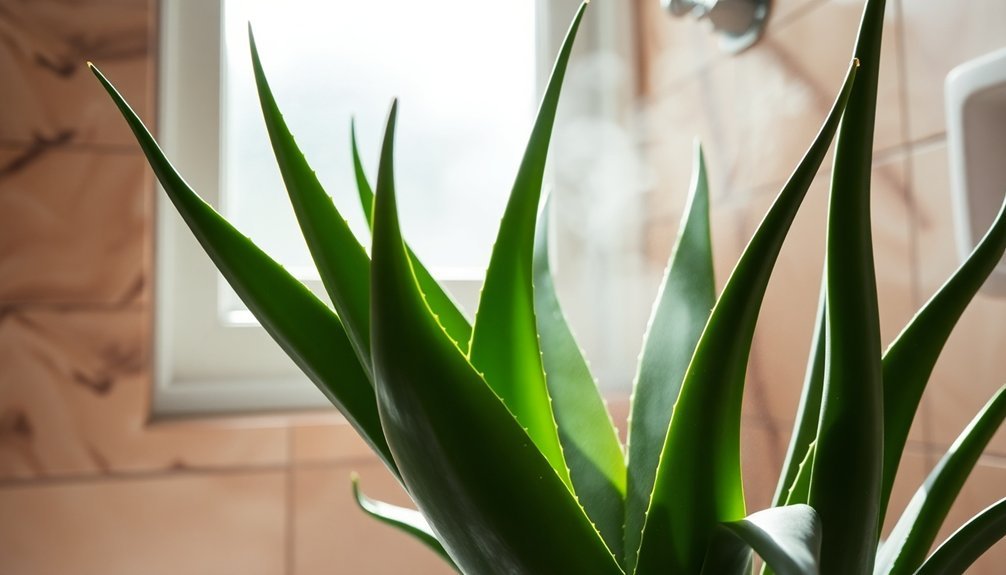
Aloe vera stands as a powerhouse plant that masters two essential bathroom tasks: humidity control and natural healing. You'll appreciate how this versatile succulent effectively absorbs excess moisture while purifying the air of common bathroom pollutants and airborne contaminants.
What makes aloe vera particularly appealing is its adaptability to your busy lifestyle. It thrives in bright, indirect light and won't complain if you occasionally forget to water it.
Plus, it's a perfect match for modern bathroom designs, especially if you're embracing the Japandi aesthetic.
Beyond its humidity-fighting capabilities, you can use the plant's gel for your beauty routine. It's nature's solution to several needs: maintaining ideal moisture levels, preventing mold growth, and providing readily available therapeutic benefits right in your bathroom.
Frequently Asked Questions
How Often Should Bathroom Plants Be Rotated to Ensure Even Growth?
You'll want to rotate your bathroom plants every 1-2 weeks, turning them 90-180 degrees each time. If you're dealing with very low light conditions, consider rotating them more frequently for balanced growth.
Can Bathroom Plants Contribute to Water Damage on Walls and Surfaces?
Yes, your bathroom plants can damage walls and surfaces if you don't manage moisture properly. Overwatering, poor drainage, and high humidity from plants can lead to water damage and mold growth.
What's the Ideal Number of Plants for Different Bathroom Sizes?
You'll want 1-2 plants for small bathrooms under 50 sq. ft., 2-3 for medium spaces (50-100 sq. ft.), 3-4 for large bathrooms (100-200 sq. ft.), and 4-6 plants for extra-large bathrooms.
Should Bathroom Plants Be Removed During Winter Months?
You don't need to remove your bathroom plants during winter. They'll continue thriving in the warm, humid environment while helping control moisture levels and purify the air. Just maintain regular care and occasional misting.
Do Bathroom Plants Attract Insects That Thrive in Humid Environments?
Yes, your bathroom plants can attract insects in humid conditions, but you'll minimize this risk by maintaining proper air circulation, avoiding overwatering, and choosing naturally pest-resistant plants like snake plants and spider plants.
In Summary
Adding these moisture-loving plants to your bathroom isn't just about controlling humidity – you'll also create a spa-like atmosphere while improving air quality. Whether you choose the hardy snake plant, the lush Boston fern, or any of these top performers, you're taking a natural approach to managing bathroom moisture. Start with one or combine several to transform your bathroom into a healthier, more beautiful space.

Leave a Reply