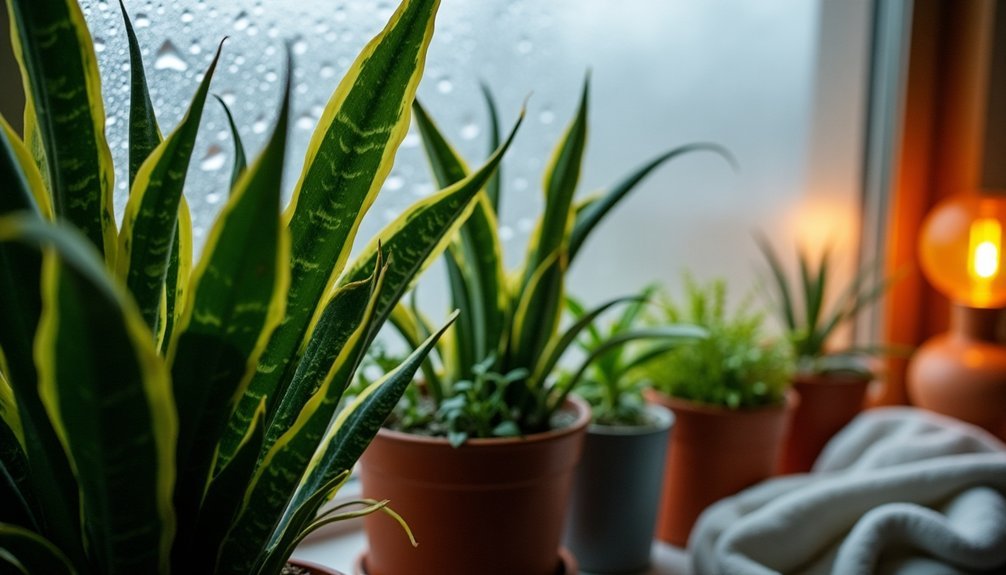
Keep your snake plant thriving by maintaining temperatures above 50°F, as exposure to colder conditions can cause fatal damage. You'll need to monitor temps carefully, move plants away from drafty windows and doors, reduce winter watering, and maintain proper humidity. Act fast if temperatures drop by relocating your plant to a warmer spot and covering it with a blanket. Understanding the right prevention methods will help you protect your snake plant year-round.
Understanding Snake Plant's Natural Temperature Range
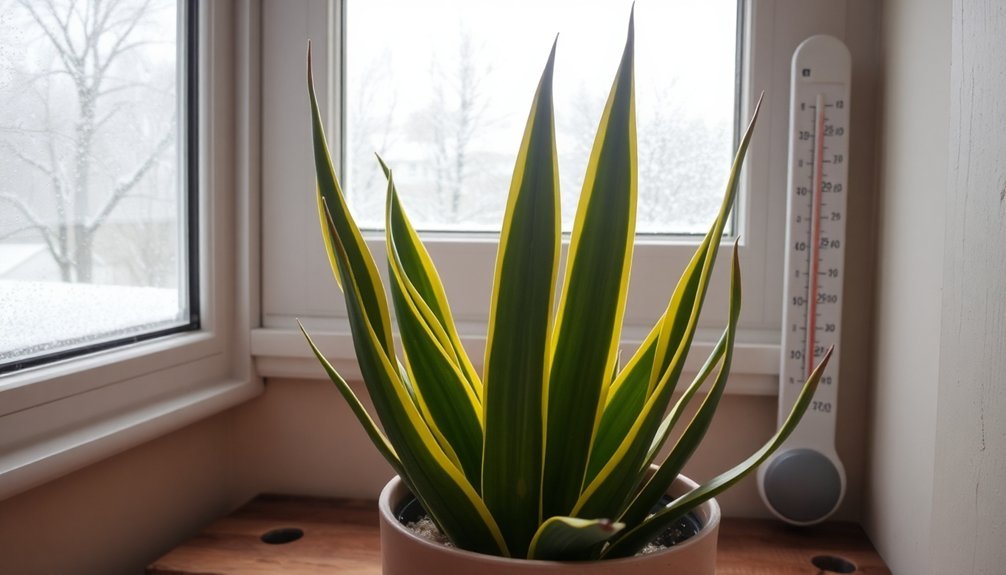
Since snake plants originate from the tropical regions of West Africa, they flourish best in temperatures between 60°F and 80°F (16°C-27°C). When temperatures drop below this range, your plant may show signs of stress, though it can briefly tolerate conditions as low as 50°F (10°C).
To guarantee your snake plants grow at their best, you'll want to maintain ideal temperatures within their preferred range. Watch for warning signs like yellowing leaves or mushy textures, which often indicate temperature-related stress. A consistent temperature is key to preventing these issues.
While these hardy plants can handle minor fluctuations, prolonged exposure to unsuitable conditions will harm their health. To prevent distress, keep your snake plant in a stable environment and away from cold drafts, air conditioning vents, or windowsills that might expose them to temperatures below 50°F.
Signs of Cold Damage in Snake Plants
Recognizing cold damage early can save your snake plant from severe harm. When your plant's been exposed to temperatures below 50°F, you'll notice several clear signs of cold damage that shouldn't be ignored.
Watch for yellowing leaves, which are often the first indicator that your plant's struggling with cold stress. If you notice your snake plant's leaves becoming mushy or soft to the touch, it's likely suffering from cell damage due to low temperatures.
Brown spots appearing on the foliage and wilting leaves are also telltale signs that your plant's been exposed to harmful cold conditions. Additionally, if you observe stunted growth or your plant's stopped growing altogether, it's probably reacting to cold drafts or sustained low temperatures in its environment.
Best Indoor Locations During Winter Months
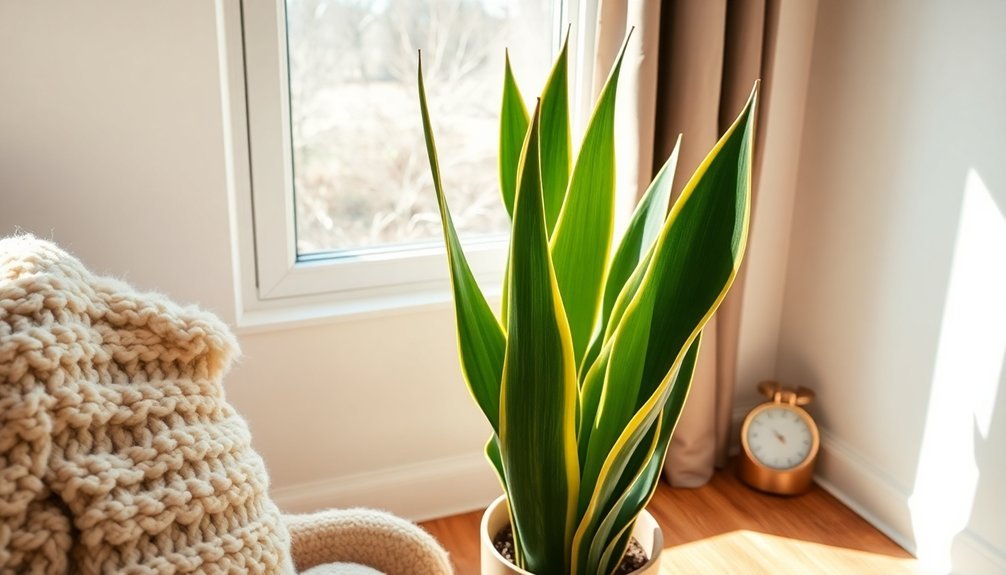
Finding the perfect winter location for your snake plant can make the difference between survival and thriving during the cold months. Your snake plant performs best in bright, indirect sunlight while maintaining stable temperatures between 60°F and 75°F for ideal growth. Avoid placing them near windows, exterior doors, or heating vents where temperature fluctuations can stress the plant.
| Location | Benefits | Risks |
|---|---|---|
| Interior walls | Stable temperatures | Limited light |
| Living spaces | Monitored conditions | Heating vent exposure |
| Elevated surfaces | Away from cold floors | Draft vulnerability |
Use a thermometer to monitor your plant's environment and adjust its position accordingly. Remember that cold drafts below 50°F can damage your snake plant, so choose central locations away from exterior elements to guarantee consistent growing conditions throughout winter.
Temperature Monitoring and Control Methods
Maintaining proper temperature control for your snake plant requires careful monitoring and proactive measures. Use a reliable thermometer for consistent temperature monitoring to guarantee ideal snake plant health above 50°F (10°C).
You'll need to implement a solid temperature regulation strategy, keeping your plant away from cold drafts and unheated areas.
To protect your snake plant effectively:
- Place a thermometer near your plant and check it daily, especially during winter.
- Use heating mats when necessary to maintain warmth on cold surfaces.
- Watch for signs of temperature stress, including yellow or mushy leaves.
Remember to gradually acclimate snake plants when moving them outdoors during seasonal changes.
Don't rush this process – wait until nighttime temperatures consistently stay above 50°F (10°C). This careful approach helps prevent temperature-related damage and maintains your plant's continued health.
Winter Watering Adjustments for Cold Protection
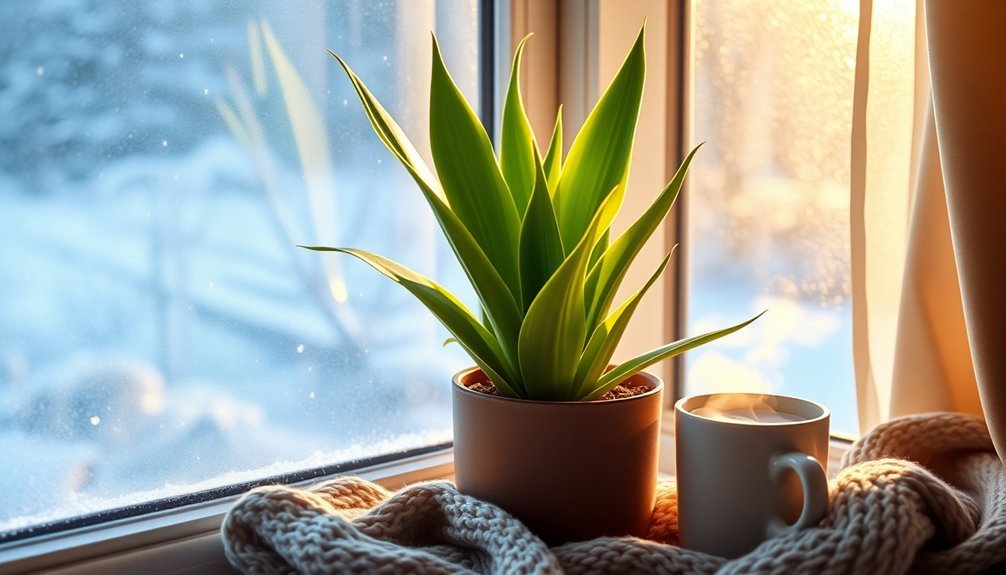
During winter, you'll need to cut back considerably on watering your snake plant, spacing out waterings anywhere from 2 to 8 weeks apart to protect it from cold stress.
Before you water, check the top 2-4 inches of soil with your finger or a moisture meter to verify it's completely dry, preventing potential root rot issues.
You can safeguard your plant from cold shock by using room temperature water and completely avoiding watering when temperatures fall below 50°F (10°C).
Reduce Winter Water Frequency
Winter's cold temperatures require significant adjustments to your snake plant's watering schedule. You'll need to reduce winter water frequency to every 6-8 weeks to prevent root rot when temperatures drop.
Before watering, always check that the top 2-4 inches of soil is dry to avoid excess water accumulation.
When temperatures fall below 50°F, your snake plant becomes particularly vulnerable to moisture-related damage. To protect your plant during this sensitive period:
- Water thoroughly but less frequently than in warmer months
- Use a moisture meter to accurately monitor soil moisture levels
- Allow soil to dry completely between waterings to maintain healthy roots
These adjustments help prevent mushy leaves and root damage while ensuring your snake plant stays healthy throughout the colder months, when it naturally requires less moisture for survival.
Check Soil Before Watering
Cold weather demands extra vigilance when checking your snake plant's soil moisture levels. Before you water a Snake plant during winter, insert your finger 2-4 inches below the soil line to verify it's completely dry.
Using a well-draining soil, like a cactus mix, helps prevent water retention when temperatures drop below 50°F.
To avoid overwatering, wait 4-8 weeks between waterings during cold months, as moisture evaporates more slowly. You can test soil moisture by gently pressing a damp cloth against the surface – if soil particles stick, it's still too wet.
Consider watering from the bottom to encourage stronger root growth and prevent water from collecting around the leaves. This method is particularly effective in winter when your snake plant's growth naturally slows down.
Avoid Cold Water Shock
When temperatures plummet, your snake plant becomes particularly sensitive to cold water shock, which can damage its roots and stunt growth.
During winter months, you'll need to adjust your watering schedule and use only room temperature water to protect your plant from stress.
To prevent cold water shock and root rot, follow these essential steps:
- Let tap water sit for several hours to reach room temperature before watering.
- Check soil dryness by testing the top 2-4 inches with your finger.
- Water only every 4-8 weeks, ensuring soil dries completely between waterings.
If temperatures drop below 50°F, move your plant to a warmer location indoors.
This helps protect it from both environmental stress and the risks associated with cold, damp conditions that can harm your snake plant's root system.
Creating Protective Barriers Against Draft
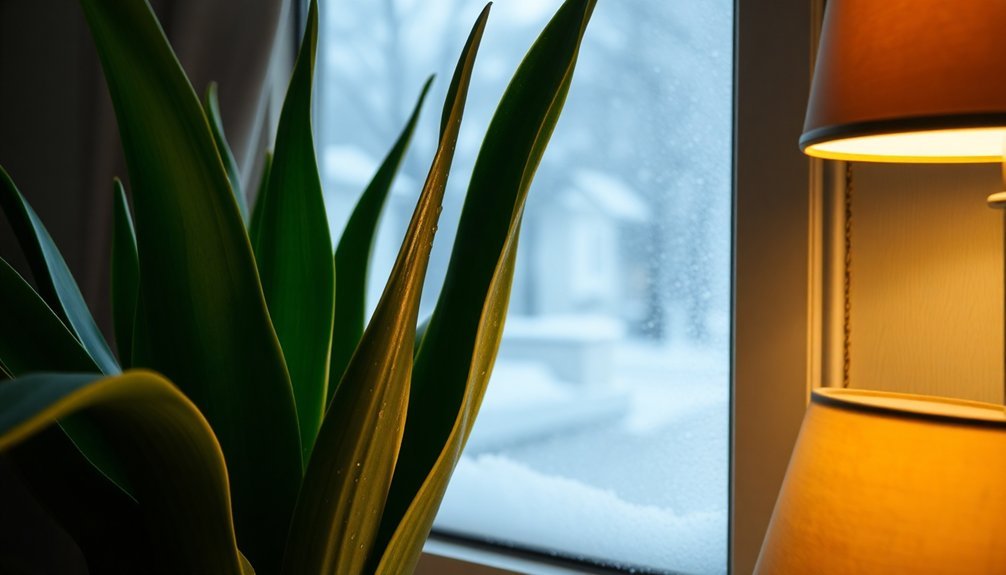
Protecting your snake plants from drafts requires strategic placement and thoughtful barriers throughout your home. You'll want to create multiple layers of defense against cold air to maintain a stable environment. Position your plants away from windows and doors, and install draft stoppers to prevent chilly air from seeping in. Consider elevating them away from cold floors using plant stands, which helps maintain warmer temperatures around their roots.
| Barrier Type | Protection Method |
|---|---|
| Windows | Heavy curtains/thermal drapes |
| Doors | Weather stripping/draft stoppers |
| Floors | Plant stands/elevated shelves |
| Air Flow | Group with other plants |
| Room Setup | Away from exterior walls |
Creating protective barriers isn't just about physical barriers – you can establish a beneficial microclimate by grouping your snake plants with other houseplants, helping to stabilize temperature fluctuations and maintain higher humidity levels.
Emergency Measures for Sudden Temperature Drops
Despite your best preventive measures, sudden temperature drops can catch any plant parent off guard. When temperatures plummet below 50°F, you'll need to take immediate emergency measures to protect your snake plant. Move your plant to a warmer location and maintain the ideal range of 60-80°F using a space heater or heating pad.
When winter's chill strikes, act fast! Your snake plant needs quick rescue to stay warm above 50°F.
Keep these critical actions in mind when facing sudden cold exposure:
- Cover your snake plant with a light blanket for insulation against cold drafts.
- Reduce watering frequency to prevent root rot in colder conditions.
- Monitor regularly for signs of distress, such as yellow or mushy leaves.
If you notice any concerning symptoms, don't wait to act. Quick intervention during temperature drops can mean the difference between a thriving plant and one suffering from cold damage.
Transitioning Snake Plants Between Seasons
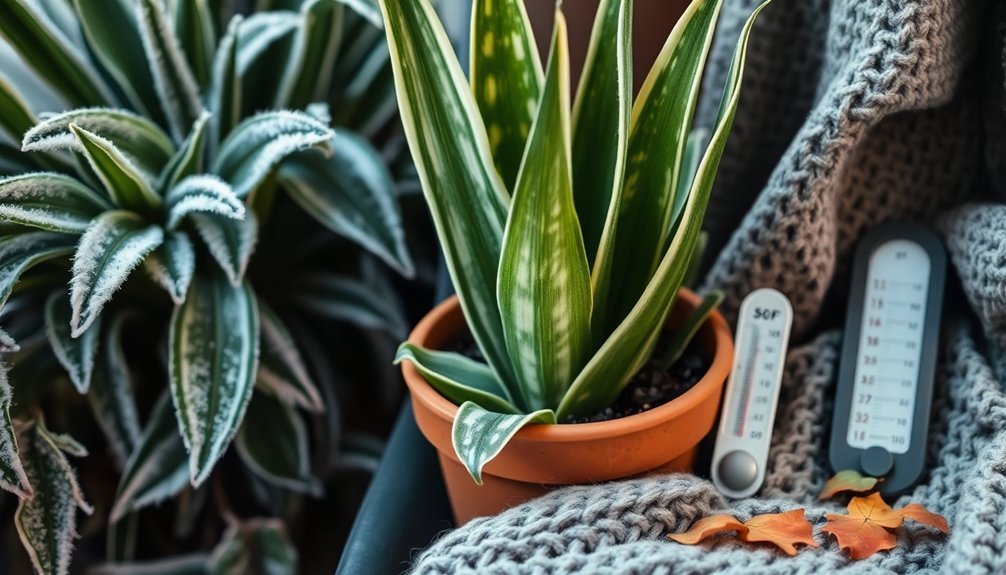
When shifting your snake plant between seasons, you'll need to make gradual temperature adjustments to prevent shock to the plant.
You can start by moving your plant to shifting spaces like a covered porch during warm months, or placing it a few feet away from windows during colder periods.
As seasons change, you'll want to scout new locations in your home that maintain stable temperatures while avoiding both cold drafts and direct heat sources.
Gradual Temperature Adjustment Tips
Since snake plants thrive best with stable temperatures, moving them between seasons requires careful attention to prevent shock.
You'll need to monitor nighttime temperatures and protect your plant from cold drafts during these changes. To gradual acclimate your snake plant, start by moving it to lower light conditions and adjusting its care routine accordingly.
Here are three essential steps for temperature adjustment:
- Place a thermometer near your plant to track temperature fluctuations, especially around windows and doors.
- Begin the change by placing your plant in a shaded area for a few hours daily, gradually increasing exposure.
- Reduce watering as temperatures drop, allowing soil to dry more between waterings.
Remember to maintain temperatures above 50°F and give your plant at least a week to adjust to its new environment before making further changes.
Seasonal Location Changes
As the seasons change, your snake plant may need to shift locations to maintain ideal growing conditions. When summer arrives, start moving your plant outdoors gradually, allowing it to adjust to indirect sunlight before full exposure.
Remember to monitor indoor temperatures closely with a thermometer to guarantee they stay within 60°F to 75°F for peak growth.
Focus on seasonal location changes as fall approaches by bringing your plant back inside before nighttime temperatures drop below 50°F.
Choose a consistent indoor location away from cold drafts and windows during fall and winter months. If you're shifting snake plants near heating vents, adjust their position to prevent excessive heat exposure.
This careful attention to temperature range and placement will help your snake plant thrive throughout the changing seasons.
Humidity Management in Cold Conditions
Although snake plants are known for their resilience, maintaining proper humidity becomes essential during cold conditions to prevent leaf damage and stress. Your snake plant needs humidity levels around 40% to thrive, and you'll want to monitor these levels carefully using a hygrometer during colder months.
To maintain adequate moisture in the air, you can employ several effective methods:
- Set up a humidifier near your plant to combat dry indoor air, especially during winter months.
- Place a pebble tray filled with water beneath your plant for natural humidity through evaporation.
- Mist the leaves occasionally, but don't overdo it to avoid soil saturation.
Remember to check your hygrometer regularly and adjust your humidity management strategy accordingly. This careful attention to moisture levels will help your snake plant stay healthy when temperatures drop.
Recovery Techniques After Cold Exposure
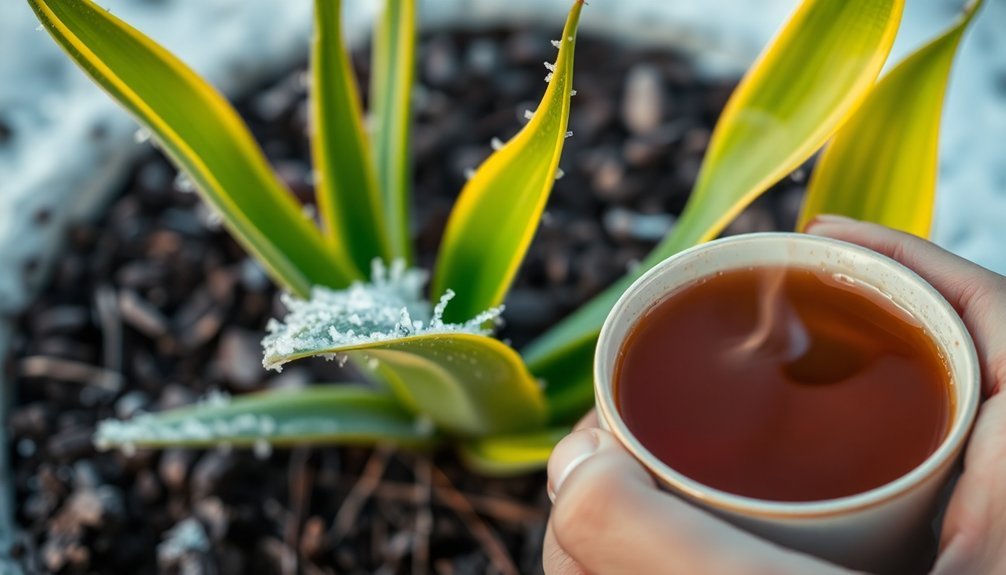
When your snake plant has suffered cold damage, you'll need to act quickly by moving it to a warmer spot between 60-75°F and checking for signs of injury like yellowing leaves or soft spots.
You'll want to examine the roots carefully for any rot and repot in fresh soil if needed, while being cautious not to overwater during the recovery period.
Keep a close eye on your plant for several weeks, watching for new growth that signals successful rehabilitation, and don't hesitate to seek expert advice if your plant shows no improvement.
Immediate Warmth And Care
Once your snake plant has endured temperatures below 50°F (10°C), swift action is essential for its recovery. Move it immediately to provide immediate warmth and maintain a stable indoor temperature between 60-75°F.
Check the soil moisture carefully, as wet conditions can worsen cold damage.
Your priority actions should include:
- Providing indirect light to support recovery without adding stress
- Inspecting and pruning affected leaves that show yellowing or mushiness
- Monitoring for pests or diseases, as cold-stressed plants are more susceptible to infestations
While your plant recovers, don't water until you're certain it's needed, as overwatering can compound cold damage.
Keep the environment consistent and watch for new growth, which signals successful recovery.
Remember that prevention is always better than treating cold damage, so maintain proper temperatures year-round.
Long-Term Plant Rehabilitation
Successfully rehabilitating your snake plant after cold damage requires a systematic, long-term approach that extends beyond initial emergency care.
First, you'll need to assess your plant for cold damage symptoms like yellowing or mushy leaves. Trim away any damaged leaves using sterile scissors to prevent disease spread and encourage new growth.
To combat potential root rot, repot your Snake plant in fresh, well-draining soil. This step is essential for ensuring proper root aeration and preventing water retention issues.
Place the plant in a stable environment away from direct sunlight, allowing it to adjust gradually to warmer temperatures.
As part of your snake plant care routine, monitor the plant's watering schedule carefully. Wait until the soil dries completely between waterings to support root recovery and prevent further stress.
Frequently Asked Questions
How Do I Protect My Snake Plant From the Cold?
Move your snake plant indoors when temps drop below 50°F. Keep it away from drafty windows and doors. Monitor indoor temperatures between 60-75°F, and use protective covers if you can't bring it inside.
How to Stop a Snake Plant From Dying?
Keep your snake plant between 60-75°F, don't overwater it, guarantee good drainage, and maintain 40% humidity. Place it away from cold drafts and reduce watering in winter. It'll thrive with these basic care steps.
Can Snake Plants Live in 50 Degree Weather?
You shouldn't keep your snake plant in 50°F weather consistently. While it might survive brief exposure, it's risky. Keep your plant in temperatures between 60-75°F to guarantee it stays healthy and thriving.
Should I Cut the Dead Tips off My Snake Plant?
Yes, you should cut dead tips off your snake plant using clean, sharp scissors. Trim at an angle just above the damaged area. It'll improve appearance and promote healthy growth while preventing potential problems.
In Summary
Taking proper winter precautions will help your snake plant thrive year-round. You'll need to maintain indoor temperatures above 50°F, monitor conditions regularly, and adjust your care routine seasonally. Don't forget to check drafts near windows, maintain proper humidity, and be ready with emergency measures when temperatures drop. With these preventive steps, you're ensuring your snake plant stays healthy through the coldest months.