Position your air-filtering plants near windows in spring for maximum light and ventilation, using sheer curtains to diffuse intense summer sun. Group moisture-loving varieties together and move them to interior spaces during winter to avoid drafts. Rotate plants regularly to guarantee even growth, and adjust watering based on seasonal needs. Monitor humidity levels and temperature zones throughout the year. These foundational tips will help you access the full potential of your indoor air-purifying garden.
Maximizing Natural Light Exposure Through Window Placement
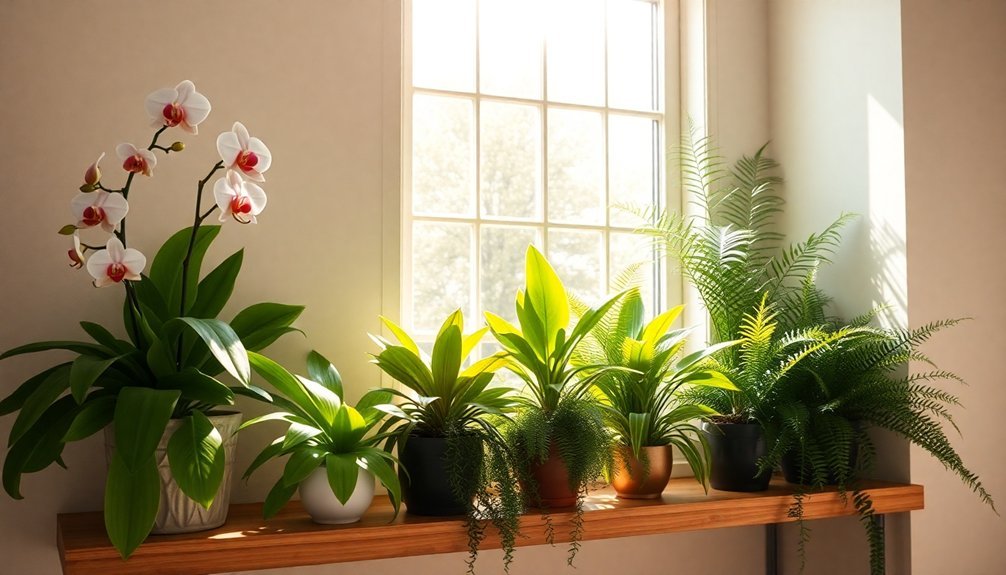
When positioning air-filtering plants, proper light exposure through strategic window placement can make or break their effectiveness.
You'll want to place your air purifying plants where they receive bright sunlight, but indirectly – typically 12-16 hours daily for peak photosynthesis and plant growth.
For south-facing windows, opt for sun-tolerant species, but protect sensitive plants with sheer curtains to maintain ideal humidity levels.
During winter, move your plants closer to windows to maximize light exposure from the lower sun angle.
Don't forget to rotate your plants regularly to guarantee even light distribution, preventing them from stretching toward the light source.
This seasonal adjustment approach helps you maintain healthy, effective air-filtering plants year-round while avoiding the common pitfall of uneven growth patterns.
Humidity Control and Plant Grouping Strategies
As indoor heating systems reduce humidity during winter months, maintaining proper moisture levels becomes essential for your air-filtering plants.
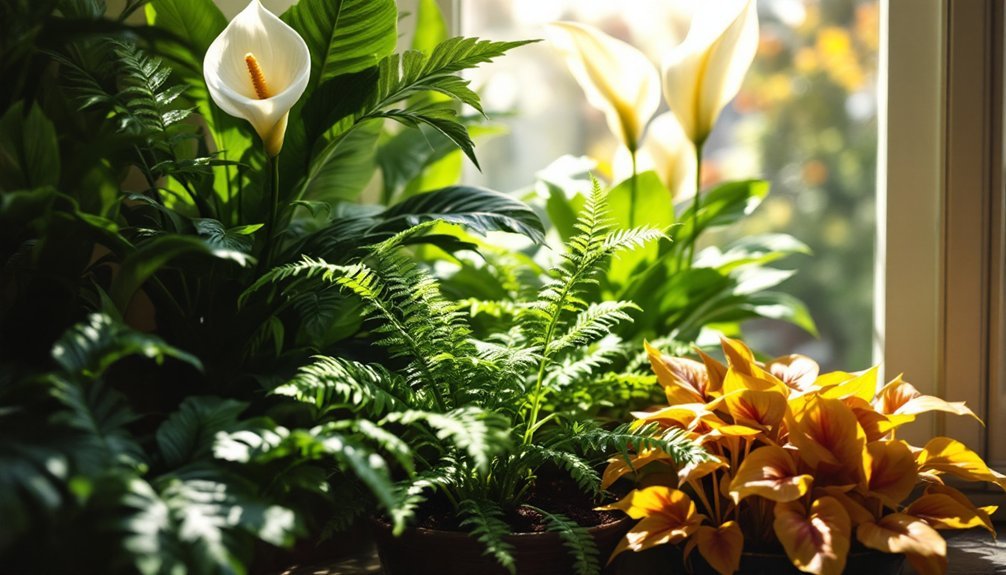
You'll want to monitor humidity using a hygrometer and create a microenvironment where plants thrive by grouping plants with similar moisture needs together. Boston ferns and peace lilies, for example, make perfect companions.
To prevent leaf browning, mist them regularly and keep humidity-loving plants away from heat sources.
Adapt to seasonal changes by adjusting plant placement throughout the year. During spring and summer, protect your moisture-sensitive plants from direct sunlight, which can quickly dry them out. Consider using sheer curtains to diffuse intense light.
Temperature Zones and Plant Adaptation Methods
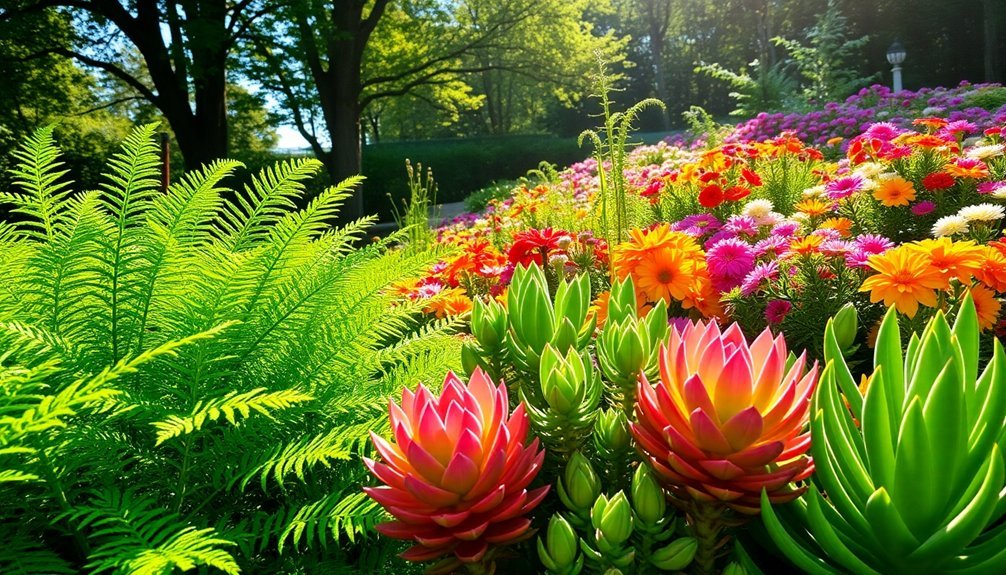
Understanding your home's temperature zones plays an essential role in positioning air-filtering plants effectively. Most indoor plants have specific temperature preferences, and you'll need to adapt their locations as seasonal fluctuations occur.
- Move plants closer to windows during winter to maximize light exposure while maintaining stable environments.
- Place humidity-loving air-filtering plants in bathrooms or near humidifiers to maintain 40-65% moisture levels.
- Use sheer curtains in summer to create indirect sunlight, preventing leaf burn while ensuring adequate light.
- Monitor temperature zones throughout your home to protect plants from drafts and extreme conditions.
Seasonal Air Flow Patterns and Plant Arrangement
Proper arrangement of air-filtering plants throughout the seasons directly impacts their effectiveness in purifying your indoor air. You'll need to adjust your plant arrangement based on seasonal air flow patterns to maintain ideal humidity and maximize their air-filtering capabilities.
| Season | Plant Location | Key Considerations |
|---|---|---|
| Spring | Near windows | Increased natural light, fresh air circulation |
| Summer | Window areas | Maximum light intensity, natural ventilation |
| Winter | Interior spaces | Consistent indoor temperatures, avoid drafts |
During warmer months, position your plants to capitalize on natural ventilation. When winter arrives, relocate them away from heating vents and create clustered arrangements to maintain humidity levels. Remember to monitor humidity and adjust plant positions based on seasonal changes in light intensity. You'll want to place taller plants behind shorter ones during winter to guarantee proper light distribution.
Growth Cycles and Rotation Schedules
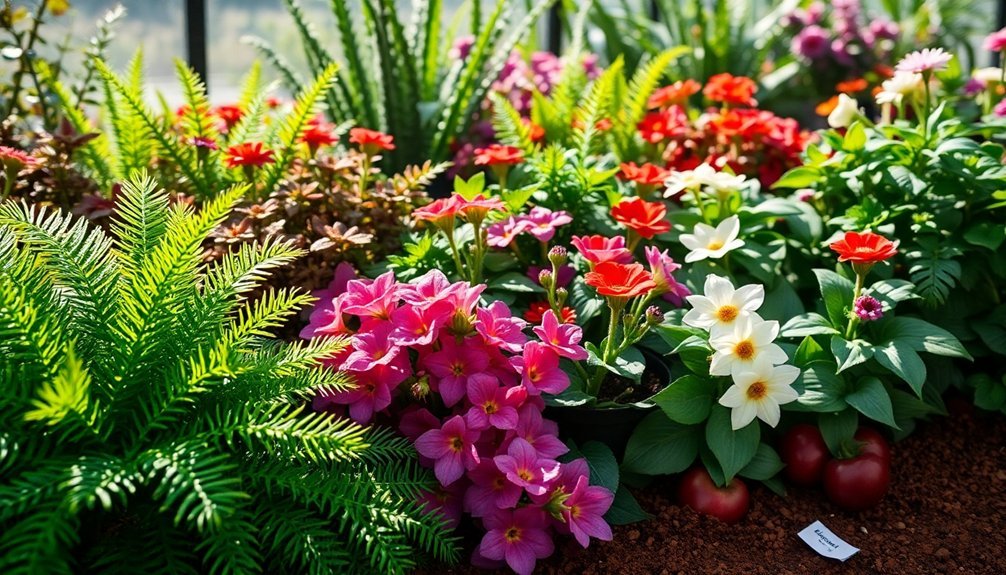
To maximize your air-filtering plants' effectiveness, you'll need to sync their care with their natural growth cycles throughout the year. Understanding these cycles helps you create ideal rotation schedules that support plant health during both active and dormant months.
- Adjust watering frequency based on seasons – more during spring/summer growth periods, less during fall/winter dormancy
- Monitor humidity levels during seasonal changes, adding humidifiers or misting for moisture-loving varieties
- Schedule fertilization for growing seasons only, pausing during dormant months to prevent nutrient buildup
- Rotate plants to match changing light conditions, especially moving sun-dependent species closer to windows in winter
Frequently Asked Questions
What Is the Best Season to Use an Air Purifier?
You'll benefit from using an air purifier year-round, but it's especially important during fall and winter when you're indoors more. Don't forget spring for allergies and summer for humidity control.
How Many Plants in a Room to Purify Air?
You'll need 100-1,000 plants per 10 square feet for effective air purification. That's impractical for most rooms, so it's better to combine a few plants with an air purifier for better results.
How Often Should You Water Air Purifying Plants?
You'll need to water most air-purifying plants every 7-14 days. Check the top inch of soil – if it's dry, it's time to water. During growing season, you'll water more frequently than winter months.
Which House Plant Purifies the Air the Most?
You'll get the most air purification from Peace Lilies, as they effectively remove multiple toxins like formaldehyde, benzene, and trichloroethylene. They're the top performers among air-purifying houseplants for indoor spaces.
In Summary
Position your air-filtering plants strategically throughout the year to maximize their effectiveness. You'll want to rotate them based on seasonal light patterns, group them for peak humidity, and adjust their locations as temperatures shift. Keep track of individual growth cycles and move plants accordingly. By following these seasonal placement tips, you're creating a dynamic, living air filtration system that works year-round.