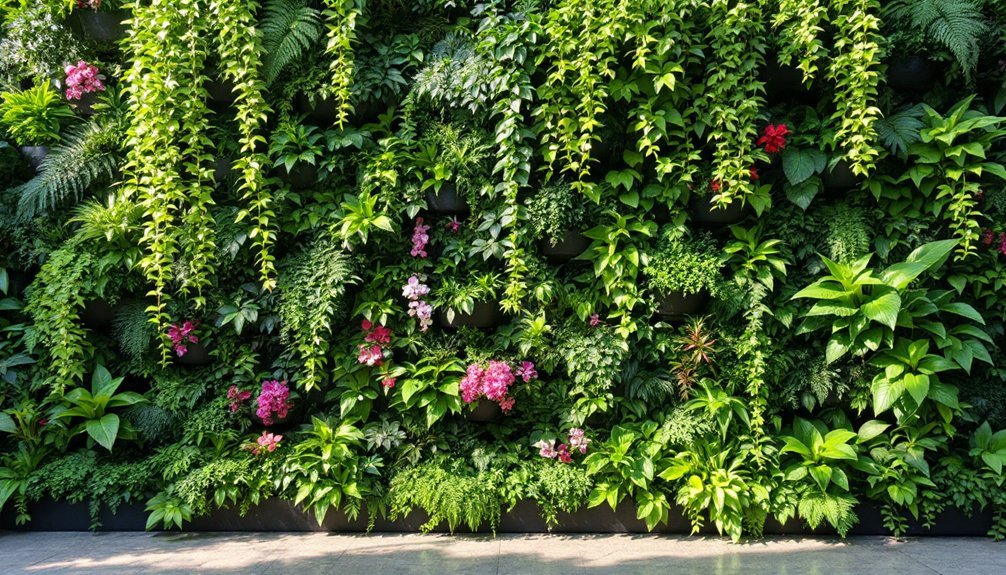
Transform your vertical space into a thriving living wall garden with these smart design tips. You'll want to select a wall with ample natural light, plan your layout with complementary plant groupings, and choose climate-appropriate species. Install an efficient irrigation system, maximize space with strategic mounting options, create a low-maintenance watering schedule, and implement seasonal care strategies. Following these essential principles will reveal the full potential of your living wall masterpiece.
Selecting the Perfect Wall Location and Lighting

When creating a living wall garden, selecting the right location and lighting conditions serves as your foundation for success. Start by identifying a wall that receives ample natural light, preferably near windows or skylights. This guarantees your plants will thrive and maintain healthy growth patterns throughout the year.
Consider the wall's orientation carefully. If you're planning to grow sun-loving plants, choose south or west-facing walls that receive maximum sunlight. For shade-tolerant species, north-facing walls work better.
Don't forget to factor in seasonal light changes, as they'll impact your plants' growth cycles. Make certain you can easily access your chosen wall for regular maintenance tasks like watering and pruning.
Avoid walls in dim rooms, as insufficient light will compromise your plants' health and development.
Planning Your Plant Layout for Visual Impact
With your wall location and lighting requirements established, the next step focuses on crafting a visually striking plant layout.
Start by creating a grid design on paper, mapping out your plant walls with taller specimens at the top and trailing varieties at the bottom. Consider how you'll group plants with similar needs while incorporating varied textures and colors for maximum visual interest.
When spacing plants, remember to account for future growth to prevent overcrowding. Your layout should balance both aesthetics and practicality, using different mounting techniques to enhance the overall design.
- Create distinct zones by clustering plants with complementary colors and contrasting shapes
- Position plants at varied angles using specialized trays to add depth and dimension
- Establish a natural flow by alternating leaf sizes and textures throughout your arrangement
Choosing Climate-Appropriate Plant Combinations
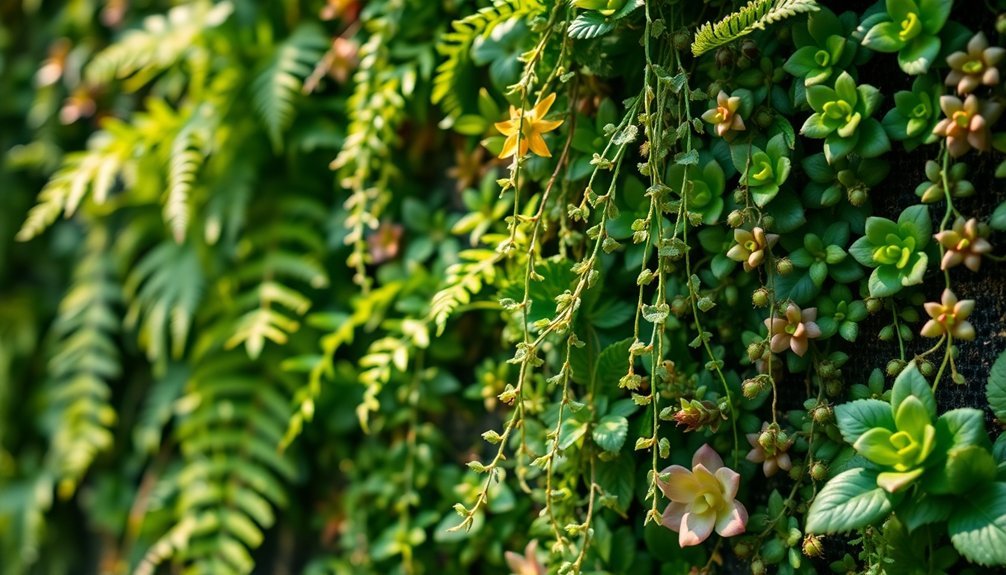
Selecting climate-appropriate plants serves as the foundation for a thriving living wall garden. You'll want to prioritize native species that have naturally adapted to your local conditions, guaranteeing they'll flourish with minimal care.
When planning your plant combinations, group varieties with matching water and sunlight needs together. This strategy creates sustainable micro-ecosystems within your living wall and streamlines maintenance.
If you're working with a sun-exposed area, incorporate drought-tolerant varieties that can withstand heat and reduced watering schedules.
Consider your wall's specific microclimate, including wind exposure and temperature variations, as these factors notably impact plant success.
For year-round visual interest, blend evergreen species with seasonal bloomers. This approach guarantees your living wall remains attractive while adapting naturally to your climate's rhythms.
Installing an Efficient Irrigation System
Because proper irrigation forms the backbone of any successful living wall garden, installing an efficient watering system should be your top priority. A drip irrigation system paired with automated timers will guarantee your plants receive consistent hydration while minimizing water waste.
You'll also want to incorporate a water reservoir into your design to maintain ideal moisture levels and reduce manual maintenance.
- Install moisture sensors to monitor soil conditions and prevent overwatering, which can damage plant health.
- Include strategic drainage holes throughout your planter design to avoid water accumulation and root rot.
- Set up a drip system with precise water delivery directly to plant roots, maximizing absorption efficiency.
Don't forget to regularly check your irrigation system's components and adjust watering schedules based on seasonal changes and your plants' specific needs.
Maximizing Space With Strategic Mounting Options
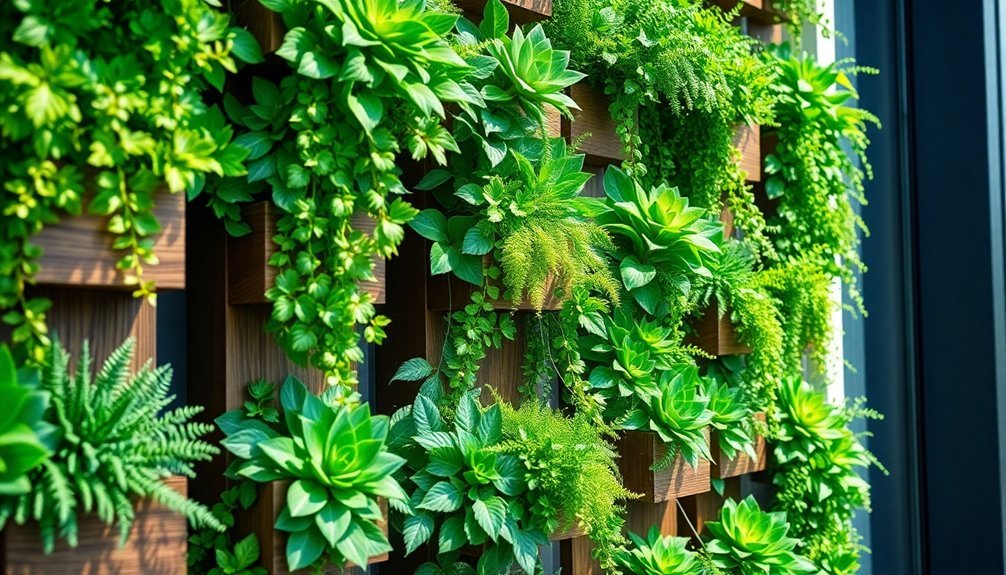
When planning your living wall, you'll find that vertical rail systems offer flexible mounting options that adapt to various plant sizes while maintaining structural integrity.
Strategic placement of multi-sized planters at different heights creates visual layers and maximizes your available wall space.
You can enhance your garden's efficiency by implementing multi-level mounting brackets that allow for both horizontal and vertical adjustments, making it easier to accommodate growing plants and create dynamic arrangements.
Vertical Rail Installation Methods
Installing vertical rails effectively requires three key mounting approaches: wall brackets, French cleats, or direct mounting solutions.
You'll need to select corrosion-resistant materials for your vertical rail systems, especially if you're planning an outdoor garden. When setting up your rails, verify proper spacing to promote ideal air circulation between plants while accommodating their growth patterns.
- Choose adjustable rail components that let you modify your design as plants mature.
- Install integrated irrigation systems during the initial setup to simplify future maintenance.
- Calculate load-bearing requirements before mounting to support heavier plant arrangements.
Your mounting method should match your garden's specific needs.
Consider factors like wall material, weight distribution, and accessibility for maintenance. Remember that modular systems offer the most flexibility, allowing you to adapt your garden's design over time as your plants evolve.
Space-Saving Planter Arrangements
Three innovative mounting strategies can transform your living wall's spatial efficiency.
First, angle your wall-mounted planters strategically to maximize accessibility and vertical space utilization. You'll find maintenance becomes easier while creating an engaging visual display.
Next, implement modular planting systems that adapt to your changing needs. These versatile units let you customize and expand your vertical gardens over time, giving you complete control over the design.
Group plants with similar care requirements together to streamline your maintenance routine.
Finally, create depth by installing planters at varying heights and sizes. Stagger your hanging arrangements to draw attention upward and establish a dynamic space-saving layout.
This approach not only optimizes your available space but also produces an eye-catching living wall that maximizes both form and function.
Multi-Level Mounting Systems
Building upon the concept of strategic planter arrangements, multi-level mounting systems take vertical gardening to new heights.
You'll maximize your space while creating stunning visual displays that transform any wall into a living masterpiece. These customizable designs let you arrange plants at different angles, guaranteeing ideal light exposure and easy maintenance access.
- Vertical garden layouts can accommodate various plant species with different light and water requirements, allowing you to mix sun-loving flowers with shade-tolerant foliage.
- Multi-level mounting systems with angled trays make plant care effortless while creating dynamic visual interest through layered arrangements.
- Self-watering system features reduce maintenance time and guarantee consistent moisture levels across all planting tiers.
Creating a Low-Maintenance Watering Schedule
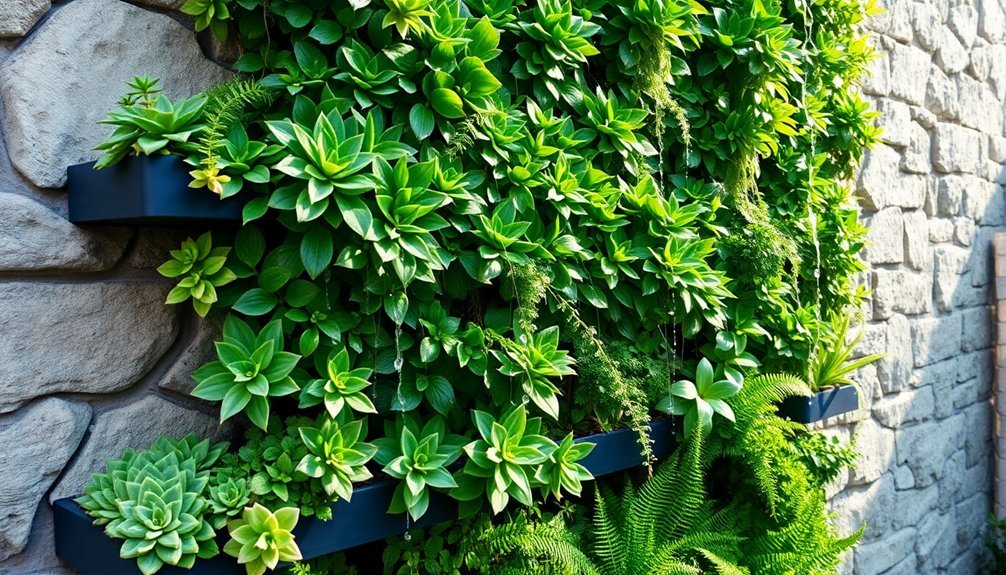
When designing a living wall garden, establishing an efficient watering schedule becomes essential for long-term success and minimal maintenance. You'll want to implement a self-watering system that automatically delivers moisture to your plants, making your living wall system truly low-maintenance.
Start by grouping plants with similar water requirements together and use a moisture meter to monitor soil conditions accurately. Your watering schedule should account for each plant's specific needs – pothos may need water every 1-2 weeks, while ferns require more frequent hydration.
Don't forget to adjust your schedule seasonally, as plants typically need more water during warmer months. A well-planned automated system will maintain consistent moisture levels throughout your living wall, reducing your hands-on maintenance time while ensuring your plants thrive year-round.
Implementing Seasonal Care Strategies
You'll need to track seasonal light changes throughout the year to guarantee your living wall plants receive adequate illumination as the sun's angle shifts.
As seasons progress, adjust your watering routine by increasing frequency during hot summer months and reducing it during cooler periods when plants are less active.
To maintain a vibrant living wall, schedule pruning sessions in late winter or early spring, removing overgrown sections and shaping plants before their active growth cycle begins.
Monitor Light Level Changes
Since natural light levels fluctuate throughout the year, monitoring your living wall garden's exposure becomes essential for maintaining ideal plant health.
As seasonal changes affect daylight hours, you'll need to track how these shifts impact different sections of your living wall. Consider supplementing with LED grow lights during darker winter months to support plants requiring higher light conditions.
- Use a light meter or observation log to document which areas receive direct sunlight versus shade throughout different seasons.
- Track individual plant performance and relocate specimens that aren't thriving to more suitable spots.
- Keep detailed records of seasonal light variations and how different plant species respond to help inform future adjustments.
Adjust Watering During Seasons
Just as light conditions change throughout the year, proper watering adjustments become a fundamental aspect of maintaining a thriving living wall garden. You'll need to adapt your watering schedule to match seasonal changes, paying close attention to moisture levels in your growing medium.
| Season | Temperature Impact | Watering Frequency |
|---|---|---|
| Summer | High evaporation | Increase watering |
| Fall/Winter | Low evaporation | Reduce watering |
| Spring | Moderate evaporation | Regular watering |
To maintain ideal moisture levels, use a moisture meter or finger test to check soil conditions regularly. Consider installing a self-watering system to regulate moisture consistently throughout the year. Remember that different plants have varying water needs – some require more during growth phases, while others need less during dormancy. This tailored approach guarantees your living wall thrives across all seasons.
Prune For Growth Cycles
Mastering seasonal pruning rhythms keeps your living wall garden vibrant and well-maintained throughout the year.
You'll need to align your pruning schedule with natural growth cycles to maximize plant health and visual appeal. Time your cuts strategically, focusing on spring pruning for flowering plants to encourage robust blooms.
- Cut back trailing plants like philodendrons regularly to promote bushier growth and prevent overwhelming spread.
- Monitor individual plant growth rates to establish customized pruning frequencies.
- Adjust water and nutrient levels after pruning to support recovery.
Watch how different plants respond to pruning and adapt your approach accordingly. Some varieties will need more frequent attention than others based on their growth habits and environmental conditions.
Frequently Asked Questions
How Long Does It Take for a Living Wall to Reach Full Coverage?
You'll typically see full coverage in 3-6 months with fast-growing plants, but it can take up to a year depending on your plant selection, growing conditions, spacing, and initial plant size.
Can Living Walls Attract Unwanted Insects or Pests Indoors?
Yes, you'll likely encounter some insects with indoor living walls. However, you can minimize pest issues by choosing pest-resistant plants, maintaining proper air circulation, and using natural pest control methods when needed.
Will the Wall Structure Be Damaged by Constant Moisture Exposure?
You'll need proper waterproofing to protect your wall. Without it, constant moisture can cause mold, rot, and structural damage. Install a vapor barrier and guarantee good drainage to keep your wall safe and dry.
How Much Does a Professional Living Wall Installation Typically Cost?
You'll typically spend between $150-500 per square foot for professional living wall installation. The final cost depends on your wall size, plant selection, irrigation system, and whether it's indoor or outdoor placement.
Are Living Walls Suitable for Rental Properties or Temporary Installations?
You can create portable living walls using modular systems or freestanding units that don't damage walls. They're perfect for rentals since you'll be able to take them with you when you move out.
In Summary
Living wall gardens transform ordinary spaces into vibrant, natural sanctuaries. By following these design tips, you'll create a thriving vertical garden that adds beauty and life to your environment. Remember to monitor your plants' health, adjust watering schedules as needed, and swap out seasonal varieties to maintain year-round appeal. With proper planning and maintenance, your living wall will become a stunning focal point that brings the outdoors in.