Several common houseplants effectively clean your indoor air through natural filtration. You'll get the best results from Snake Plants, which tackle formaldehyde and benzene while thriving in low light, or Spider Plants that combat multiple toxins. Peace Lilies and Golden Pothos also excel at removing various pollutants with minimal care. For maximum air purification, place clusters of these plants in high-traffic areas – there's much more to discover about optimizing your indoor air quality.
The Science Behind Plant Air Purification
Nature's own air filtration system operates through houseplants in fascinating ways. You'll find that plants actively clean your indoor air through two main processes that NASA studied extensively.
Through photosynthesis, they convert carbon dioxide into oxygen while simultaneously absorbing harmful toxins like benzene and formaldehyde through their leaves and roots.
Different plants target specific pollutants in your home. You can rely on Spider Plants to eliminate formaldehyde and xylene, while Peace Lilies excel at filtering out ammonia and benzene.
As plants undergo transpiration, they'll also increase your indoor humidity levels, creating a healthier environment.
While air purification through plants works gradually, you'll get the best results by strategically placing multiple plants throughout your space, especially in humid areas where their cleaning abilities are most effective.
Top-Performing Air-Cleaning Plants for Your Home
Armed with an understanding of how plants purify air, you'll want to select the most effective natural air filters for your home.
These top-performing air-purifying plants excel at improving indoor air quality while offering varying levels of care requirements.
- Snake Plants and Golden Pothos are perfect for busy homeowners, filtering toxins like formaldehyde and benzene while thriving with minimal attention.
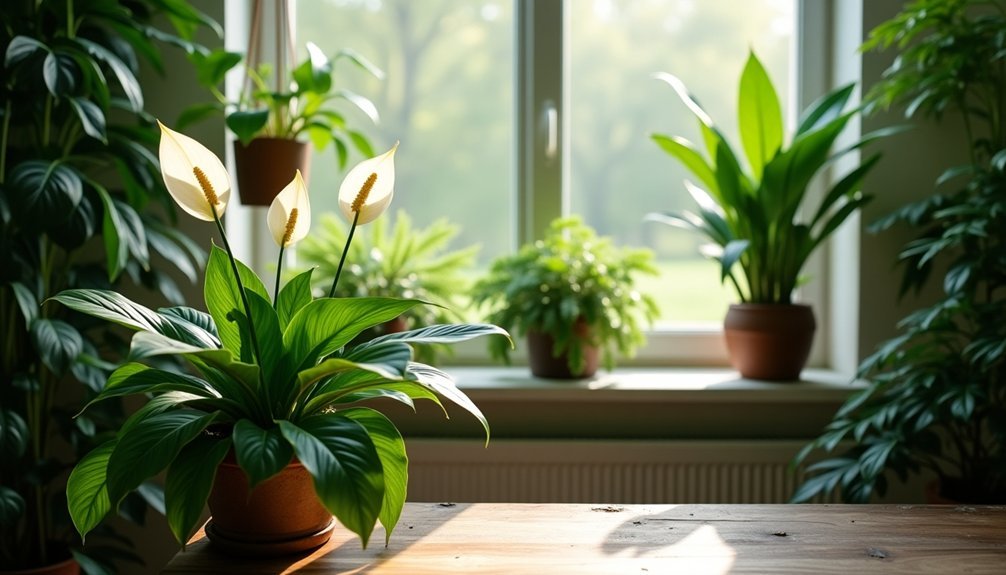
- Spider Plants and Peace Lilies pack a powerful punch against multiple air pollutants, with Peace Lilies adding elegant blooms to your indoor environment.
- Boston Ferns target specific toxins like formaldehyde and xylene, though they'll need extra humidity to perform their best.
Each of these plants brings unique strengths to your space, from the low-maintenance Snake Plant to the versatile Golden Pothos, making it easy to create a healthier home environment with natural air purifiers.
Pet-Safe Plants That Filter Indoor Air
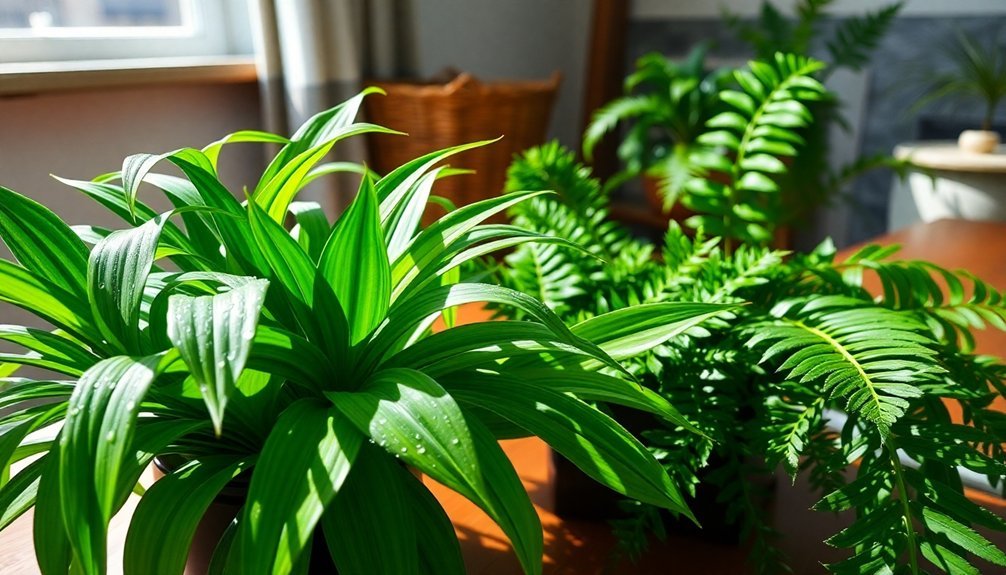
While creating a healthier home environment with air-purifying plants, pet owners must carefully select varieties that won't harm their furry companions. You'll find several pet-friendly options that excel at purifying the air and fighting indoor air pollution.
| Plant Type | Air-Purifying Benefits |
|---|---|
| Boston Fern | Removes formaldehyde, xylene |
| Areca Palm | Filters benzene, formaldehyde |
| Lady Palm | Adapts easily, removes toxins |
The Bamboo palm acts as a natural humidifier while filtering formaldehyde and benzene from your air. For compact spaces, try the Kimberly Queen fern, which thrives in bright, indirect light while removing harmful toxins. These safe-for-pets options let you enjoy cleaner air without worrying about your four-legged family members' safety.
Best Low-Light Air Purifying Options
Five remarkable plants stand ready to purify your air even in the darkest corners of your home.
These low light champions not only survive but thrive while removing harmful toxins from the air. Snake plant and ZZ plant excel at eliminating benzene, while Chinese evergreen tackles formaldehyde and carbon monoxide with ease.
- Pothos vines adapt perfectly to dim spaces while filtering xylene and formaldehyde, making them ideal for bathrooms and offices.
- Peace lily brings elegant blooms to low-light areas while removing ammonia and benzene from your indoor air.
- Snake plant requires minimal care yet powerfully cleanses multiple air pollutants.
These air purifying indoor plants offer you the perfect blend of functionality and convenience.
You'll get cleaner air without needing to worry about constant maintenance or bright lighting conditions.
Moisture-Loving Plants for Better Air Quality
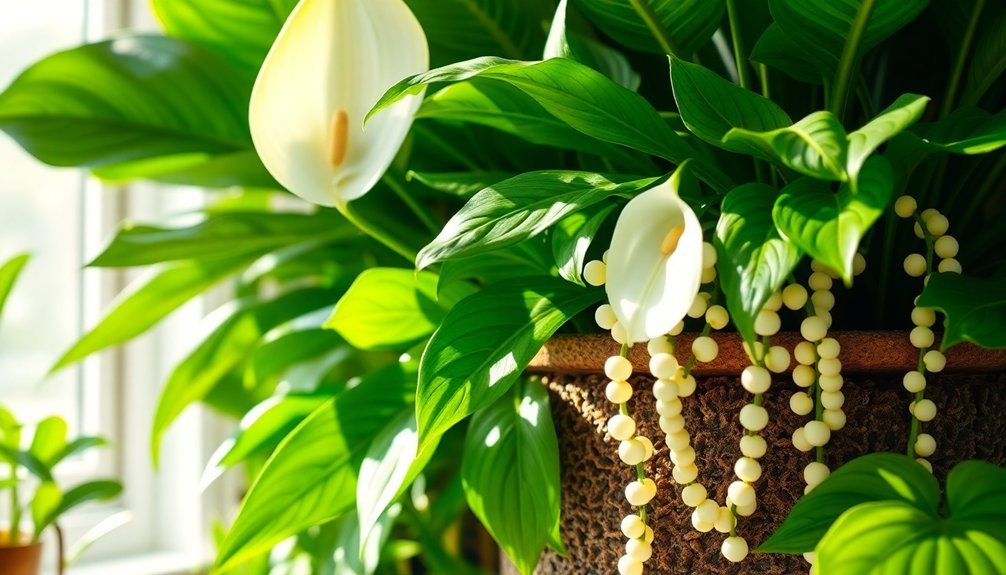
When you're looking to improve your indoor air quality while maintaining healthy humidity levels, moisture-loving plants are excellent multitaskers.
Plants like the Boston Fern and Bamboo Palm naturally filter harmful toxins such as formaldehyde and benzene while acting as natural humidifiers.
The Areca Palm and Kimberly Queen Fern offer similar benefits, removing pollutants like xylene and toluene while thriving in humid environments that benefit your home's air quality.
Humidity-Loving Air Purifiers
If you're looking to improve your indoor air quality while maintaining higher humidity levels, moisture-loving plants offer a natural two-in-one solution.
Humidity-loving plants like the Boston Fern and Bamboo Palm excel at filtering harmful toxins while naturally increasing moisture levels in your space.
- Boston Ferns thrive in indirect light and high humidity, making them perfect for bathrooms and kitchens where they'll actively remove formaldehyde from your air.
- Bamboo Palms are especially effective at eliminating ammonia and xylene, providing cleaner air for homes with pets.
- Regular misting enhances these plants' air-purifying abilities, boosting their effectiveness in supporting respiratory health.
Place these natural air purifiers in naturally humid areas of your home to maximize their potential, creating a healthier and more comfortable living environment.
Ferns For Clean Air
Ferns stand out as nature's most effective air-purifying powerhouses, especially in moisture-rich environments.
You'll find the Boston Fern and Kimberly Queen Fern leading the pack as natural air purifiers, efficiently removing harmful toxins like formaldehyde and xylene from your indoor environments.
Both varieties thrive in bright, indirect light and need consistent moisture to perform their air-cleaning magic.
You'll want to maintain higher humidity levels around these plants, particularly during winter months. This not only keeps your ferns healthy but also improves your home's air quality by preventing dry conditions.
Beyond their air-purifying abilities, these ferns add stunning aesthetic appeal to your space.
Their lush, green fronds create a natural backdrop while they quietly combat indoor air pollutants, making them perfect for any room where you'd like cleaner air and beautiful greenery.
Easy-Care Plants That Remove Common Toxins
Five remarkable houseplants stand out for their dual ability to purify indoor air and require minimal maintenance. Spider plants and Peace Lilies are champions at removing common air pollutants while being incredibly easy to care for.
Boston Ferns thrive in humid environments, while Bamboo Palms excel in indirect sunlight, both effectively filtering out harmful toxins from your indoor spaces.
- Spider plants tackle formaldehyde, xylene, and toluene while requiring minimal attention
- Peace Lilies combat multiple toxins including benzene and trichloroethylene, needing only low light
- Snake Plants work tirelessly against indoor pollutants even with infrequent care
Choose any of these air-purifying powerhouses to create a healthier home environment without adding complicated maintenance routines to your schedule.
Transform your living space into a natural air filter with these low-maintenance plants that silently safeguard your family's health.
They'll clean your air while you barely lift a finger.
Bedroom Plants for Cleaner Nighttime Air
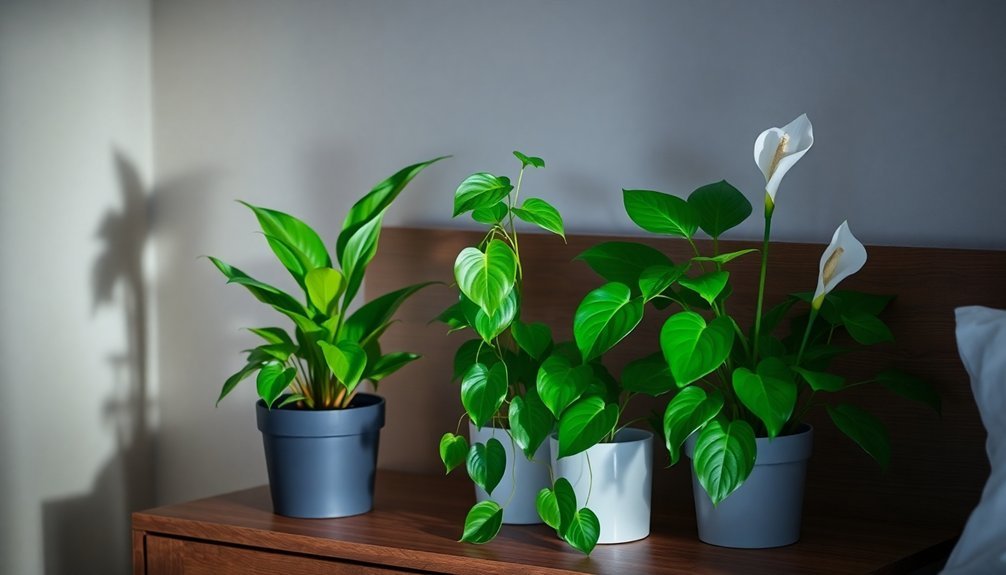
While getting a good night's sleep depends on many factors, the right plants in your bedroom can greatly improve air quality during those essential hours of rest.
You'll find the Peace Lily particularly effective at filtering out benzene, formaldehyde, and ammonia, while the Snake Plant converts carbon dioxide to oxygen as you sleep.
For ideal clean air, consider adding a Boston Fern, which thrives in indirect light and tackles formaldehyde and xylene.
Aloe Vera's dual benefits make it an excellent choice – it removes toxins and releases oxygen throughout the night.
If you're looking to boost humidity while purifying your space, the Areca Palm serves as a natural humidifier while eliminating harmful substances.
These bedroom plants work continuously to create a healthier environment for your nightly recharge.
Combining Plants for Maximum Air Cleaning Power
Building on the benefits of individual bedroom plants, you can dramatically boost your indoor air quality by strategically combining different species.
Think of these plant combinations as natural air purifiers working together to eliminate a wider range of toxins from your home.
- Pair a Spider Plant with a Snake Plant to tackle formaldehyde, xylene, benzene, and toluene all at once.
- Combine Peace Lily and Boston Fern for thorough removal of ammonia, toluene, and formaldehyde.
- Group Bamboo Palm, Golden Pothos, Dracaena Janet Craig, and Aloe Vera to create a powerhouse air-cleaning station.
For best results, place plants with similar care requirements together.
For example, if you've got a sunny spot with moderate humidity, cluster your Bamboo Palm with other light-loving varieties to maximize their collective air-purifying potential.
Seasonal Care Tips for Air Purifying Plants
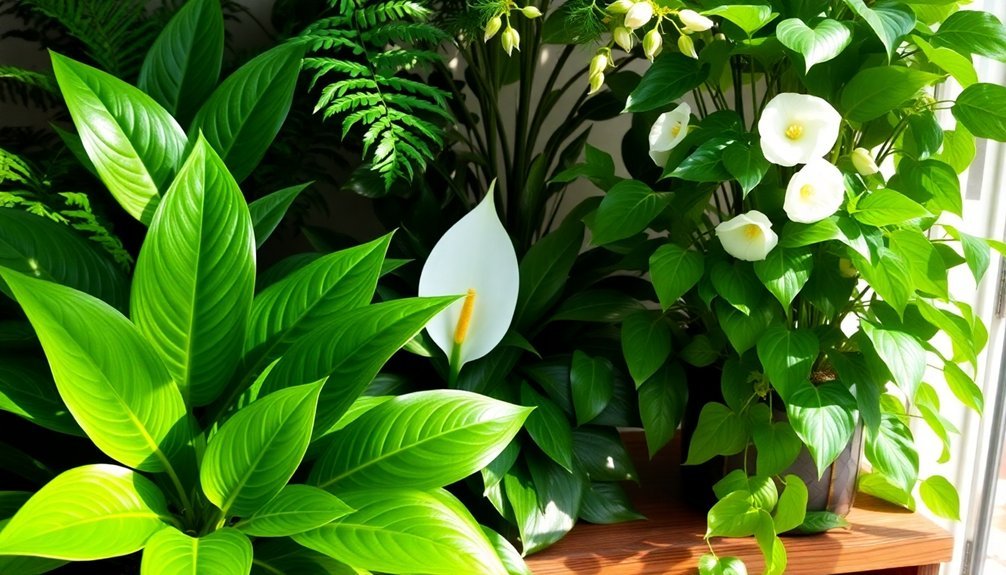
Just as nature adapts to changing seasons, your air-purifying plants need adjusted care throughout the year to maintain their toxin-fighting abilities.
During winter months, you'll want to increase high humidity around plants like Boston Fern and Bamboo Palm through misting or humidifiers to prevent leaf damage.
Regular misting or humidifier use keeps Boston Ferns and Bamboo Palms thriving through dry winter air, protecting their delicate leaves.
Position your plants strategically to catch indirect sunlight, especially moving Areca Palms near southeast or west-facing windows during shorter days.
To prevent root rot, reduce watering frequency in colder seasons, waiting until the top inch of soil dries.
When the growing season arrives in spring, fertilize indoor plants like Dracaena Janet Craig to boost their growth.
Remember to monitor light exposure as seasonal changes occur, adjusting plant placement to guarantee they receive adequate brightness for peak air-cleaning performance.
Setting Up Your Indoor Plant Air Filter System
Position your air-purifying plants strategically near potential pollution sources, such as placing Peace Lilies beside electronic devices and Snake Plants in bedrooms to filter air during sleep.
You'll get the best results by combining tall plants like Bamboo Palms for capturing airborne pollutants with low-growing plants such as Spider Plants that excel at removing ground-level toxins.
Create an effective multi-layered system by grouping these plants in clusters of three to five, ensuring each cluster contains different species that target various pollutants.
Strategic Plant Placement Tips
When creating your indoor air-filtering oasis, strategic plant placement can make the difference between mediocre and exceptional air purification.
Position your air-purifying plants in areas with bright, indirect light, and guarantee proper spacing between them to maximize air circulation. You'll improve air quality most effectively by placing plants in high-traffic areas where you spend significant time.
- Group multiple plants together in larger spaces to enhance their collective cleaning power
- Install humidity-loving plants like Boston Fern in bathrooms and kitchens where moisture levels are naturally higher
- Place air-filtering champions like Bamboo Palm and Spider Plant in living rooms and offices where air circulation is frequent
Remember to avoid overcrowding, as this can reduce your indoor garden's effectiveness at capturing airborne pollutants and maintaining healthy growth patterns.
Best Plant Combinations Working
Creating a powerful indoor air filtration system requires strategic plant combinations that target different pollutants.
You'll want to pair Spider Plants with Snake Plants, as they work together to eliminate formaldehyde, xylene, benzene, and toluene from your air. For peak effectiveness, combine these air purifiers with a Peace Lily and Bamboo Palm to tackle ammonia, trichloroethylene, and carbon monoxide.
To diversify your indoor air-cleaning squad, add a Boston Fern and Golden Pothos. These plants excel at different aspects of air purification while adapting to various environments.
Don't forget to include a Rubber Plant, which thrives in different light conditions. Remember to monitor your plants' health and adjust their care routines to maintain prime air-cleaning performance.
This combination approach guarantees you're targeting the broadest range of indoor pollutants effectively.
Common Air Pollutants and Their Plant Solutions
Indoor air quality can greatly affect your health, but nature offers elegant solutions through various houseplants. You'll find powerful natural air purifiers in common plants that target specific pollutants in your home.
Spider Plants and Boston Ferns excel at filtering formaldehyde, benzene, and xylene, while Peace Lilies tackle ammonia and trichloroethylene effectively.
- Snake Plants work tirelessly in low light to remove multiple toxins, making them perfect for bedrooms and darker spaces.
- Bamboo Palms pull double duty by filtering harmful chemicals while adding moisture to dry indoor air.
- Golden Pothos, an easy-care favorite, actively removes formaldehyde and xylene while requiring minimal maintenance.
Choose these natural air purifiers based on your home's specific needs and enjoy cleaner, healthier indoor air through the power of plants.
Measuring Your Plants' Air Cleaning Success
Now that you've selected your air-purifying plants, you'll want to track their effectiveness in improving your indoor environment. While household plants like the palm naturally clean the air, measuring air quality helps confirm their impact. You can monitor volatile organic compounds and humidity levels using simple testing devices that complement your plants' natural filtering abilities.
| Plant Type | Ease of Care | Air Cleaning Power |
|---|---|---|
| Spider Plant | High | Excellent |
| Boston Fern | Medium | Superior |
| Palm Species | Medium | Very Good |
Remember that plants need proper care to thrive and maintain their air-purifying effectiveness. While they're slower than mechanical air purifiers, they'll steadily reduce toxins when properly maintained. Track improvements over 24-hour periods, as studies show plants can remove up to 95% of certain pollutants within this timeframe.
Frequently Asked Questions
Which House Plant Purifies the Air the Most?
You'll get the best air purification from the Spider Plant, which removes 95% of indoor toxins within 24 hours. It's especially effective at filtering formaldehyde, xylene, and toluene from your home's air.
What Green Plant Cleans the Air?
You'll find Boston Ferns, Spider Plants, and Peace Lilies are top air-purifying plants. They'll remove toxins like formaldehyde and benzene from your home. Bamboo Palms and Golden Pothos are excellent choices too.
What Plant Removes 78% of Airborne Mold?
The Boston Fern's your best choice, as it'll remove up to 78% of airborne mold spores in your home. You'll need to keep it in humid, cool conditions with indirect light for peak performance.
What Plants Are Good for Clearing the Air?
You'll find Spider Plants, Peace Lilies, Snake Plants, Boston Ferns, and Bamboo Palms are excellent air purifiers. They'll remove toxins like formaldehyde, benzene, and xylene while adding natural beauty to your space.
In Summary
You've got the tools to create your own natural air filtration system at home. Start with proven performers like snake plants and spider plants, and you'll notice improvements in your indoor air quality. Remember to rotate your plants seasonally, keep them healthy, and combine different species for maximum effectiveness. With proper care and placement, your green air cleaners will work hard to keep your space fresh.